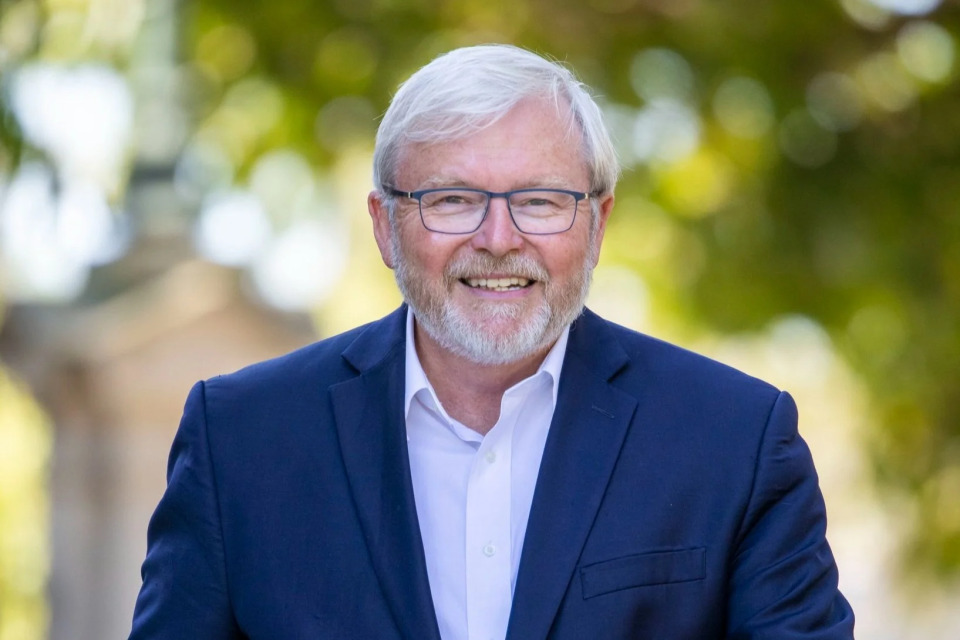
Kevin Rudd to return to Asia Society after wrapping up ambassador job in USA. Photo: kevinrudd.com
Embassy out, NGO in
Kevin Rudd is quitting his job as Australia’s ambassador to the United States early, wrapping up on 31 March 2026.He is not heading back into Australian politics. He is heading back into the global influence circuit.Rudd is returning to Asia Society, the New York based institution where he has previously held senior roles, and where he is expected to take the top job at the organisation and its policy arm.It is a sharp pivot from public service to private power. From an embassy desk to a membership driven network that sells access, briefings and convening.
What is Asia Society
Asia Society is a United States not for profit organisation that sits at the crossroads of foreign policy, culture and corporate networking.It runs events, publishes policy work, hosts delegations and builds relationships across business, government and academia.In plain terms, it is a place where important people meet other important people, with Asia as the focus and Washington and New York as the backdrop.Rudd’s reported remit includes leading Asia Society and also steering its China focused policy work through the organisation’s Center for China Analysis.
Asia Society announced that the Honorable Kevin Rudd, Australia's Ambassador to the United States, will return to lead the Asia Society from New York in March.
Founded by a Rockefeller, built for the establishment
Asia Society was founded in 1956 by John D Rockefeller III.That name matters because it speaks to the institution’s DNA.The Rockefeller dynasty is one of the great symbols of American capitalism and corporate power. Oil money, industry, philanthropy, elite networks.So yes, it is fair to say the optics are strange.A senior Labor figure, often painted by critics as a man of the left, is leaving a top diplomatic role and walking into the leadership of a Rockefeller founded institution.If you want a one line summary of modern politics, it might be this.Ideology sells at election time. Influence sells every day.
The frame critics will use
Here is how the sceptics will frame it.Rudd also carries a reputation, fair or not, for big government instincts and internationalist politics.Now he is moving into the upper tiers of what many voters call the NGO world, the think tank world, the conference circuit.A world where the public does not vote, but where agendas can still be shaped.That does not mean anything illegal is happening. It does not mean Asia Society is doing anything wrong.But it does raise the question everyday Australians keep asking.Who is really being served when politicians move from public office into private institutions that sit right beside power.
The money question
Asia Society Australia operates a membership model that is not cheap.Corporate membership is listed at $28,000 a year.Individual membership is listed at $800 a year.That is not a charity tin model. It is a high end access model.For corporate members, the value is not a tote bag. The value is the room.
Who is in the room
Asia Society Australia publicly showcases a long list of members and partners, including major law firms, banks, resources companies and government linked entities.Among those publicly listed are names such as Ashurst, ANZ, BHP, Clayton Utz and others.It also highlights university partnerships.Macquarie University and RMIT are positioned as partners, linking Asia Society’s programming into major city campuses and events hubs.This is how the institution functions on the ground.It sits where business, politics and academia overlap, then it sells the convening.
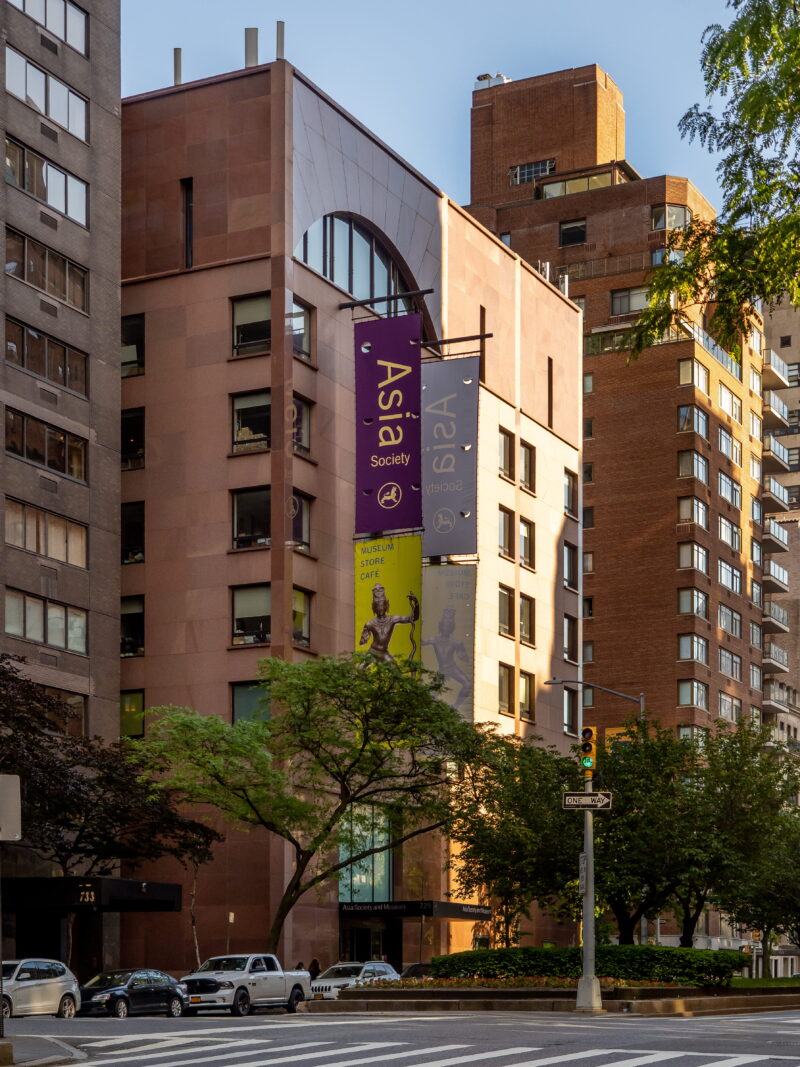
Asia Society New York. Photo: Wikimedia Commons
The Trump angle, and the NGO crackdown narrative
Rudd’s move also lands in the middle of a heated American political fight.In conservative politics, especially around Donald Trump and his allies, there has been sustained talk about auditing the NGO ecosystem, cutting government waste, and scrutinising programs that funnel money through not for profits.Supporters call it cleanup.Critics call it a power play.Either way, the sector is under a brighter spotlight than it used to be.That is the atmosphere Rudd is walking into, moving from an official diplomatic role to the leadership of a prominent not for profit institution.To be clear, there is no suggestion Asia Society is being accused of fraud.But the politics of NGOs has become radioactive in Washington, and Rudd will be standing right in the middle of it.
Why this matters
Rudd is not disappearing.He is moving.From representing Australia inside the US system to shaping debates around the US system, especially on China.At the embassy, the accountability is clear. You serve the Australian government.At Asia Society, the accountability is different. You serve a board, donors, members and partners, and you trade in influence.That is why the move will attract criticism.A Labor heavyweight exiting a public job early to take over a Rockefeller founded institution, funded by large memberships and packed with corporate and academic partners, right as Washington is tearing strips off the NGO world.It is not just a career change.It is a case study in how modern power works.