
NEW COLUMNIST
Feudalism gets a bad rap — say the word and people picture muddy peasants, oppressive lords and a boot on the neck of the common man.
What nobody tells you in school is that feudalism worked for centuries.
It wasn’t a system designed to be cruel; it was a survival contract born out of collapse. When the Roman Empire fell and there was no army, no roads, no law, the feudal arrangement was the only sensible answer. ‘You give me your labour, I give you protection and land to work. We both survive.’ Was it equal? No. Was it the best option available at the time? Probably yes.
So before we condemn it, we should at least understand it because that is exactly how you recognise it when it comes back around wearing different clothes.
It’s autumn 1126: A lord owns the land that you work. Without access to it, you can’t function. No tilling, no gathering, no shelter, no community. There was no need to enslave you outright. You work the land, make it profitable and the baron takes his share. It’s sizable but you are now part of something bigger. You have protection. You have purpose. You have a place in a structure that, for all its inequality, keeps you alive through winter.
FEUDALISM 2.0
Now meet your modern equivalent.
You wake up, reach for your phone, open your platform of choice, post your work, build your audience, run your business, communicate with your clients, store your life. The platforms you depend on were built by someone else.
The algorithm that decides whether your work gets seen was written by someone else. The terms of your participation were set by someone else. You don’t own any of it. You just work it. And the baron takes his share.
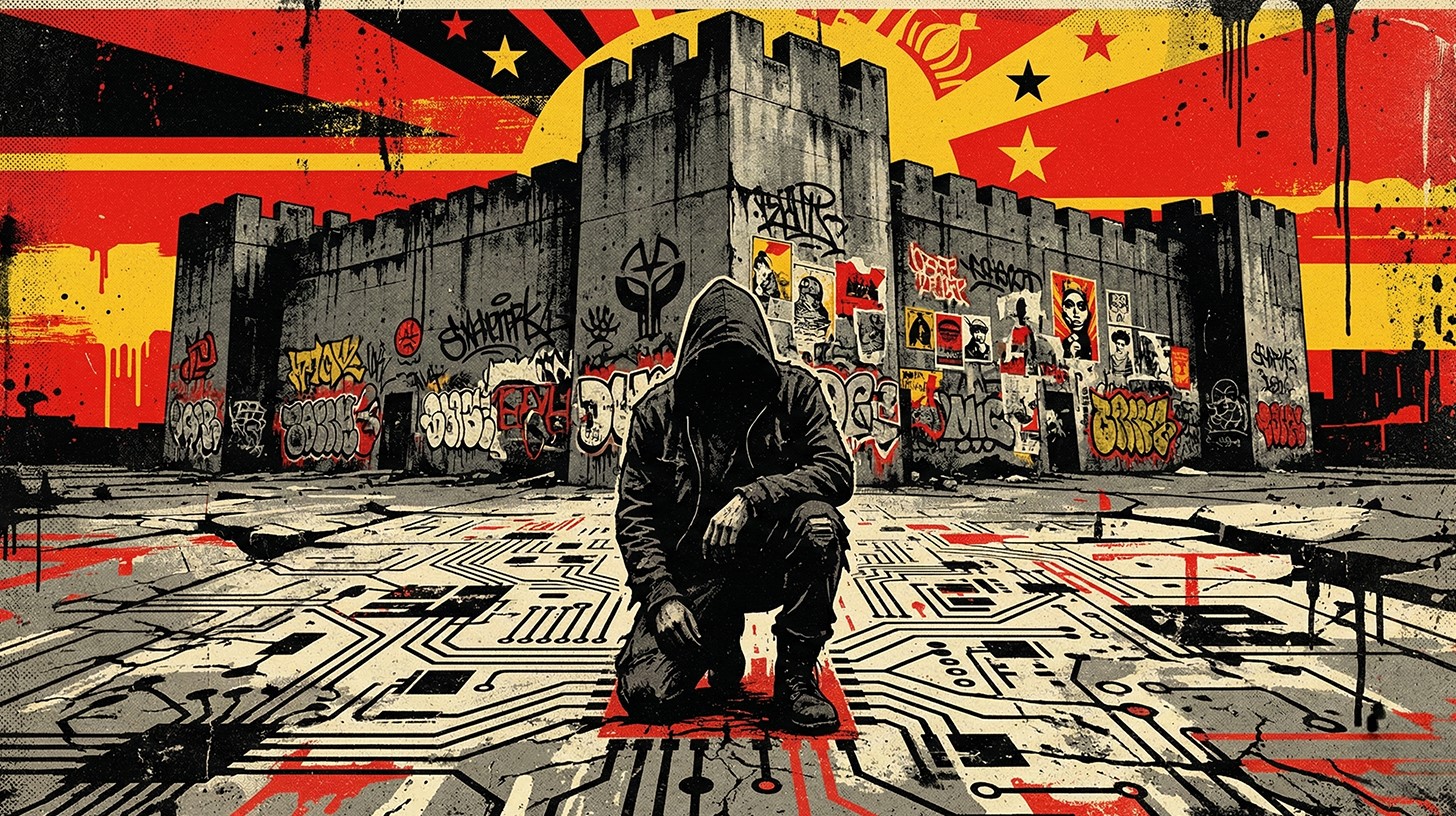
You are part of something bigger, sure. But ask yourself, “Who built the walls?”.
This isn’t a metaphor cooked up by academics. The term ‘technofeudalism’ has been gaining traction for a few years now, largely through the work of economist Yanis Varoufakis.
But I don’t think it has landed with ordinary people yet and I think that’s a problem.
What we are watching in real time — the consolidation of AI, the battle for control of digital infrastructure, the egos of Silicon Valley behaving like medieval barons — is not just a tech story. It’s a power story. And power stories have always ended the same way for the people at the bottom.
The barons have changed. The structure hasn’t and the barons know exactly what they’re doing.
Elon Musk, Sam Altman, Alex Karp, Peter Thiel, Jeff Bezos, Mark Zuckerberg, Dario Amodei: these are not quiet engineers. These are men who love the spotlight because visibility is power, who position themselves as visionaries while building the most consequential infrastructure in human history, pushing the boundaries of accountability at every turn, elected by nobody and regulated by almost nobody.
Which brings us to a story that got framed completely wrong.
CONTINUED NEXT PAGE: The story of Anthropic




