
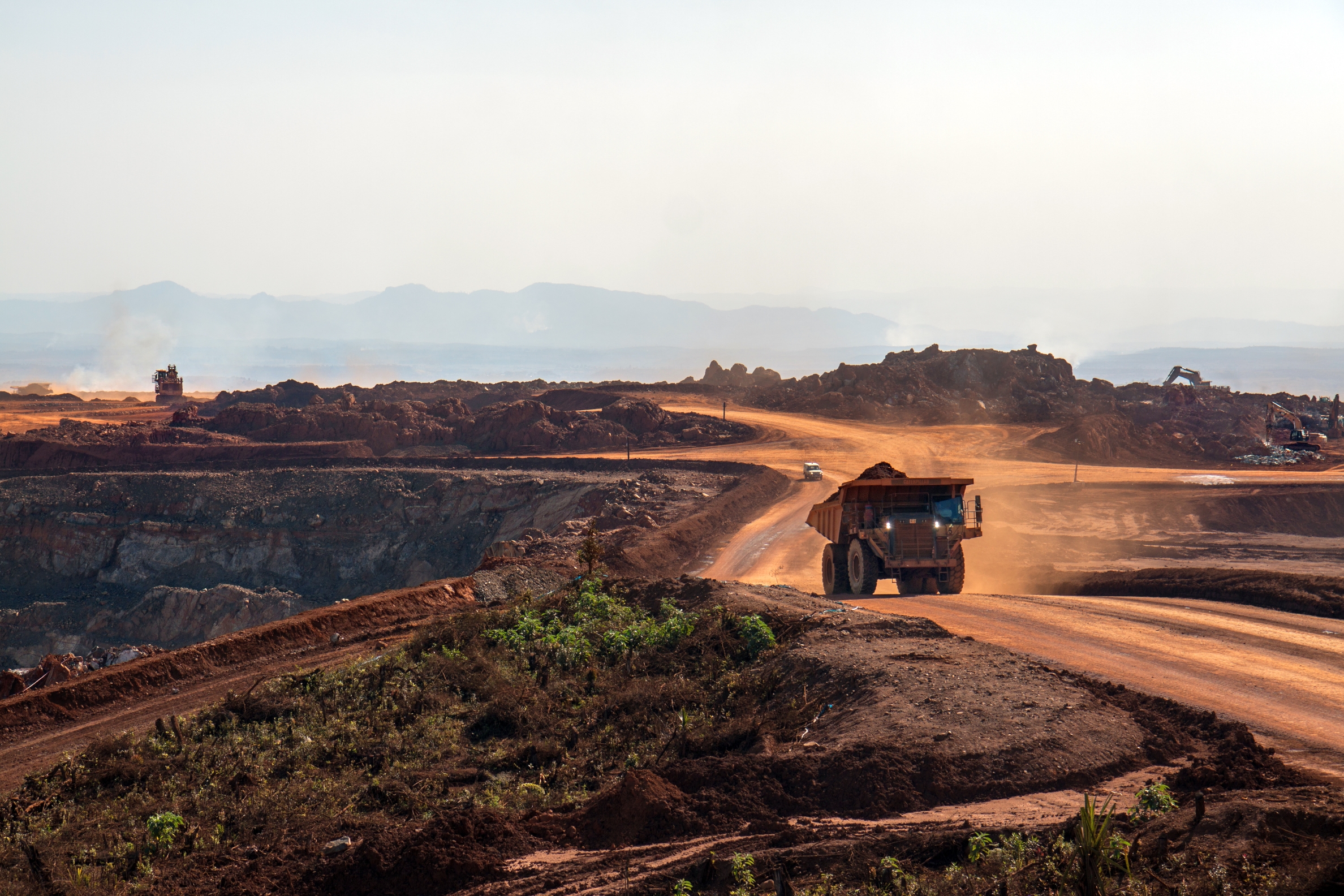
A ‘dig-and ship’ approach to mining and lack of domestic manufacturing has left Australia far too exposed to China, a new report warns.
The report from independent think-tank Climate Energy Finance (CEF) examines China’s move to dominate key minerals markets and reduce supply risks; click here to read the full report.
The report’s lead author is Tim Buckley, CEF Director and former managing director of global investment bank Citigroup.
“Australia is sitting on some of the world’s most strategically valuable resources at precisely the moment the global economy is re-organising itself around them but sitting on them is all we are doing,” he says.
“China is investing at extraordinary scale and speed to build out global mining and processing capacity, supply chain integration and partner nation relationships that will define who wins and who loses in the zero-emissions economy.”
He says the window “is closing” for Australia to use its mining resources (such as bauxite, copper, nickel, rare earths, lithium and iron ore) and emerging renewable energy with Asian trade partners (like China) for a green industrial future.
“With our abundance of resources and nascent clean energy capacity we have a generational opportunity to strategically reposition as a key player in global green industrial supply chains,” he says.
Click here to earn more about the CEF.
MINING REPORT FINDINGS
The CEF says its report highlights these moves by China, including:
China has spent more than US$120 billion globally since 2023 building lithium supply chains across Africa and South America, anchoring the US$23bn Simandou iron ore project in Guinea and developing more processing factories in partner nations. (The CEF says the Simandou plant delivered its first shipment to China in January and, once fully operational by 2029, will make Guinea the world’s third largest iron ore exporter and help China cuts its 80% reliance on Australian and Brazilian iron ore supplies.)
In lithium mining, China’s domestic production now outstrips Australia while in 2023 Australia had 50% of global market share. No new Chinese investment in Australian lithium was highlighted by the February closure of Albemarle’s lithium hydroxide plant in WA after just four years while threats are coming from a string of threatened closures across alumina, aluminium, nickel, copper, lead, zinc and steel industries.
KPMGsays Chinese investment in Australia collapsed by 85% since 2018; in 2024, it made up just 1.5% of total inbound investment (US$882m compared to US$16bn in 2008) even as two-way Australia-China trade hit a record high of A$300bn in 2025.
Report co-author Matt Pollard, a net zero transformation analyst, says “the same model China used to build green industrial capacity across the Global South is available to Australia”.
But he says “a significant strategic shift” in Australia’s national interests and economic security must happen.
He says Australia’s economy remains deeply tied to China’s green industrial strategy but it has been long undervalued, under-recognised and under-leveraged in Canberra.
“Economies that will benefit the most from the global shift to net zero are ones that will transform resource wealth into industrial capability.”
OTHER MINERALS STORIES: First plant in Australia earmarked for Townsville




