
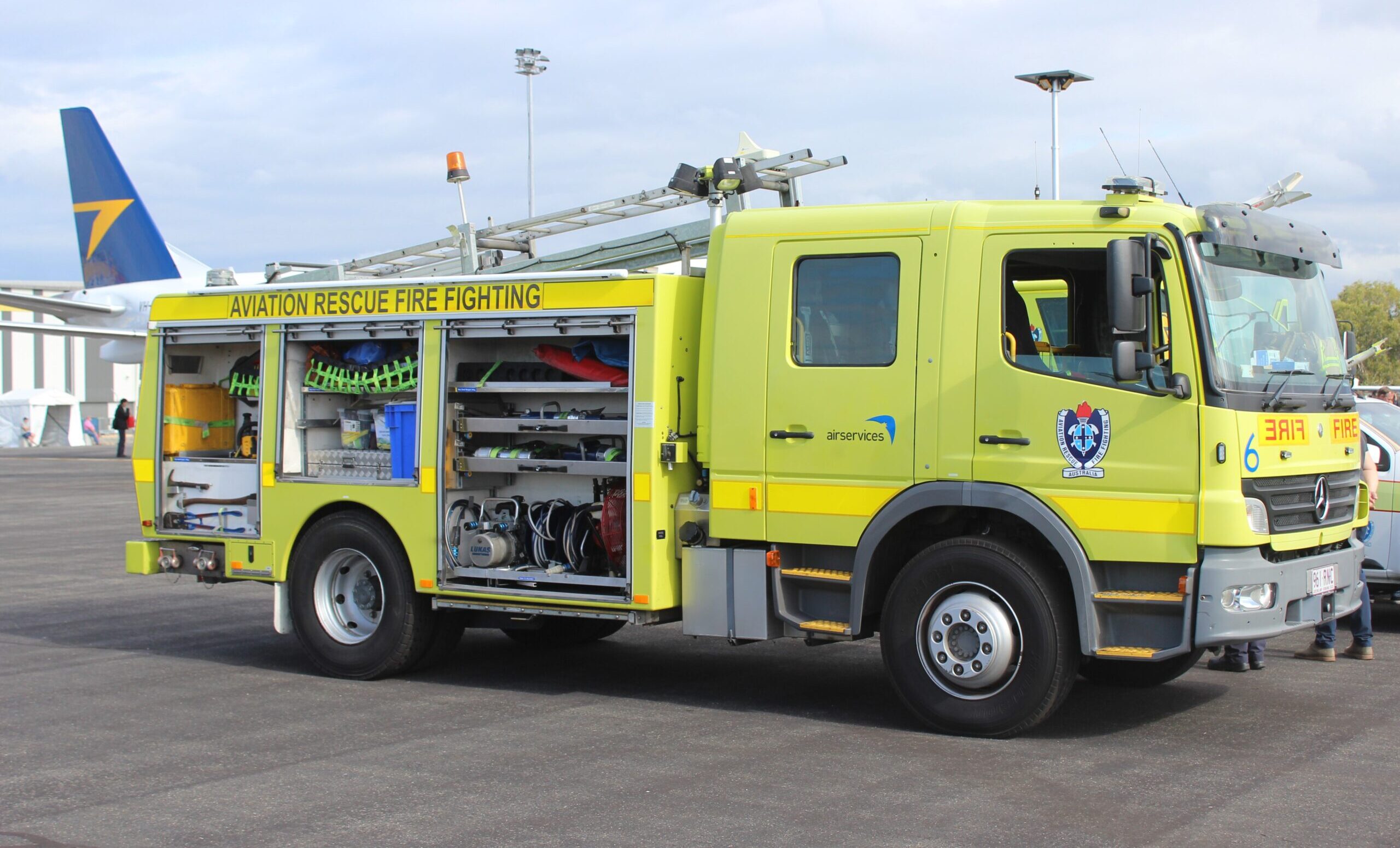
Airservices Australia’s bid to “privatise” airport firefighting services will be fought all the way, says the United Firefighters Union.
The union’s aviation branch says the Airservices (a government agency) wants to sell some aviation firefighting infrastructure to a sovereign wealth fund.
It claims fire stations, vehicles, training facilities and protective equipment transferred to a third-party then leased back to Airservices under a long-term deal.
The Australian Financial Review reported late last year that the federal government is eyeing a $2 billion partial privatisation of the agency which is seeking $8 billion to fund capital works for the next five to eight years; click here for that article.
Union branch secretary Wes Garrett says the Airservices plan amounts to commercialisation of an emergency service.
“Aviation firefighting is not a money-making enterprise; it is a lifesaving emergency service. The moment you introduce a profit motive, safety stops being the first priority,” he says.
AIRSERVICES PLAN WORRIES
“Under the proposal, ownership and management of critical aviation safety assets would be transferred to a commercial operator whose primary obligation would be delivering a financial return to investors, not protecting the safety of air travellers or firefighters,” he says.
He claims this will result in maintenance delays on vehicles and lower spending on equipment, facilities and operational readiness.
“In an aircraft fire, passengers typically have only minutes to survive. International aviation standards require firefighters to reach an incident within three minutes because every second counts,” he explains.
“If operational preparedness is compromised by cost-cutting or delayed maintenance, the consequences could be fatal for passengers and devastating for firefighters.”
The union also warns that the proposal’s intention to transfer maintenance to the private sector would undermine safety.
“Aviation firefighting works because the crews, vehicles, technicians and infrastructure operate as one integrated system. Breaking that system apart introduces risk where none currently exists,” Garrett says.
The union believes the deal will lock the Commonwealth into decades of escalating costs through a long-term lease and raises questions about other emergency services.
“If aviation firefighting can be privatised, what emergency service is next?”
The union says it will strongly oppose any attempt to privatise the service.
AIRSERVCES PLAN
Airservices Australia is responsible for firefighting services at 27 airports with a large fleet of firefighting vehicles and for operating 29 air traffic control towers.
In its 2025-26 corporate plan (click here to read it), Air Services says it is eyeing a return to profit in two years and that its capital spending projects included the new Western Sydney International (WSI) Airport which opens later this year.
The plan also calls for the agency to adapt to the use of unmanned aerial traffic and digitalisation of its services; for example, unlike other airports, WSI will operate 24-7 without a curfew and with a 20-camera digital air control tower.




