
Whistleblower allegations, claims of a toxic internal culture, and concerns over discretionary income “reconstruction” raise fears that thousands of Australian families may have been affected.
Serious questions are emerging about whether Australia’s child support system is showing some of the same warning signs that preceded the Robodebt scandal – a program in which government-administered debts were raised on assumptions many recipients said were impossible to disprove. Critics warn the alarming similarities may extend to the Commonwealth’s balance sheet: the creation of debts “on paper” through disputed methodologies, potentially increasing recorded receivables even where the underlying amounts are not supported by real-world evidence of income or capacity – leaving families and children as “collateral damage”.
News Cop has reviewed tribunal material, enforcement submissions, complaints from affected families, and communications from individuals claiming insider knowledge of the system. What is emerging is not merely disagreement over individual child support decisions, but a growing allegation of systemic structural problems in the way discretion is being exercised, particularly for self-employed parents.
At the centre of the concern is this: are discretionary income-setting methodologies being applied in ways that inflate assessed income beyond normal accounting principles?
If these practices are occurring broadly rather than in isolated cases, complainants argue the impact may extend to thousands of child support assessments across Australia, with downstream consequences for household stability, parenting arrangements, and children’s wellbeing.
This investigation follows News Cop’s earlier reporting on Mr Daniel Jolliffe, an outsourced decision-maker engaged by the Child Support Agency. Questions were raised about transparency, accountability and value for money in multi-million dollar child support outsourcing deals.
The question being asked now is whether income is being assessed fairly, transparently, and in accordance with normal accounting practice, especially when the consequences can include debt escalation, enforcement action, and in extreme cases, restrictions on international travel to ‘encourage’ payment.
FROM FORMULA TO “INCOME RECONSTRUCTION”
Australia’s child support scheme is designed to operate primarily through a statutory formula using taxable income data.
However, under the Change of Assessment provisions, the Registrar has some discretion to depart from that formula where “special circumstances” exist however states its role is not to engage in wholesale reconstructions of financial affairs. It is within this discretionary framework that controversy appears to be emerging.
Documents and complaints reviewed by News Cop describe cases where decision-makers have relied on methodologies that families argue depart significantly from ordinary financial analysis, and in some instances, “do not add up,” even under basic arithmetic scrutiny.
Complainants allege practices including:
· Annualising short-term or irregular deposits
· Treating business income or turnover as personal income
· Characterising loans as earnings
· Ignoring tax liabilities when assessing capacity to pay
· Applying calculations that appear to double-count tax or inflate figures
· “Setting” income despite fluctuating or seasonal self-employed earnings
· Escalating enforcement actions to “encourage” payment despite disputes about accuracy
For self-employed Australians, particularly tradespeople, contractors, and small business operators, this can create extraordinary hardship. Unlike PAYG employees, self-employed income may fluctuate with seasons, contract cycles, weather disruptions, illness, downtime, and the realities of running a viable business.
Where a business has turnover but no distributions, operates at a loss, or reinvests profit to remain viable, the line between legitimate inference and speculation becomes critical.
WHY FAMILIES ARE INVOKING ROBODEBT 2.0
Critics argue the comparison to Robodebt is not rhetorical – it is structural.
Robodebt became a national scandal because income averaging created debts based on assumptions, often placing the burden on individuals to produce records that were difficult or impossible to obtain years later.
In 2025, the Commonwealth agreed to pay almost $500 million in compensation for harms caused by Robodebt. A systemic failure within the child support system, if proven, could potentially dwarf that figure and inflict long-term harm on families and children.
LIMITED REVIEW, HIGH CONSEQUENCES
Adding to the complexity is the limited scope of administrative review. While the Administrative Review Tribunal (ART) can review certain child support decisions, families allege that in practice review mechanisms can be slow, procedurally complex, and costly particularly where litigation becomes the only realistic pathway to contest a disputed methodology.
For some families, the cost of legal action becomes a barrier to challenging the underlying assessment, even where they believe it is financially, or even mathematically unsound.
SELF-EMPLOYED PARENTS IN THE SYSTEM
Decision-makers commonly note that taxable income may not fully reflect financial capacity, particularly where a parent controls a business structure.
While that principle exists in broader family law reasoning, complainants argue its application in some child support cases appears to move beyond adjusting for genuine non-cash benefits (for example, use of a phone or vehicle) into assuming capacity based on business structure alone.
Where a business shows activity but cashflow is unstable, or where profit is reinvested to keep the business afloat or viable, affected parents argue the result can be an “income” set at a level that does not reflect real-world take-home capacity.
WHISTLEBLOWER ALLEGATIONS AND CULTURE CONCERNS
In addition to technical concerns about income methodology, News Cop has received whistleblower allegations describing what they characterise as deeper cultural problems within parts of the child support division.
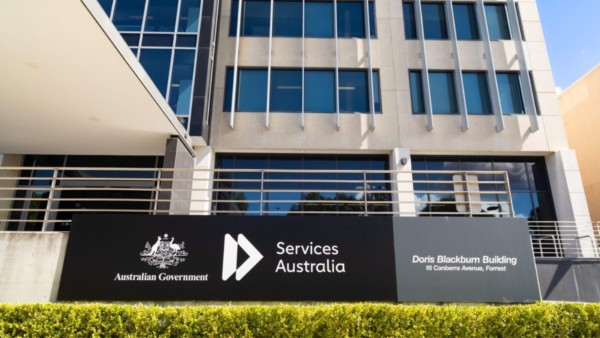
News Cop is continuing to investigate these allegations and has sought comment from Services Australia.
QUESTIONS RAISED REGARDING TRIBUNAL PROCESSES
News Cop has also reviewed complaints concerning proceedings within the Administrative Review Tribunal.
Some complainants allege disclosure requirements imposed on paying parents in child support disputes can be extremely broad and difficult particularly for self-employed individuals who may not hold documents in the precise form requested, or within the timeframe required.
A complaint reviewed by News Cop referenced proceedings involving Tribunal Member Dr Christihilde Breheny, with complainants alleging disclosure directions required documentation they believed was practically impossible to produce, raising concerns about whether those proceedings afforded a meaningful opportunity to contest the assessment.
In attempting to understand the professional background of tribunal members involved in these matters, News Cop conducted preliminary searches of publicly available information relating to Dr Breheny. At the time of writing, News Cop did not identify any readily available publications, professional profiles, or publicly listed commercial affiliations.
News Cop is now seeking further details under Freedom of Information processes regarding appointment background, professional experience, and assessed suitability along with any decision-making guidance applicable to tribunal members in child support matters.
CHILDREN CAUGHT IN THE MIDDLE
Lost in the adversarial nature of these disputes are the children themselves.
Many families argue the system’s current incentives and enforcement posture risk fuelling conflict rather than promoting stable arrangements that keep children safe and supported.
A system that is firm must also be fair.
A system thatexercises discretion must also exercise restraint.
THE BIGGER QUESTIONS
The central issue is not whether any single decision-maker acted improperly.
The question being raised is whether systemic methodologies, particularly income annualisation, business inference and “gross-up” calculations, are being applied in ways that inflate assessed capacity across a significant number of cases.
If that is occurring nationally, the number of families potentially affected could be far greater than currently understood. Once again, families and children may bear the cost of a system that critics warn is manufacturing debt on paper to increase its balance sheet, regardless of the benefit to the families it purports to support. The result may be intensifying conflict in a manner reminiscent of the Robodebt scandal, while producing liabilities that may never be realistically recoverable.
THE INVESTIGATION CONTINUES
News Cop’s investigation into discretionary income reconstruction, outsourced decision-making and enforcement practices within Australia’s child support system is ongoing.
We are particularly interested in hearing from readers who:
· dispute their assessed income, especially self-employed parents
· have experienced severe impacts on children’s welfare that could be linked to child support assessment disputes
· have faced DPO escalation during child support disputes
· have experienced disclosure requirements they believed were oppressive or impossible to satisfy
If you have experienced similar issues, News Cop invites you to contact our investigative team confidentially at investigations@newscop.com.au.
Families deserve a child support system that is accurate, transparent and fair.
This investigation is continuing.




