
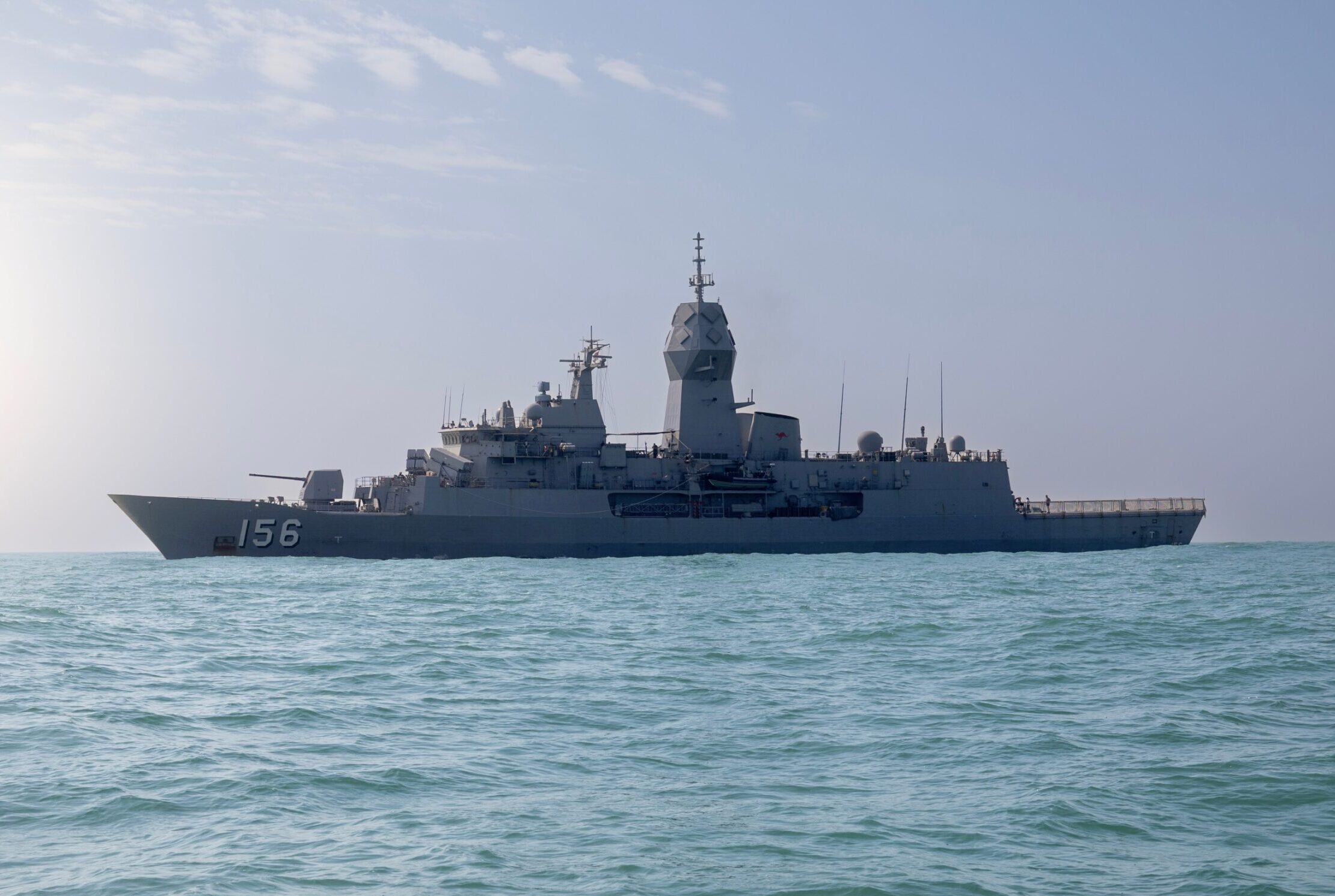
No warship will be sent to the Strait of Hormuz in the Middle East, Federal Transport Minister Catherine King says.
The minister made the comment in an interview with ABC Radio National’s Sally Sara today.
“We’ve been very clear about what our contribution is in relation to requests, and so far, that is to the UAE … but we won’t be sending a ship to the Strait of Hormuz,” she says.
“We know how incredibly important that is, but that’s not something that we’ve been asked or that we’re contributing to.”
WARSHIP CLAIMS REJECTED
US President Donald Trump claimed on social media that other nations will be sending warships to protect shipping as it passes through the strait, a claim that quickly rejected by countries like Italy, France and China.
“It’s something we’re not contributing to. I’m not aware of whether there’s an ask,” King replied when asked if the US had asked for an Australian warship.
“I’m informed that we’re not intending to send ships to the Strait of Hormuz. We’re well prepared here in this country to weather the economic crisis that is occurring as a result of the Middle East, but we’re not planning to send a ship.”
On Australia’s current fuel reserves, King says they have 1.6 billion litres of petrol or 37 days’ worth of supply; 30 days of diesel and 29 days of jet fuel which takes in the 20% of reserves that are being released (762 million litres).
On fuel reserves in regional areas, the minister says the reserve release and a temporary lowering of the sulphur standard (boosting supplies by 100 million litres a month) will help.
“Ampol has been asked particularly to prioritise, to redirect that to the regions, and to the wholesale spot market, to support independent distributors and harvesters so we should start to see some of that flow and ease shortly.”
MORE ON FUEL PRICES: ACCC wants explanation about price fluctuations
On fuel supply levels, she says Australia is “well placed”.
“It’s why we introduced the minimum stock holding obligation (reserves); that means that those fuel supplies are held here in Australia and they are holding us in good stead as we weather … the consequences of a global conflict.”
King also says they aware that China has told its oil refiners to halt all fuel exports and they are watching closely.
“It’s clear, obviously, the longer that the war continues, the greater the impact will be felt, not just by us, but obviously the Asia-Pacific region overall.
“At this stage, all of the ships that were planned to come into Australia, are coming in. The fuel supply is holding.”
On disruptions to jet fuel supplies from China, King says the aviation industry “is well placed” to withstand the global shocks.
“At the moment, they (airlines) are telling me there is no immediate or short-term issue in relation to jet fuel supply,” she says.
“We don’t see any immediate issue in terms of flights.”
King confirmed that the government is watching the aviation industry for price disruptions but says that Qantas and Virgin are telling them “they’re okay at the moment”.
Click here to ready more about the vulnerability of supply chains
EARLIER IRAN STORY: Aust focus is on helping UAE




