
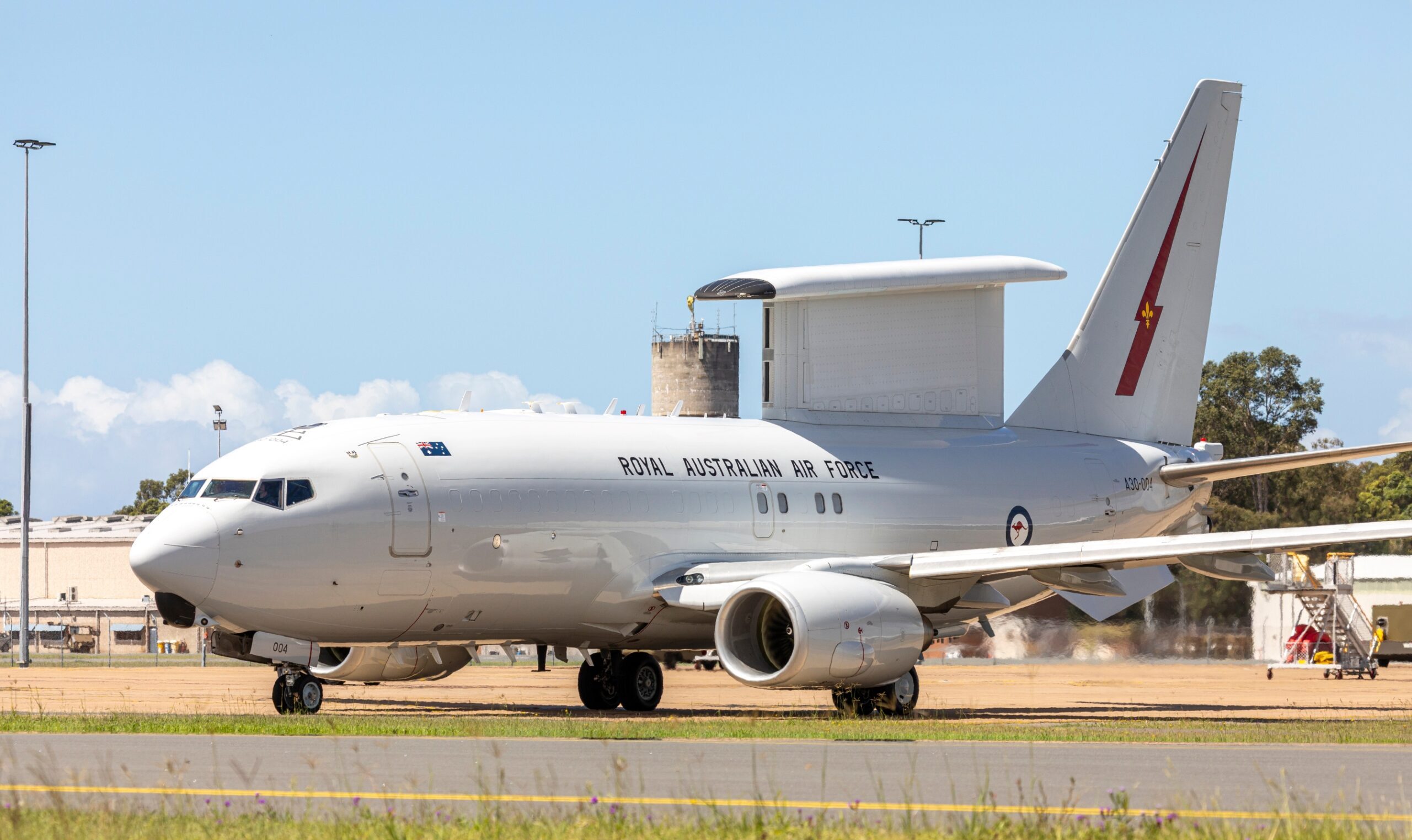
An RAAF Wedgetail airborne warning aircraft keeping an eye on the United Arab Emirates airspace will stay on in the Middle East.
Defence Minister Richard Marles confirmed the decision in an interview with ABC’s 7.30pm program earlier this week,
A Boeing E-3 Wedgetail flew to the UAE early last month for an initial four-week period which lapses today (Friday).
“We will keep it there for the time being … I’m not going to put a time limit on it because it’s really a function of how events play out,” Marles says.
“It is playing a really important role in providing for the defence of countries of the Gulf, particularly the UAE.
“We deployed (it) at the request of the UAE and it will continue to be there so long as it can continue to play that role.”
WEDGETAIL’S ROLE
Marles was unable to emphatically deny that US forces could access the RAAF data to use in its war with Iran.
“The Wedgetail is providing data to the (US Air Force’s) Combined Air Operations Centre which operates out of Qatar; within the centre are Gulf countries (which share the data),” he explains.
Media reports say that the crew is sharing data about drone and missile attacks with the US but information about non-defensive activities is not.
Click here to read more about the Centre.
“The US also is a part of the Centre. The purpose of the Wedgetail is to provide for the defence of the UAE and countries of the Gulf; that is the job it is doing.”
Marles also rejected media reports that a warship may be sent to the Strait of Hormuz to protect shipping.
He says the current situation remains too unpredictable and that any decision will be made in line with the United Nations and NATO allies France and UK.
“There is a lot of water to go under the bridge here and we need to see this ceasefire become permanent,” he said.
(Within a day of that interview, Iran closed the strait again amid continual attacks by Israel on Lebanon and fresh threats from US President Donald Trump).
EARLY DAYS FOR NAVAL OPTION
Earlier today, Marles confirmed to ABC Radio that there had been some talks with allies about a possible naval deployment but that much depended on US-Iran ceasefire talks in Pakistan this weekend.
“All of these conversations … (are) really talking about when there is a ceasefire that is permanent. We don’t have that in place now,” he says.
Marles also took a swipe at reports that Shadow Defence Minister James Patterson had suggested Australian warships may not be able to defence themselves from drone and missile attacks in the Persian Gulf.
“That’s an unhelpful contribution from the Shadow Minister and it’s not correct in terms of Australia’s capability; the Chief of the Defence Force (Admiral David Johnson) was very clear about that.
“We have (the) capability; that’s not the issue,” Marles said.
“The question is what we can usefully contribute in the context of all other pressures; we still have significant roles to play in the Indo‑Pacific which is where the bulk of our naval effort goes right now.”
OUR EARLIER STORY: Wedgetail for defensive purposes only




