
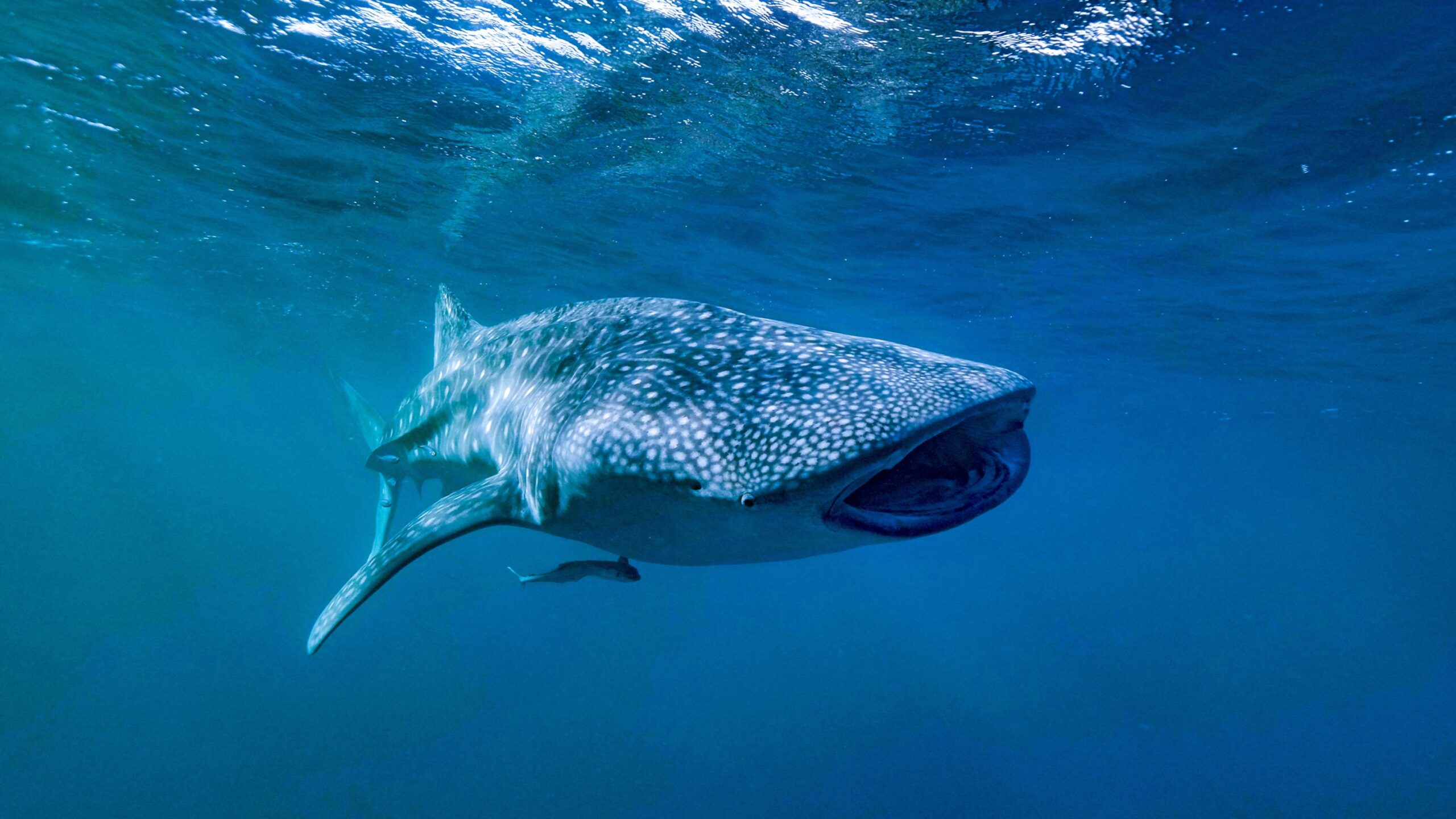
Serial snacking whale sharks at feeding at all ocean depths as new feeding behaviour is revealed in new maritime research.
The research was led by the Australian Institute of Marine Science (AIMS) and Murdoch University, and partly funded by mining giant Santos.
The study was the result of cameras mounted on whale sharks at Ningaloo Reef in Western Australia and reviewing around 100 journal articles to identify 36 different behaviours.
AIMS says whale sharks are filter feeders and their prey is mostly plankton and tiny animals like copepods.
It says 12 of their 36 behaviours involves foraging for food, and six of these behaviours are new to science; these include ‘gliding slow feeding’ (where the whale shark sinks with mouth open to catch prey slowly) and ‘dive feeding’ (swimming down to the sea floor catching as much prey as possible along the way).
SERIAL SNACKERS PROVIDE A SURPRISE OR SIX
Lead author and PhD candidate Christine Barry says the research shows whale sharks have a larger number of serial feeding behaviours compared to other giant filter feeders like baleen whales and basking sharks.
“It’s not surprising that the biggest fish in the oceans is so food oriented given they eat some of the smallest prey.
“What we didn’t realise is just how many ways they go about it compared to other large filter-feeding animals like whales and basking sharks,” she says.
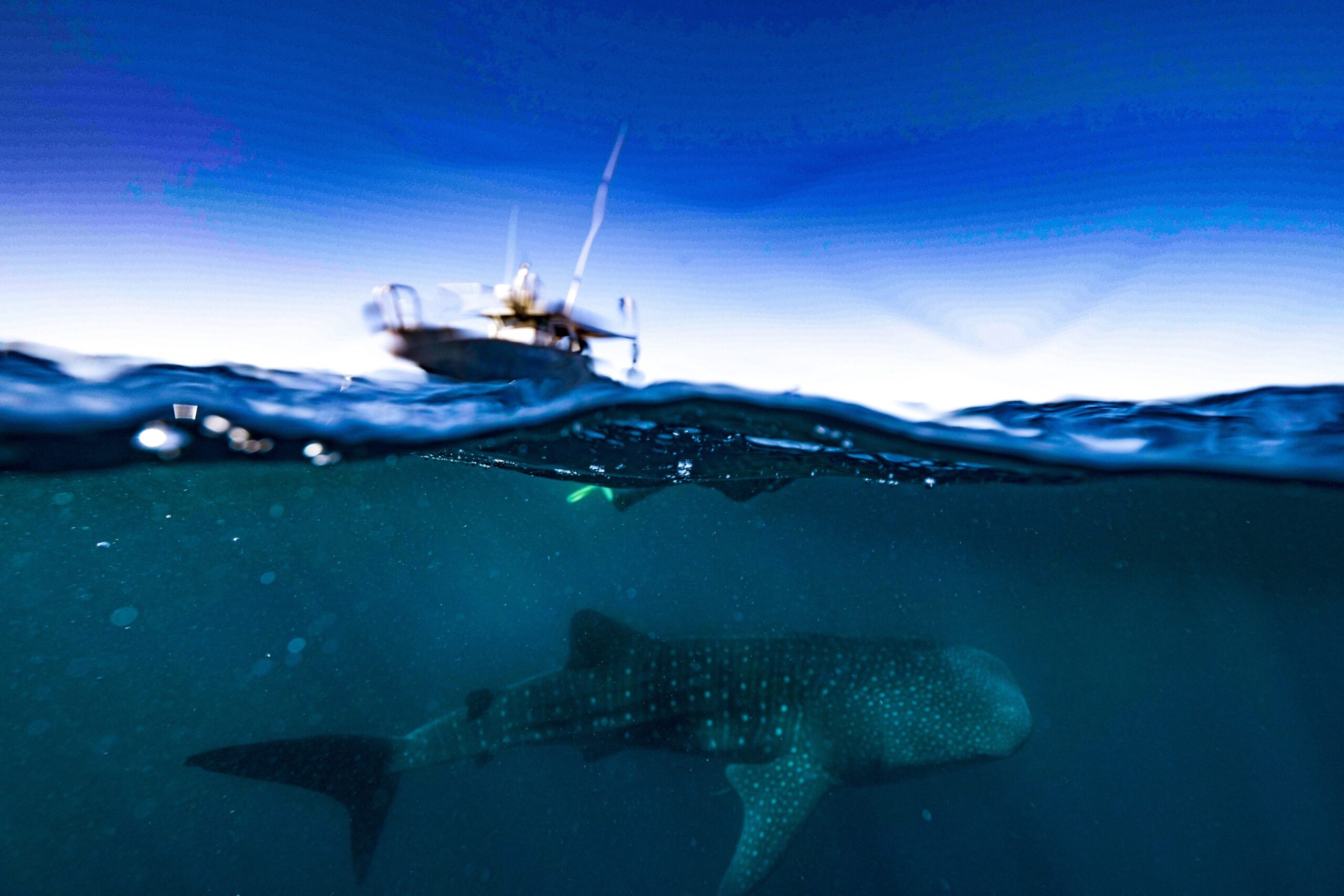
Barry says “their wide range of (serial) feeding strategies (from actively suctioning prey-filled water to sinking with their mouths open) means they can maximise feeding in different environments”.
“This flexibility likely explains how they thrive in tropical waters, where food is more scarce and patchy,” she says.
Footage from cameras attached to the dorsal fins of five whale sharks, slow feeding behaviours were found to be the most frequent and captured at all depths.
Research co-author and AIMS research scientist Dr Luciana Ferreira says the study also highlights the importance of Ningaloo Reef to the serial snacking whale sharks.
“These findings show how Ningaloo is a safe pantry for the sharks to snack and shows the importance of the ongoing protection for Ningaloo Reef,” she said.
A paper on this research has been published in the journal Marine Biology.
AIMS has been Australia’s tropical marine research agency for 50 years and conducts research for governments, industry and the public. Click here to visit their website at https://www.aims.gov.au/
MORE NINGALOO NEWS: Marine heatwave ‘is killing the reef’




