
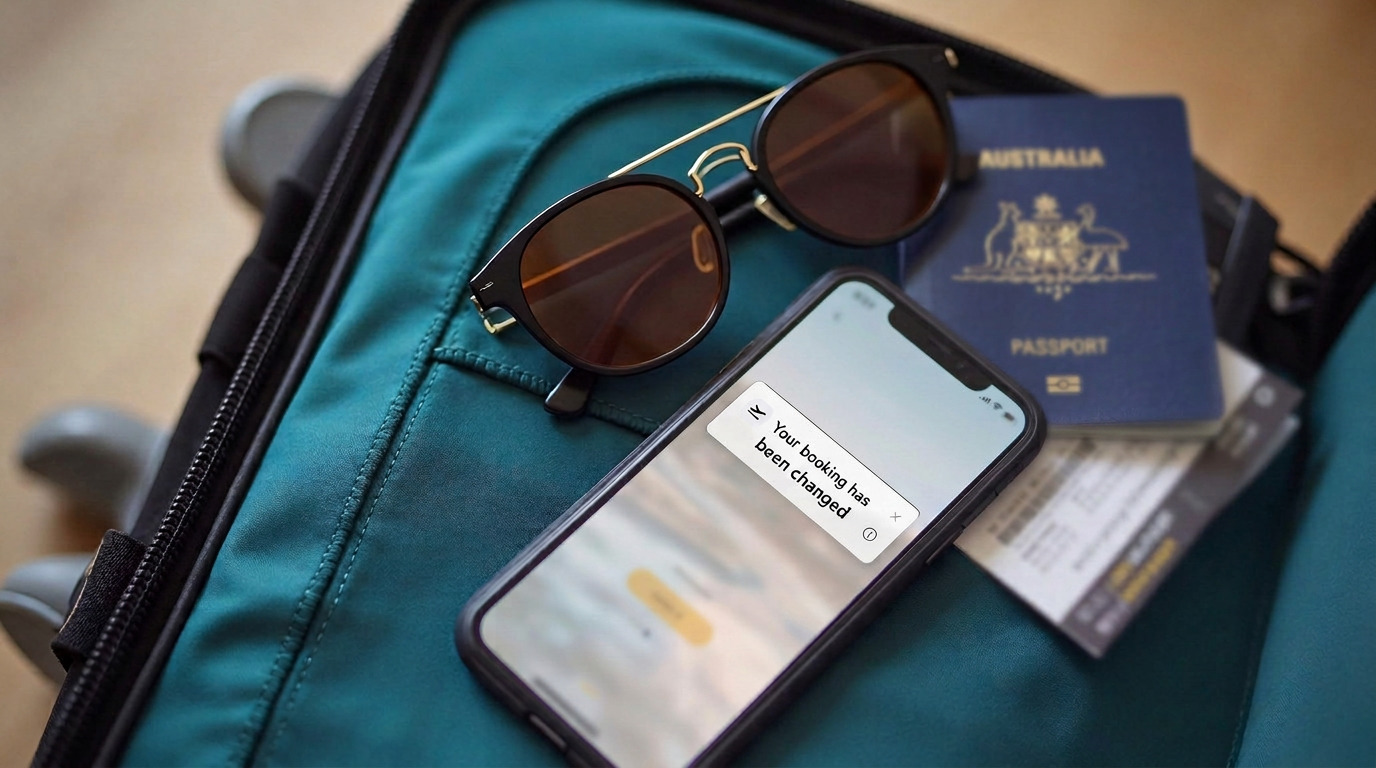
Travel scams are doing the rounds again as Australians start booking their summer getaways. The government’s Scamwatch service has issued a timely warning: scammers don’t take holidays, but they can ruin yours.
The alert was published on 16 November by Scamwatch and Smartraveller, the Department of Foreign Affairs and Trade’s travel advice service. It says criminals are going after travellers at every stage of a trip: planning, booking, the journey itself and even the trip home.
The warning comes against a grim backdrop. Australians lost $2.18 billion to scams in 2025, up 7.8 per cent on the year before, according to figures the ACCC released in March. Phishing, the kind of fake message behind many travel scams, was the scam most often reported to Scamwatch last year, with more than 65,000 reports.
Here are the four travel scams Scamwatch says to watch out for.
1. Fake flight and booking updates
You get an urgent text or email saying your flight has been cancelled or your booking has changed. It looks as though it has come from your airline, airport, travel agent or hotel. It wants you to click a link, hand over your details or pay a fee to sort it out.
Scammers also set up fake customer support lines. A quick search for “airline help” could put you on the phone with a criminal rather than a real agent.
2. Frequent flyer scams
These messages promise bonus points, warn that your points are about to expire or say your account needs updating. The link leads to a convincing fake login page built to steal your password or card details. One example Scamwatch shared was a fake Qantas email threatening to close the reader’s account if they didn’t act by a set date.
3. Copycat visa websites
Lookalike visa and entry-requirement sites often appear high in search results. At best, they charge fees you never needed to pay. At worst, they walk off with your passport details, payment information and personal data. Scamwatch recommends checking entry requirements through Smartraveller instead.
4. “Hi Mum, I’m in trouble overseas”
Not all travel scams target the traveller. Some go after the family back home. Scammers pose as a friend or relative, usually on a messaging app such as WhatsApp. They claim they’ve lost their phone or got into strife abroad, and urgently ask for money.
How to spot travel scams before they cost you
Scamwatch says the warning signs are much the same across all four scams:
- unexpected messages asking you to click a link or call a number to update your booking or payment details
- pressure to pay quickly or to share passport, banking or personal information
- visa fees you can’t confirm through official government sources
- urgent requests for money from someone who says they need help while travelling.
Its advice follows a simple “Stop. Check. Protect.” approach.
Stop: Don’t rush to reply to unexpected messages about flights, visas, accommodation or payments. Book only through official websites and providers you trust.
Check: Log in through the provider’s official app or website, or ring a number you’ve looked up yourself, never one from the message. If a family member asks for money, call them on their usual number or ask a question only they would know the answer to.
Protect: If you’ve paid a scammer or shared your card details, contact your bank straight away. If you’ve given away identity details such as your passport number, call IDCARE, the national identity support service, on 1800 595 160.
Don’t let travel scams spoil your summer
The safest habit is also the dullest: slow down. Scammers rely on panic, especially when a holiday you’ve saved for all year seems to be at stake. A two-minute check in your airline’s app is far less painful than a drained bank account at the airport.
You can report travel scams at scamwatch.gov.au and check the visa and entry rules for your destination at smartraveller.gov.au.
Also read: Queensland Designated Precincts Grow to 4 in Police Crackdown




