
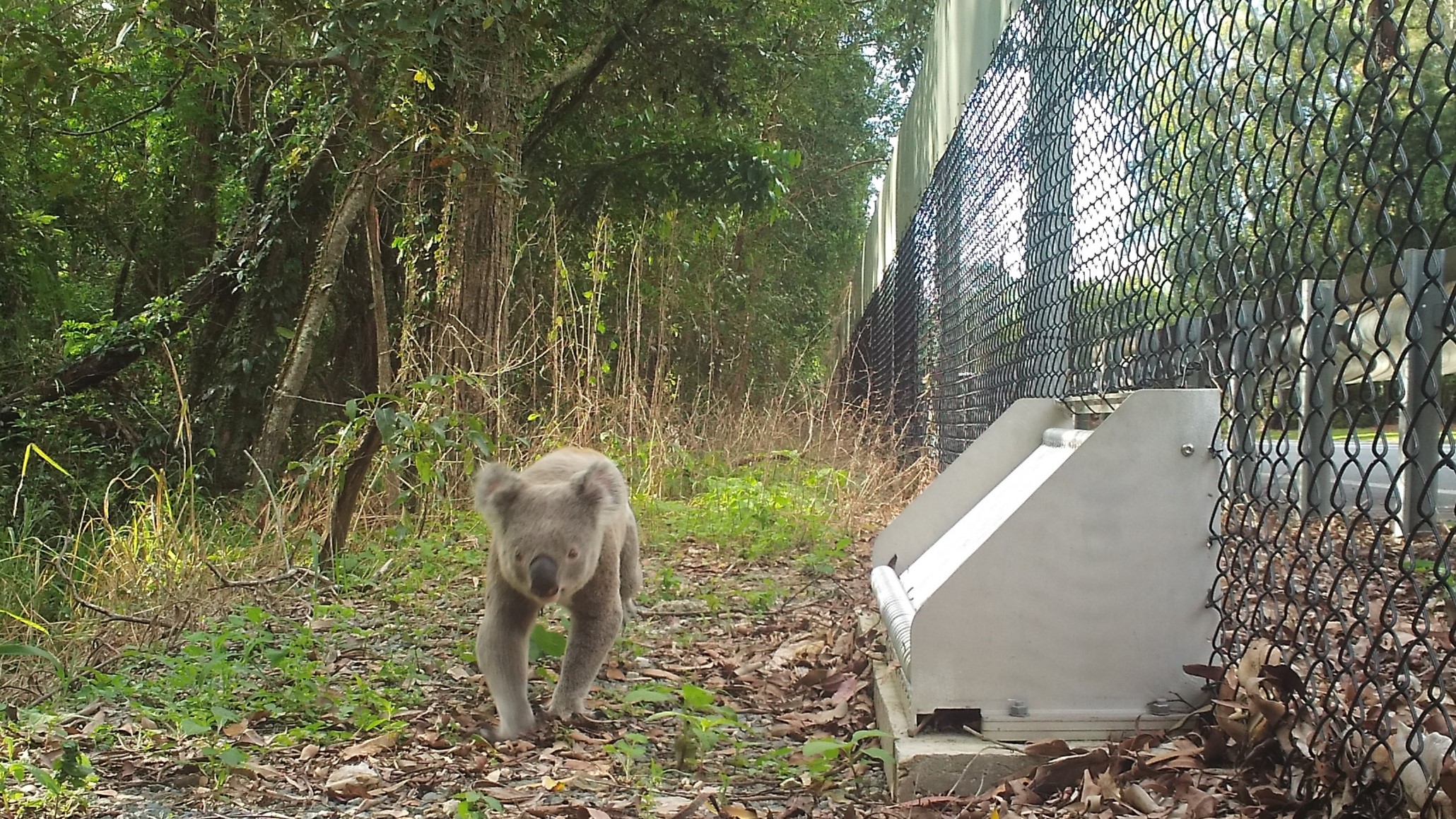
New escape hatches installed across Moreton Bay City are allowing koalas and other animals to safely cross roads one-way.
Council says 49 hatches have been installed at wildlife hotspots such as Youngs Crossing and Samsonvale Road at Joyner; Kremzow, Lilley and Old Northern roads at Cashmere; and Gympie Road at Petrie and Lawnton.
The installations follows a 12-month trial by local business Endeavour Veterinary Ecology (EVE).
During the trial of 16 hatches across seven council roads, no koala deaths were recorded at crossings.
Council says camera footage show koalas and other animals like echidnas and bandicoots using the hatch.
Mayor Peter Flannery says the hatches will allow them to help protect koalas and other animals.
“EVE’s fauna hatches are helping us do just that,” he says.
“The trial showed us that they provide effective exits for native animals when navigating roads, preventing them and road users from being injured or killed.”
EVE’s Environmental Manager for Technology Natasha Banville says the program shows how councils can help to develop such wildlife equipment.
“What started as a trial to understand how koalas navigate roads has evolved into the Fauna Escape Hatch program through ongoing monitoring, design refinement and collaboration with council,” she says.
“It is very encouraging to now see they are installed more broadly as part of council’s road infrastructure, helping reduce wildlife road mortality and improve connectivity across our road networks.”
Council was able to roll out the devices with a grant from the state government.
Click here for our earlier story.HATCHES AND SIGNS
The council is also working with EVE on testing larger hatches for the animals like kangaroos on Bribie Island, a hotspot for collisions.
Moreton Bay Council is continuing to look at other sites to install koala hatches including in Kallangur and Caboolture.
It says it will also install more seasonal road signs in collision hotspots.
Council earlier granted a 10-year community lease for the Moreton Bay Wildlife Hospital to operate the city’s first dedicated wildlife hospital on its land.




