
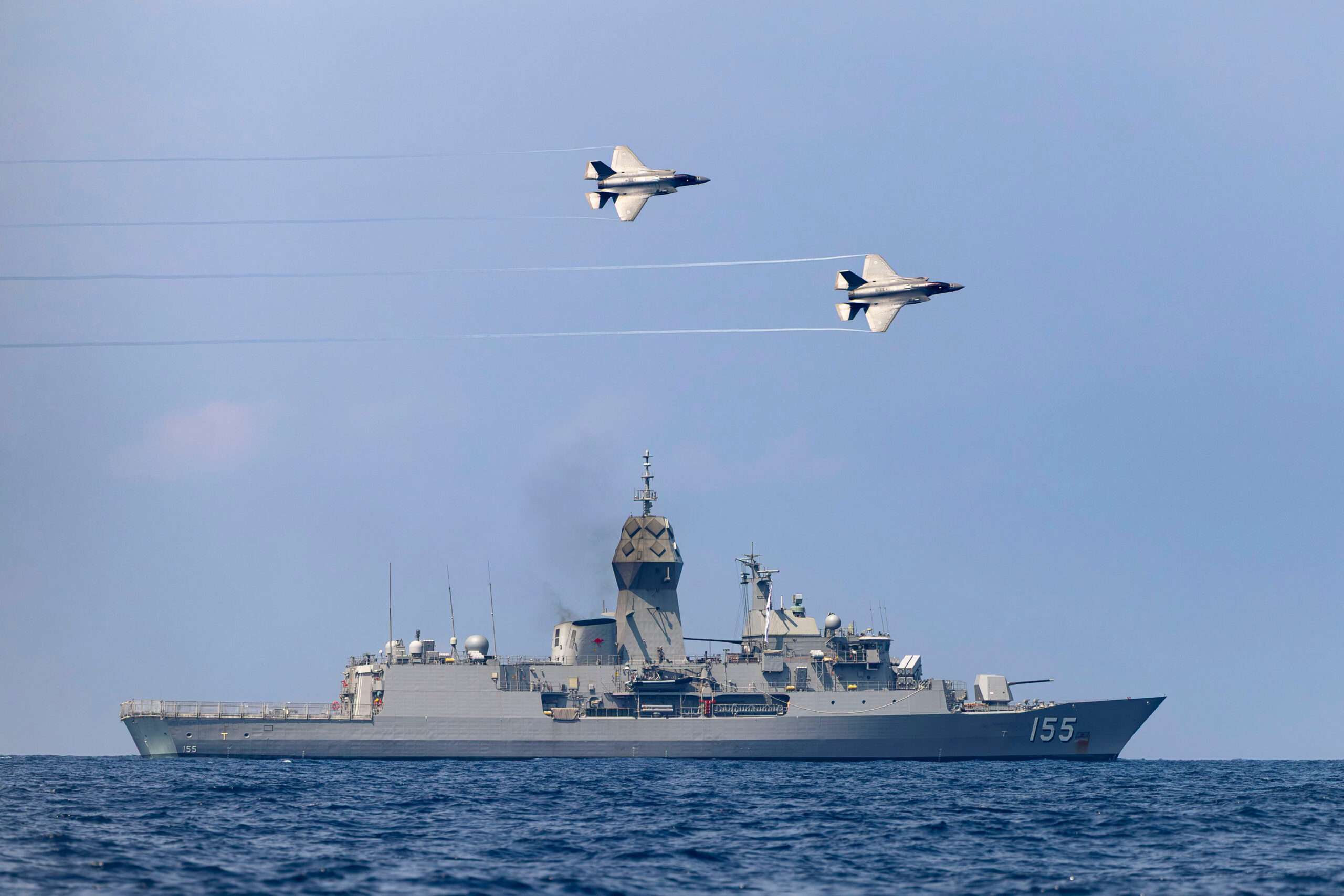
Defence spending will increase by an extra $53 billion in 10 years and account for 3% of Australia’s Gross Domestic Product by 2033.
The 2026 National Defence Strategy released by the federal government today says the GDP allocation will bring Australia in line with NATO countries.
It falls short of the 3.5% target that the US wants for Australia while Washington DC had pushed NATO countries to lift defence spending to 5% of GDP last year.
An extra $14bn will be spent over four years towards ‘upgrading’ an integrated military through greater strike power and wider use of next-generation technologies like drones and AI systems.
Click here to read the full document
GLOBAL DEFENCE CONCERNS
Defence Minister Richard Marles says the country is heading into a more unpredictable, and dangerous, era that challenges our security.
“International norms against the use of force and coercion are weakening. The coming decade is likely to be defined by increased tension and volatility,” he says pointing to greater tension between China and the US.
“Wars in Ukraine and the Middle East demonstrate how conflict can disrupt trade, undermine economic growth and drive supply chain shortages.”
The Department of Defence says the new strategy will increase self-reliance, prioritise ‘next gen’ capabilities based on the Ukraine and Iran wars, strengthen this country’s defence industrial base, build stronger, more diverse overseas industrial alliances; bolster national civil preparation in case of regional or global disruption; and increase co-ordination with regional partners.
The extra $53bn in funding will go towards:
- nuclear-powered submarines (AUKUS);
- greater naval strike power;
- extend the reach of long-range systems;
- merge air and missile defence capabilities;
- increase the use of uncrewed land, air and marine vehicles;
- boost defences against uncrewed aerial attacks;
- build a multi-orbit satellite communications system.
TIME FOR GREATER RESILIENCE
Australians will need to come to terms with greater defence spending, says the Chief of the Australian Defence Force, Admiral David Johnston.
He made the comment in a speech to an ANU National Security College conference in Canberra at the end of last month.
“One of the realities we must confront is that many systems we rely upon have been optimised for efficiency rather than resilience,” he says.
“Global supply chains minimise cost and maximise speed in stable conditions but they can quickly fail when placed under stress.
“Strengthening resilience may mean accepting higher peacetime costs – building redundancy, diversification and stockpiling – measures that can appear inefficient until they are urgently needed.”
The admiral says Australia’s connection to the rest of the world has its benefits – and threats.
“In 2024 and 2025, the globe experienced more state-on-state conflict than at any time since the end of World War II – that interconnectedness that we enjoy also has serious implications for our national security,” he says.
He says technology has made our day-to-day lives “increasingly vulnerable” to disruption hence a new emphasis on resilience over efficiency.
“… our national security resilience is a shared responsibility of everyone who calls Australia home.”
Admiral Johnston says Australia’s geographic isolation served it well in the past but no longer.
“We have seen this quite clearly with the current conflict in the Middle East,” he said.
“Australians immediately felt the economic pain of disruption to shipping in the Strait of Hormuz through increased fuel prices, disrupted critical supply chains and the consequential interest rate rise.”
Admiral Johnston says Australian’s supply chains, like shipping and fuel, remains “highly vulnerable” to disruption.
MORE DEFENCE NEWS: Army building amphibious landing craft fleet




