
Bass Coast councillors in Victoria have had enough of continually replenishing their beaches and wants funding help.
The council wants Canberra to impose a levy on large fossil fuel companies to cover the rising costs of mitigation work done by local government and communities nationwide.
Bass Coast Shire councillor Mat Morgan successfully moved a motion on April 15 (5-4 in favour) for the Wonthaggi-based council to approach Canberra.
The motion calls for a federal parliamentary inquiry into the 2025 National Adaptation Plan, specifically on a lack of extra funding to help councils who are bearing the brunt of repair costs.
“We’ve been losing up to 10 metres of beach every year, and (Bass) council has had to truck ‘sacrificial sand’ up and down the beach after every storm,” Cr Morgan says.
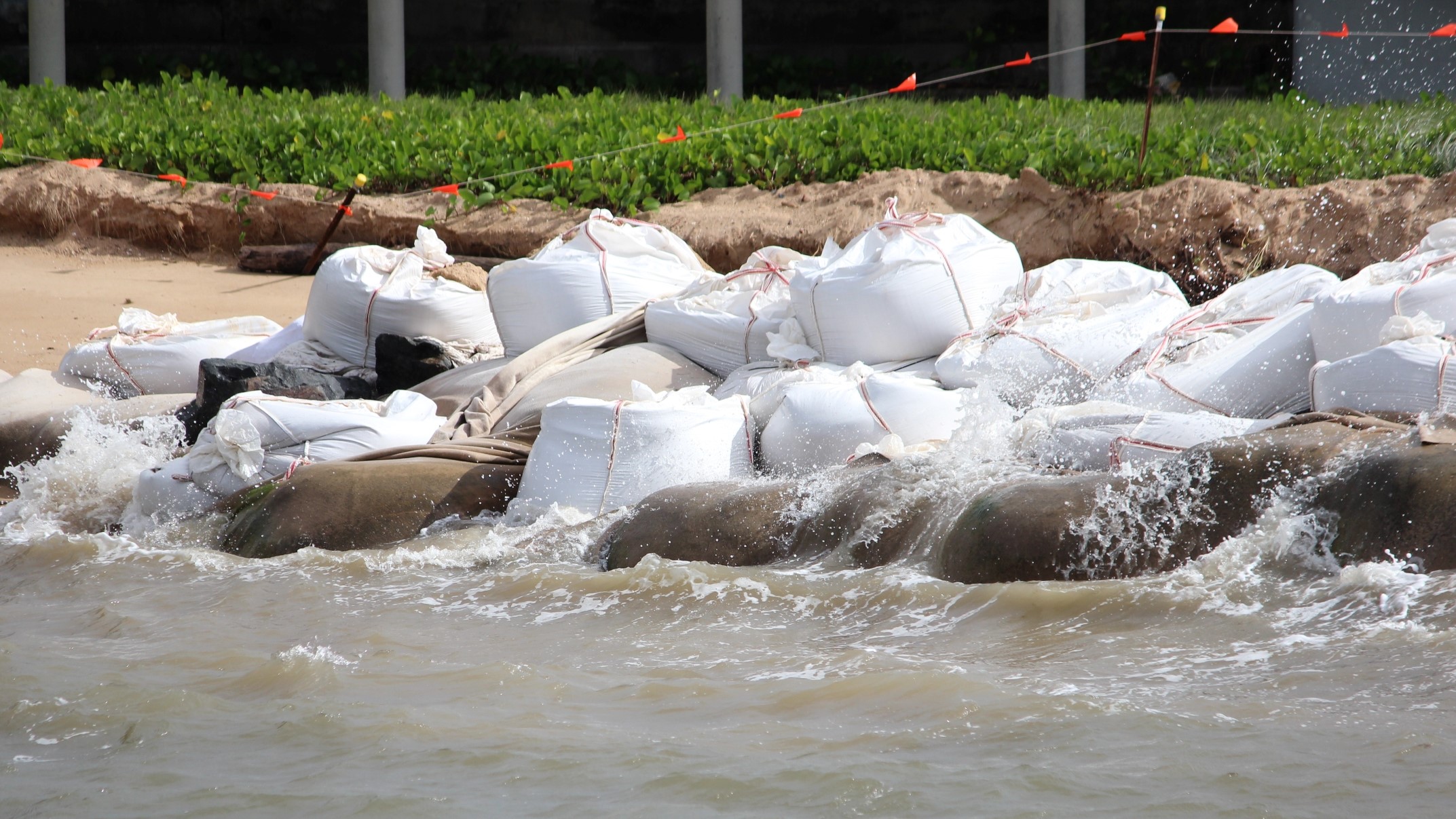
“We’re watching coastal homes become uninsurable; we’re putting up sand and rock bag walls while fossil fuel companies pocket billions in profits.
“When I was a kid, I was always told if I broke something, I’d have to pay for it from my pocket money. Well Exxon, Santos, Woodside — how about it?” he asks.
He says a national climate risk assessment predicts that $611 billion will be wiped off the national property market by 2050 with 750,000 properties likely to be uninsurable.
RELATED STORY: Homes literally on the move in North Carolina, USA
BASS SHIRE PROPERTIES
“You know which properties they’re referring to? Silverleaves, Inverloch, Grantville — in every one of our council wards,” Cr Morgan says.
“People in our coastal communities are watching their house values decrease, not knowing whether to cut their losses and sell or hold on in hope of a buyback scheme,” says Cr Morgan.
Aileen Vening is a retired geography teacher from Wonthaggi who has been documenting Inverloch’s coastal erosion for 15 years.
“To witness the acceleration of erosion recently has been confronting. Since 2013, the beach at Inverloch moved 80 metres inland and 80% of vegetated dunes have been lost in the last 10 years,” she says.
“100,000 cubic metres of sand is about to be dredged from Anderson Inlet and piped back to the surf beach just to hold the line — that is only a middle-term fix if we are lucky enough to avoid another major storm.”
She says councils and residents must also deal with the economic and mental health stresses of not knowing what the next major storm will bring.
MORE COASTAL NEWS: Residents beating a retreat from rising sea levels




