
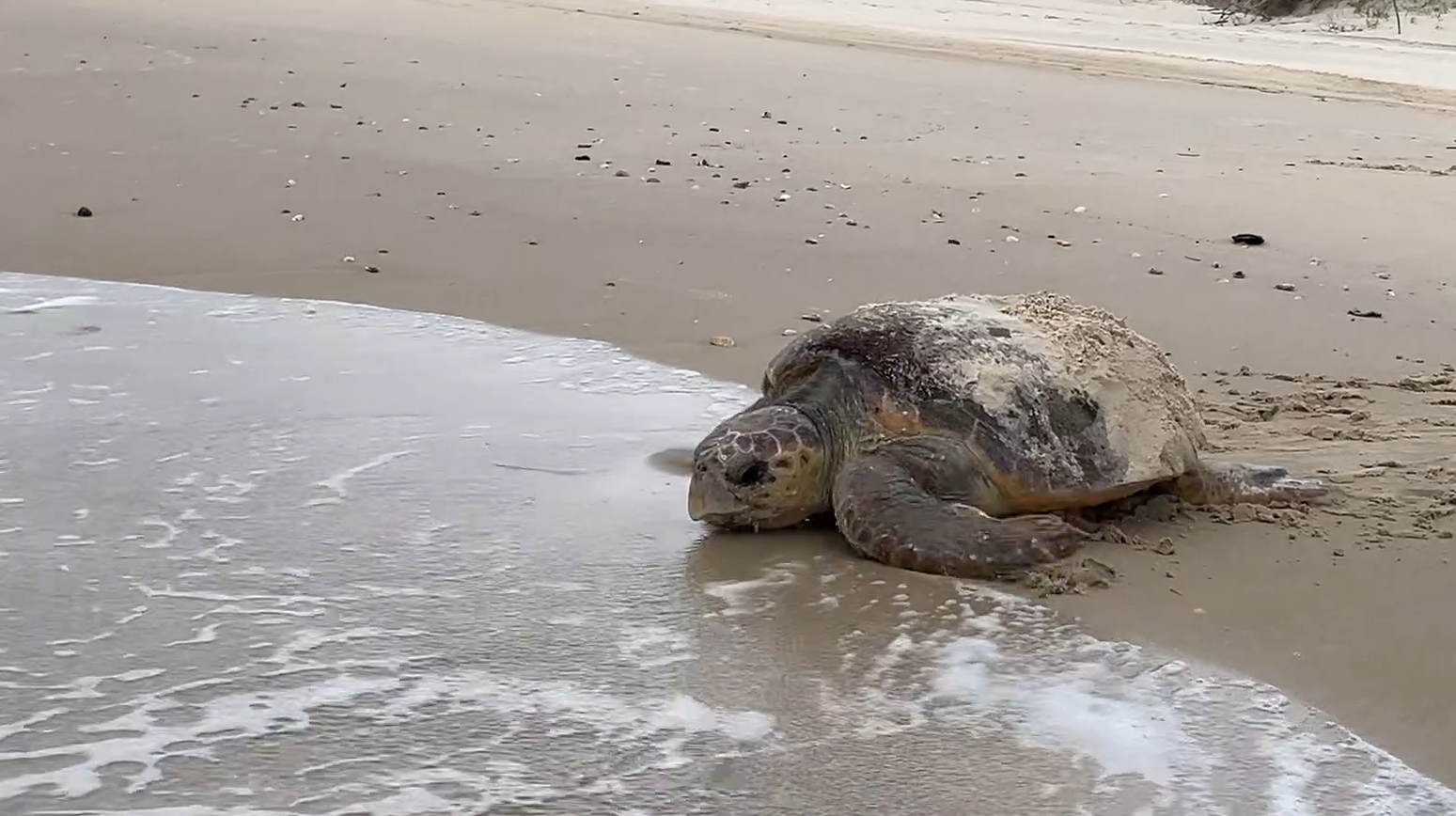
Cooling beaches is helping Moreton Bay’s loggerhead turtles to produce more males and possibly avoid breeding themselves into extinction.
Ahead of World Turtle Day on Sunday, May 23, council announced another successful turtle nesting season.
With six of the world’s seven marine turtle species found in Moreton Bay, this season there were 26 loggerhead turtle nests recorded on Bribie Island, it says.
The turtle can lay multiple ‘clutches’ during nesting season (each clutch averages 125 eggs) but warming sands caused by climate change will lead to more females then males being born.
Mayor Peter Flannery says council is helping ensure breeding season is protected from warmer sands with the help of the Bribie Island Turtle Trackers.
CLICK HERE > Learn more about loggerhead turtles
COOLING BEACHES
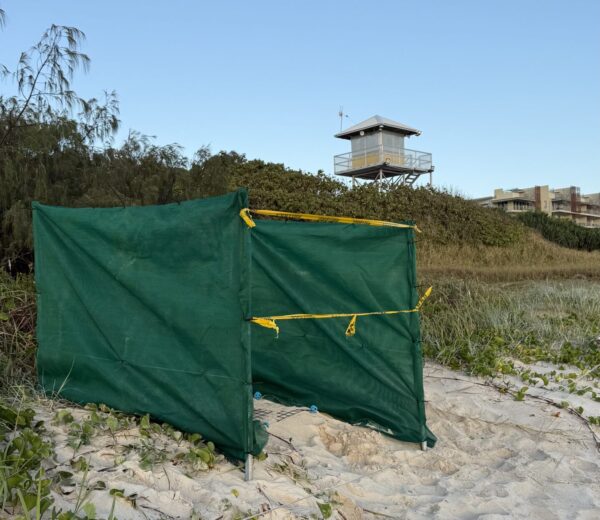
Efforts include installing shade structures for cooling the buried nests, changing lighting near nesting beaches and community education.
“We’ve also been collecting sand temperature data on our nesting beaches with results showing promising temperatures for producing more male hatchlings,” Flannery says.
“Temperatures of our nesting beaches this season averaged at 27.39 degrees Celsius in non-shaded areas and 26.54⁰C in shaded areas.
“We know that in Far North Queensland, sand temperatures of above 29.1⁰C are producing mostly female hatchlings.”
Council is working with Bribie Island Turtle Trackers volunteers, who monitor beaches daily during the nesting season and provide data on nests that is shared on a live map to guide any council maintenance or project works.
Shade structures have been installed around vulnerable nests identified by volunteers to give hatchlings the best chance of survival.
According to council, turtle hatchlings rely on environmental cues to head to the ocean after emerging from nests. They can become disoriented by artificial lighting and head inland instead using the Moon to guide them to water.
HOW TO HELP
Simple ways you can help nesting turtles and hatchlings include:
Keep off sand dunes to avoid erosion or hitting a nest.
If you live or holidaying next to the beach during nesting season, turn off outdoor lights and block light spillage from 7:30pm.
Keep dogs on a leash or within an approved off-leash area and off the dunes.
Follow directions in go-slow areas for turtles and dugongs; keep vessels at low speeds in estuaries, sandy straits, and shallow inshore areas.
Only use legal crab pots and inspect them regularly to ensure turtles aren’t caught in pots or float lines.
Remember that run-off from your property enters stormwater drains, which ultimately ends up in Moreton Bay.
Join a local volunteer or Bushcare group. Supplied: Moreton Bay City Council.
RELATED EARLIER STORY: Moving eggs to reverse fall in male hatchlings




