
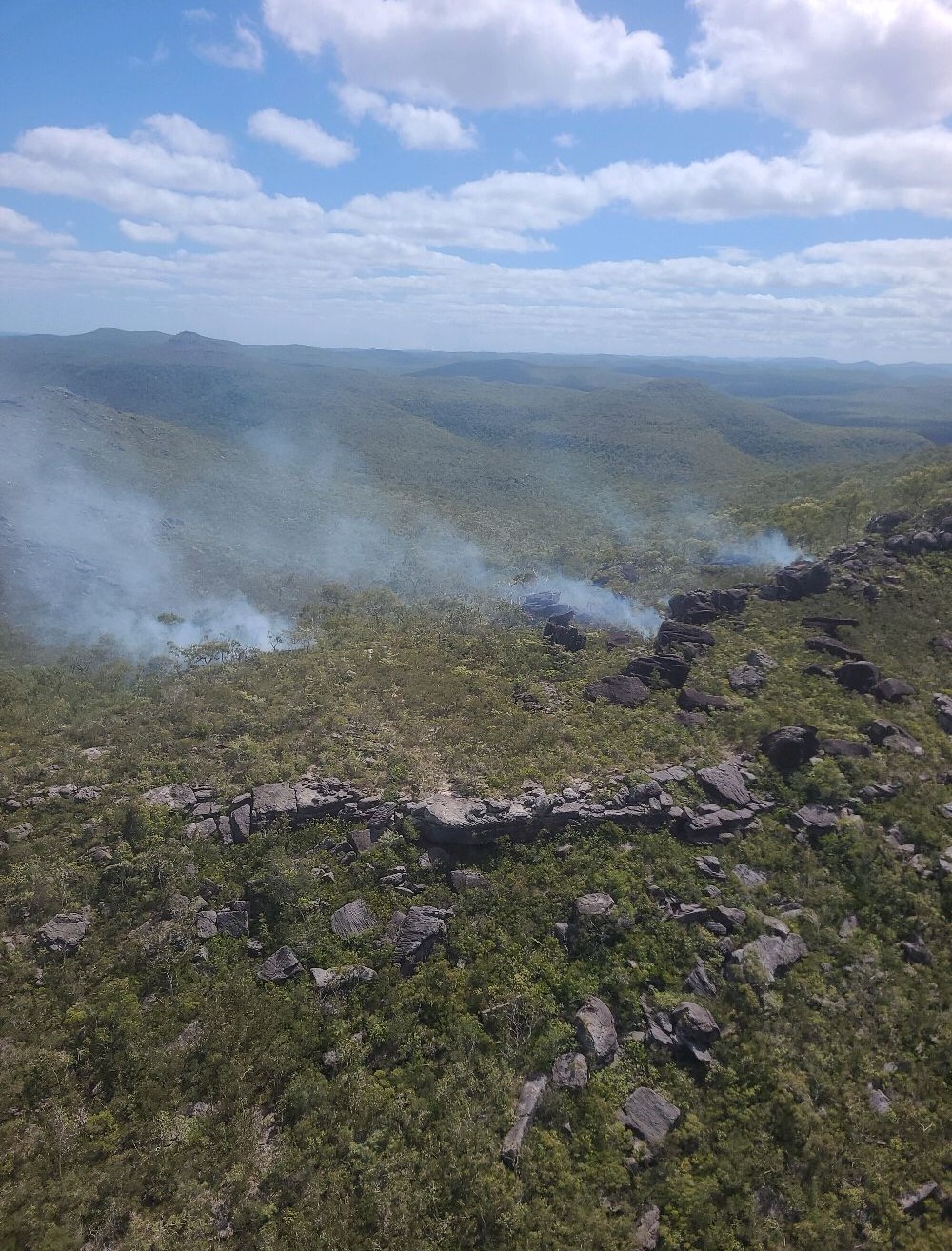
A major cultural burn in remote northern Queensland country has brought to light previously unknown artwork galleries.
The discovery was made among sandstone escarpments on Cape York Peninsula Aboriginal Land (CYPAL) during burns.
Their location will remain undisclosed to give traditional custodians the chance to learn more about them, the state government says.
Rangers from the Queensland Parks and Wildlife Service (QPWS) were working with the Balnggarrawarra, Buubu Gujin, and Waarnthurr-iin Aboriginal corporations as part of the Yugu Minthil Cultural Burn program at the time.
BURNING WORK
QPWS ranger Josh Smith says the collaboration and planned burn program is vital to the ongoing protection of cultural heritage sites across Cape York.
“This work supports the ongoing care and protection of cultural sites across the Cooktown Management Unit, ensuring these important places are looked after for generations to come,” Smith says.
Director of Waarnthurr-iin Aboriginal Corporation Steven Harrigan says the burning of Country helps to protect cultural heritage sites.
“I’m really proud to be listened to and given the opportunity to work on Country and be out there,” Harrigan says.
“It has been a long time of waiting but finally we are out here given a chance and being respected.”
Across Muundhi (Jack River), Melsonby (Gaarraay), Biniir, and Ngaynggarr national parks on CYPAL, about 500 hectares were assessed culturally with brush cutting, walk-through ignition and ground-based burning.
These efforts are part of a wider Southern Cape fire program, which successfully burnt 63,000 hectares across 227,686 hectares of protected estate.
The cultural burns allows for precise, fine-scale protection for sensitive cultural places through early season burns, the government says.
It also improves understanding of fire behaviour and boosts safer and more effective aerial burns as well as foster a stronger cultural connection and knowledge transfer for Indigenous rangers.
MORE QPWS NEWS: Invasive rates wiped out on island




