
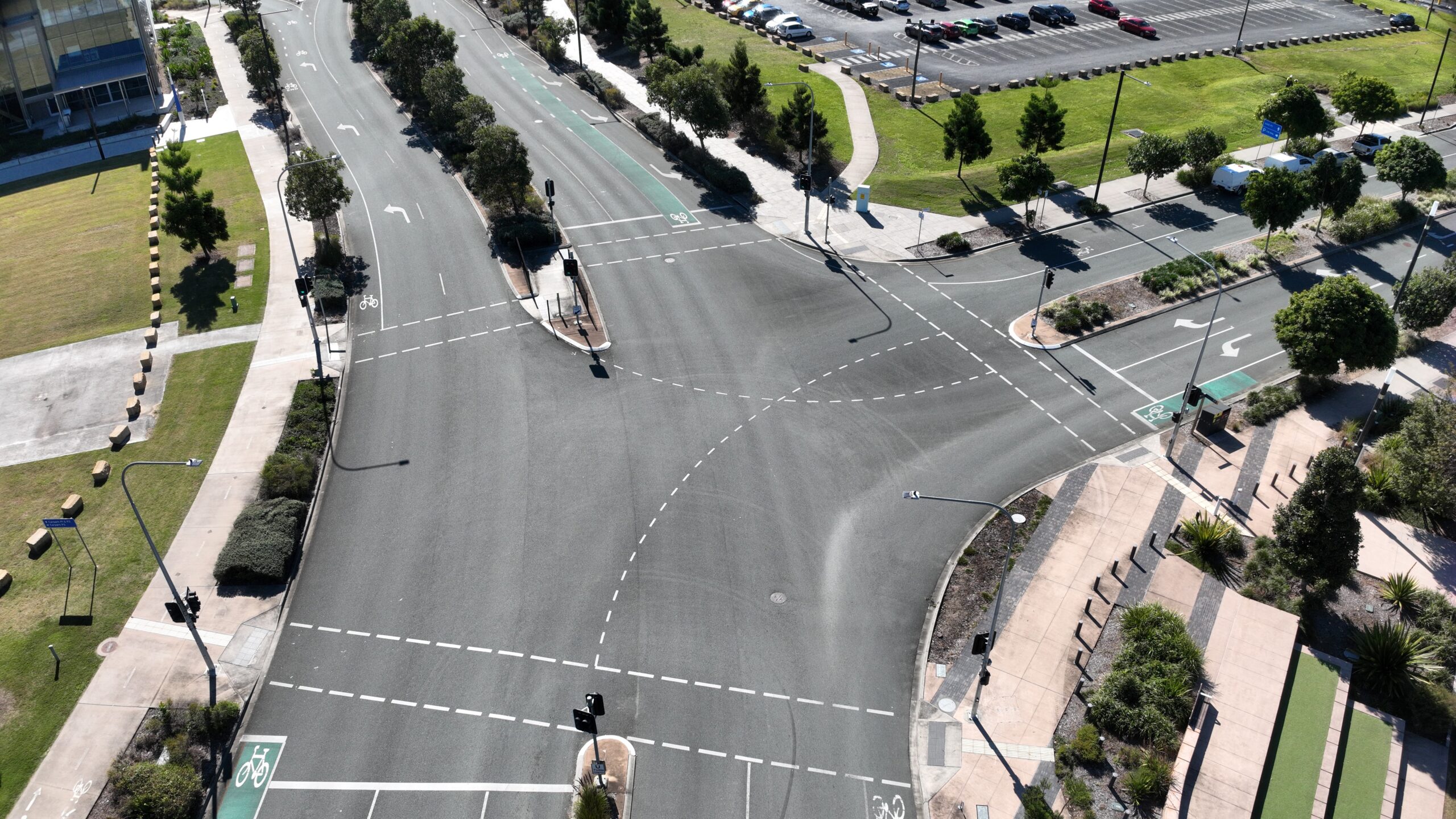
New AI traffic lights are to be tested at an intersection in Petrie, northern Brisbane, later this year as part of efforts to reduce drivers’ wait times at red lights.
Moreton Bay Council says if the trial at the Moreton Parade-Paper Avenue intersection succeeds then the technology will be tested at a busier intersection.
The advanced traffic lights should reduce delays and wait times at intersections.
Mayor Peter Flannery says that advanced algorithms will be used to manage traffic flow according to peak usage and not a programmed time.
“This means that higher traffic flows of vehicles, including public transport, can be prioritised dynamically throughout the day,” he explains.
“There is the potential to substantially reduce the time motorists spend at red lights, which is often constrained by legacy traffic control methods.
“This presents the opportunity to reduce emissions as vehicles will idle less,” Flannery says
“For the first time, traffic signals can be adjusted by individual movements using advanced traffic detection sensors so congestion can be better managed including when vehicles flood our local road network.”
OLD AND THE NEW: The country’s signal controls is phase-based and dates to the 1980s. This operates on a pre-determined sequence and group of traffic lights on a ‘first come, first served’ basis. The new signal hardware runs on a ‘movement-based’ control system, managing individual movements without the need for a pre-determined sequence or fixed group of lights. Source: MORETON BAY COUNCIL
DIFFERENCE WITH NEW AI
Council says it will reduce the transition time between the different traffic lights while maintaining safe margins at the Petrie intersection.
This means drivers will spend less time waiting during a ‘all-red’ interval at an empty intersection.
Installing the technology involves replacing traffic signal controllers at intersections with next-gen signal hardware.
The hardware will decide the most optimal way to control traffic even with in-ground loop detectors which is the existing method of vehicle detection.
Council will install advanced vehicle detection sensors to collect and categorise traffic data such as road user types (cars, trucks, pedestrians, cyclists) and predict traffic flow.
MORE COUNCIL NEWS: 4.7% rates increase for residents




