
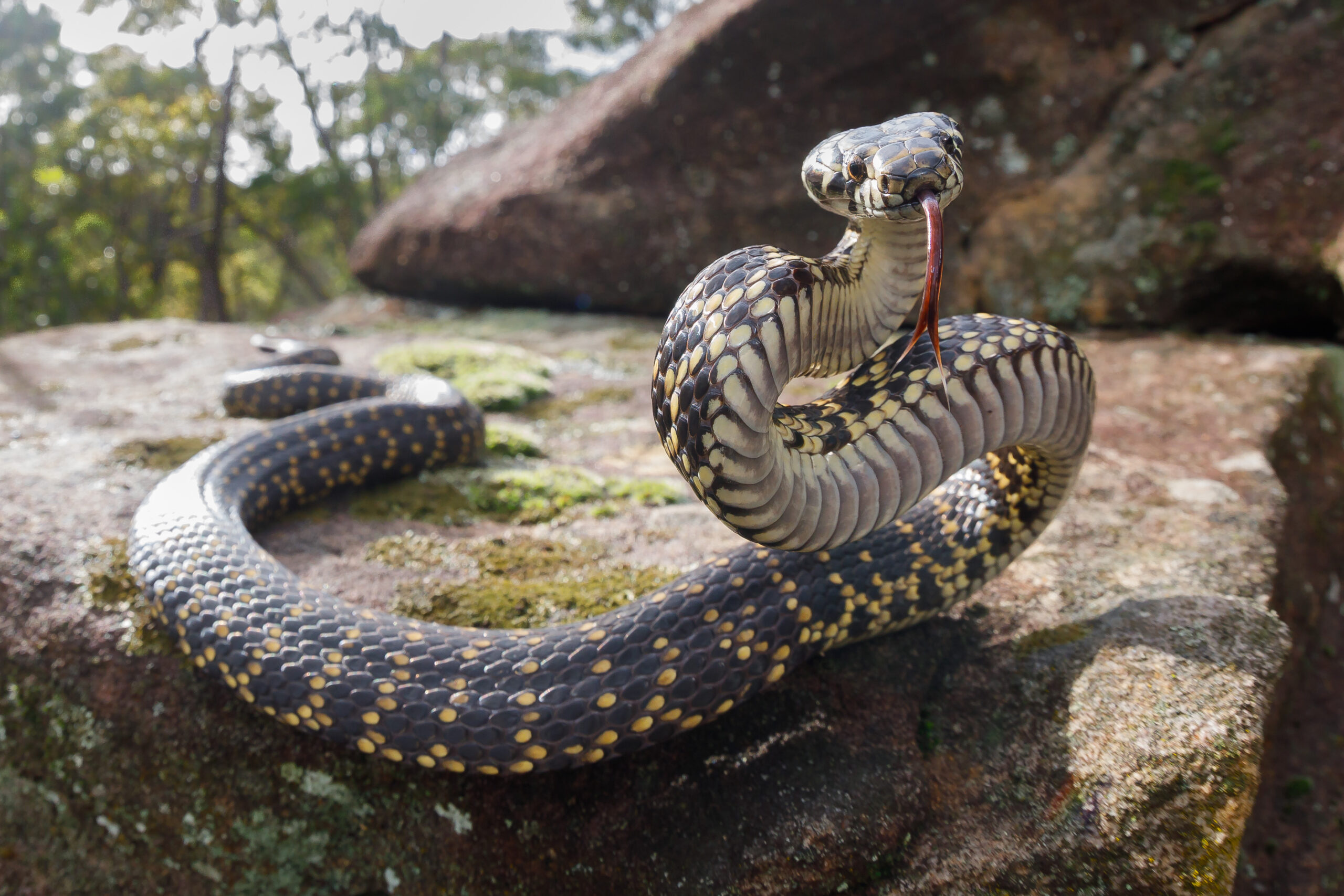
Lizards and snakes are disappearing twice as fast than previously thought, says new research from Monash University.
A university review found that about 127 species (or just over 13%) of Australian lizards and snakes are likely to be facing extinction, almost double previous estimates.
Published in Pacific Conservation Biology, the review involved top reptile experts from across Australia to assess what progress has been made since the 2017 Action Plan for Australian Lizards and Snakes was adopted.
The findings reveal worsening threats, inadequate monitoring and weak conservation action despite growing knowledge of reptiles with many species not yet adequately assessed.
Rarer species are 5.4 times more likely to be threatened than more well-known species while those yet to be formally studied are three times more likely to be under threat.
LIZARDS-SNAKES CONSERVATION ‘LETDOWN’
The review’s author, Professor David Chapple, from the university’s School of Biological Sciences, says their findings reveal a failure to keep pace with the conservation needs.
“Australia is home to around 10% of the world’s lizard and snake diversity yet they remain one of our least understood and least monitored groups of vertebrates,” he says.
“Without co-ordinated conservation, sustained monitoring and better investment in research, we risk losing species before we fully understand them.”
The review identifies an escalating combination of pressures driving declines, including climate change, more severe bushfires, habitat destruction, invasive predators (like cats and foxes), invasive grasses, disease and emerging environmental threats.
The Monash University review also outlines 11 recommendations to strengthen conservation efforts nationally.
Senior author and researcher Jules Farquhar says the review demonstrates how quickly conservation challenges evolve.
“The threats facing Australia’s reptiles are becoming more complex and more intense,” he says.
“This review provides an evidence-based roadmap for where governments, researchers and conservation managers need to focus their efforts if we want to prevent further declines.”
Since the previous national assessment in 2017, Australia’s known lizard and snake species has grown by almost 12% as new species are discovered.
However, the researchers warn that newly described species are often poorly known and can be at greater risk because their distributions are typically small and their conservation status remains uncertain.
The authors argue that improving recovery planning, accelerating conservation assessments, increasing monitoring, supporting taxonomic research and conducting regular national reviews will be essential to protecting Australia’s globally significant reptile diversity into the future.




