
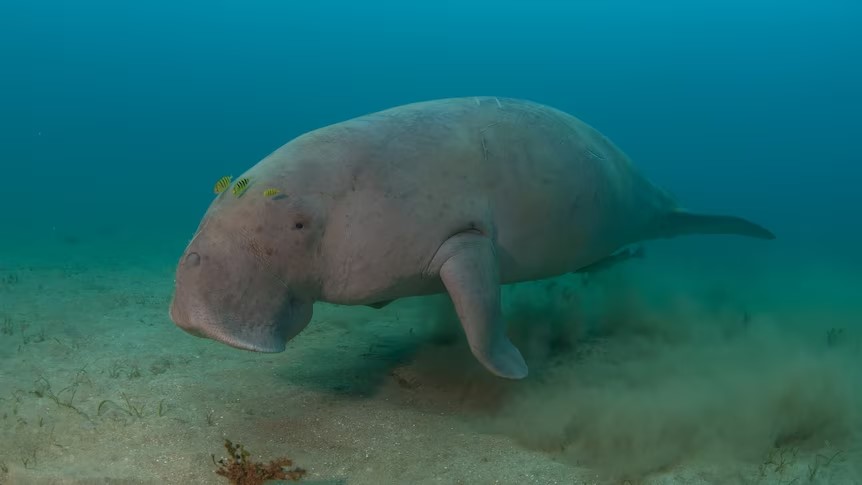
Dugong numbers in the Gulf of Carpentaria have been falling according to the first survey of their numbers in almost 10 years.
A 2025 Gulf aerial survey has revealed a sharp fall in numbers compared to the last survey, in 2007, researchers say.
In 2007, an aerial survey recorded 471 dugongs in the area compared to 305 in 2025.
The decrease is most concentrated in the southeast Gulf where the 2007 survey recorded 231 but only 63 in 2025.
In the Northern Territory, 242 of the mammals were recorded in 2025 compared to 240 in 2007.
Charles Darwin University’s Dr Rachel Groom and James Cook University TropWATER’s Dr Chris Cleguer want researchers to work with traditional custodians to protect the mammals.
DUGONG PROTECTION ‘EXTENDS TO SEA COUNTRY’
A spokesman for the Yanyuwa custodians, Shaun Evans says that protecting dugong populations means protecting sea Country as well.
“We need the resources and authority to look after Country properly,” he says.
“Dugongs are really important to (the) Yanyuwa people. They are part of our culture and our Country.”
Dr Groom says a co-ordinated response from traditional custodians, rangers, scientists and governments is key to protecting dugongs.
“The message from (a) Gulf dugong workshop in Borroloola was clear – traditional knowledge, ranger observations and science needs to be brought together,” she says.
“Communities need the authority, information and resources to respond when Country is changing.”
“The survey is an important warning signal but without collaborating to get the whole picture, we cannot confirm why this change has occurred.”
Dr Cleguer said regular monitoring is critical; the existing surveys provide only a snapshot 18 years apart.
“We cannot wait another 18 years for the next Gulf-wide survey,” Dr Cleguer says.
“Just as importantly, we need to support traditional (custodians) to lead ongoing monitoring of dugongs and Sea Country between these regional surveys.”
The 2025 surveys were funded by the federal and Queensland governments.
ABOUT THE: Dugongs are mammals who range in length from about 2.2 to 3.4 metres and weigh 230 to 420 kg. They are found in Madagascar, eastern Africa, Red Sea, Persian Gulf, India and western Pacific (including Palau). They can live up to 73 years and are believed to have inspired the myth of mermaids. Source: Encyclopedia Britannica




