
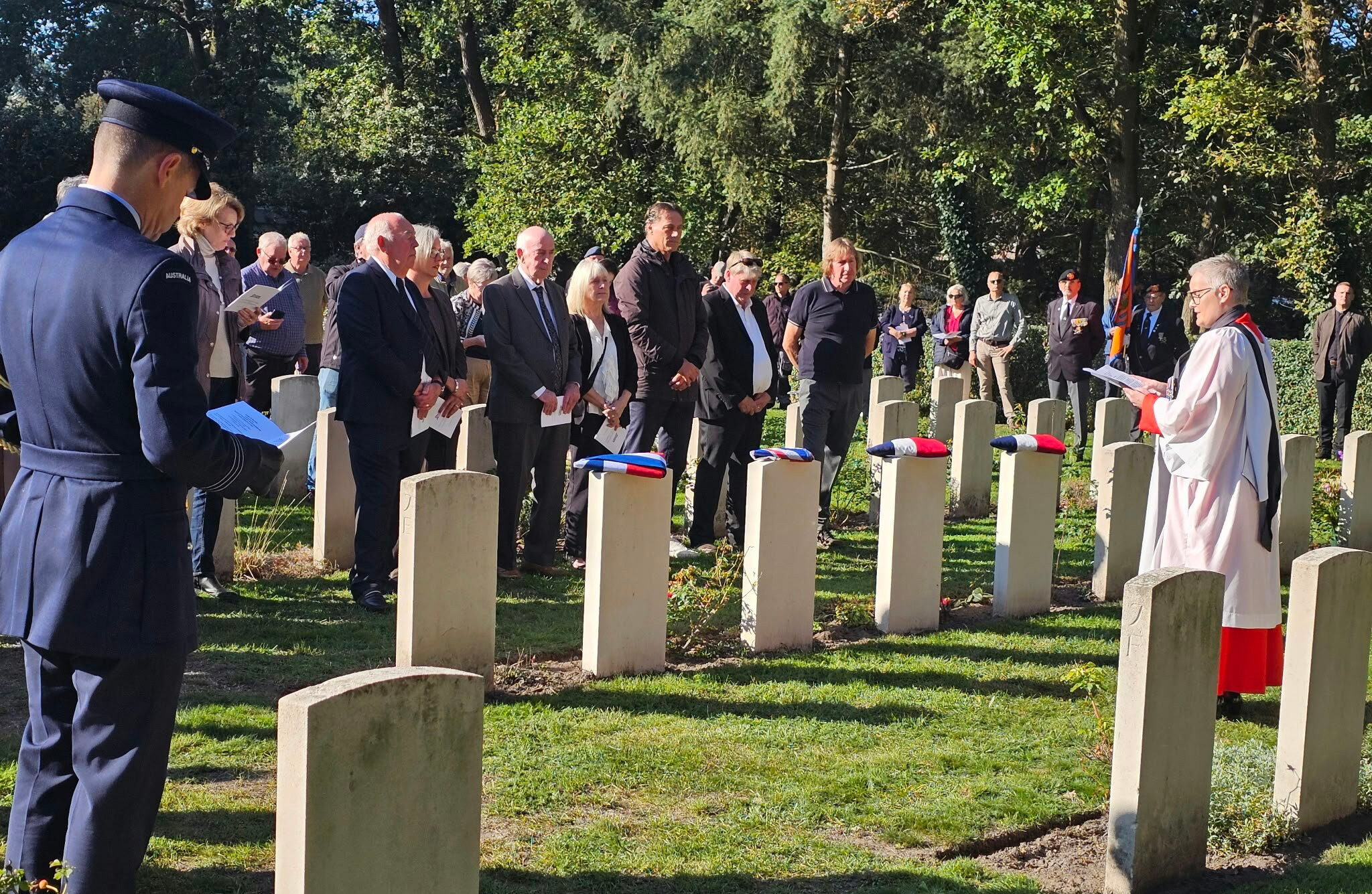
The headstone of the grave of an Australian pilot killed in WW2 now carries his name after a rededication ceremony was held following his official identification.
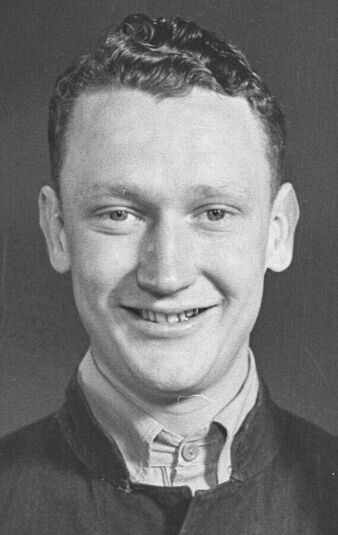
Royal Australian Air Force (RAAF) Flying Officer Leslie Markland Hough was born in Waverley, NSW, and enlisted in Adelaide in April 1942.
On November 8, 1944, he flew a four-engine Avro Lancaster heavy bomber for 218 Squadron (Royal Air Force Bomber Command), as part of a raid on an oil plant at Homberg, Germany.
His aircraft was hit by anti-aircraft fire and crashed near Hoerstgen, where four of the seven crew were killed.
His unidentified remains were buried by German forces with his three other crew and later reinterred in Venray War Cemetery, Netherlands.
He was identified by the RAAF while his crew (Pilot Officer John Tales and sergeants Henry Burnside and John Lawson) were identified by the RAF and also remembered during the headstone ceremony.
NAMED HEADSTONE MARKS END OF INVESTIGATIVE PROCESS
These identifications were a joint effort between the Commonwealth War Graves Commission, the United Kingdom’s Joint Casualty and Compassionate Centre and Air Historical Branch and the RAAF’s Historic Unrecovered War Casualties team.
Chief of Air Force, Air Marshal Stephen Chappell says the RAAF remains committed to the recovery, identification and burial of all personnel who died on service.
“Flying Officer (F/O) Leslie Hough was 26 years old and a long way from home when he was lost,” Chappell says.
“F/O Hough was one of almost 10,000 Australians who served with RAF Bomber Command over Europe during the Second World War.
“Today his headstone carries his name, and reminds us of the importance of conducting investigations to identify our missing aviators.
“No matter how much time has passed, we are committed to accounting for our wartime missing.”
Over the past decade, the RAAF identified seven missing aircraft, recovered two remains and accounted for 42 aviators deemed missing in action from World War II.
The search continues for more than 3140 missing aviators with no known grave, involving over 1000 missing aircraft from World War II and the Korean War.




