
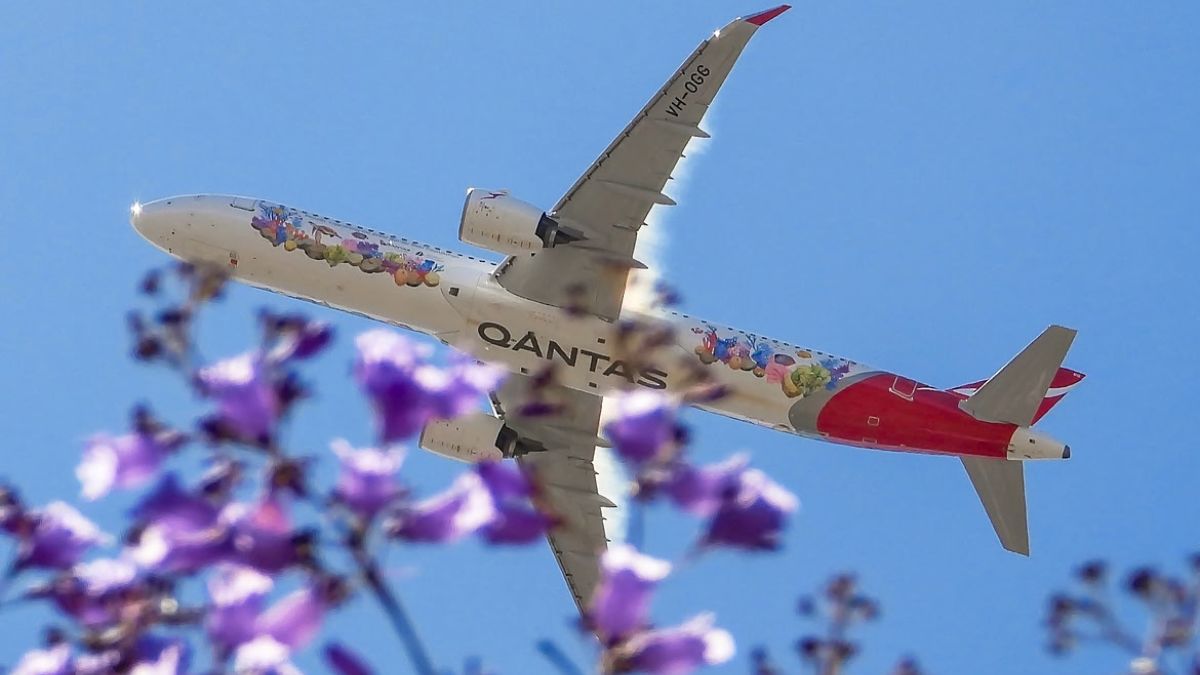
Qantas and Jetstar fare rises are set to continue into next year, and Australian travellers will also have fewer flights to choose from. On Friday, Qantas said it would cut more domestic capacity across its two airlines and keep raising fares to cover rising fuel costs.
Australian travellers should expect to pay more and have fewer flights to choose from next year. On Friday, Qantas said it would cut more domestic capacity across its two airlines and keep raising fares to cover rising fuel costs.
In a market update released before its annual general meeting in Canberra, the Qantas Group said domestic capacity at Qantas and Jetstar would be 4 per cent lower in the January–March 2027 quarter than a year earlier. That is double the 2 per cent cut it forecast in August.
The group now expects to spend about $3.75 billion on fuel in the first half of the 2026–27 financial year, up from the $3.6 billion it projected three months ago.
The airline said-:
“Based on forward curves, fuel prices are expected to remain elevated through FY27, The Group has and will continue to adjust fares and capacity in response to higher fuel costs.”
Why Qantas and Jetstar fare rises are coming
The pressure comes from the conflict in the Middle East. Brent crude is trading above US$100 a barrel, compared with about US$60 before the United States attacked Iran in February.
Qantas has hedged about 85 per cent of its fuel needs for the year, mainly against Brent crude. That gives it some protection but leaves it exposed to sustained high prices. According to AAP, every US$1 rise in the oil price costs the group about $50 million a year, because it burns roughly five billion litres of fuel annually.
Chief executive Vanessa Hudson gave shareholders the same message. “Fuel prices are expected to remain elevated through this financial year,” she said. “And we will continue to adjust fares and capacity in response.”
Chairman John Mullen said hedging had softened the blow and that the airline was “well hedged now into the coming year”. He said he could “definitely see us returning to growth” once fuel prices ease.
Passengers are still flying despite higher prices
Passengers are still flying despite higher prices. The group said international demand across Qantas and Jetstar “remains strong, supported by customers redirecting travel away from the Middle East”. Domestic leisure travel is also strong. Corporate and government travel outside the resources sector is “stable and is being closely monitored”, the airline said.
Qantas kept its forecast that total unit revenue on both domestic and international routes will grow by 8 to 10 per cent in the first half. Much of that growth reflects the higher fares passengers are already paying.
Second round of cuts this year
This is not the first time in 2026 that the group has reduced capacity because of fuel. In April, Qantas cut domestic capacity by about five percentage points in the final quarter of the 2025–26 financial year. It removed flights on its busiest routes, including Sydney–Melbourne and Sydney–Brisbane. Jetstar had already reduced its schedule in March, cutting about one in ten May services, including some trans-Tasman and New Zealand domestic flights.
The higher costs have also hit earnings. In August, Qantas reported a full-year net profit of $1.3 billion, down nearly 20 per cent. Underlying pre-tax profit fell about 14 per cent to $2.06 billion. Fuel added about $610 million more to costs than the airline had budgeted.
Qantas did not say how large the Qantas and Jetstar fare rises will be, or which routes will lose flights.
Also read: Mounjaro PBS listing process ends after Eli Lilly steps back
Soruce: ABC News, Xinhua, Michael West Media / AAP, FlightGlobal, Brit Brief, InDaily, Qantas Investor Centre




