
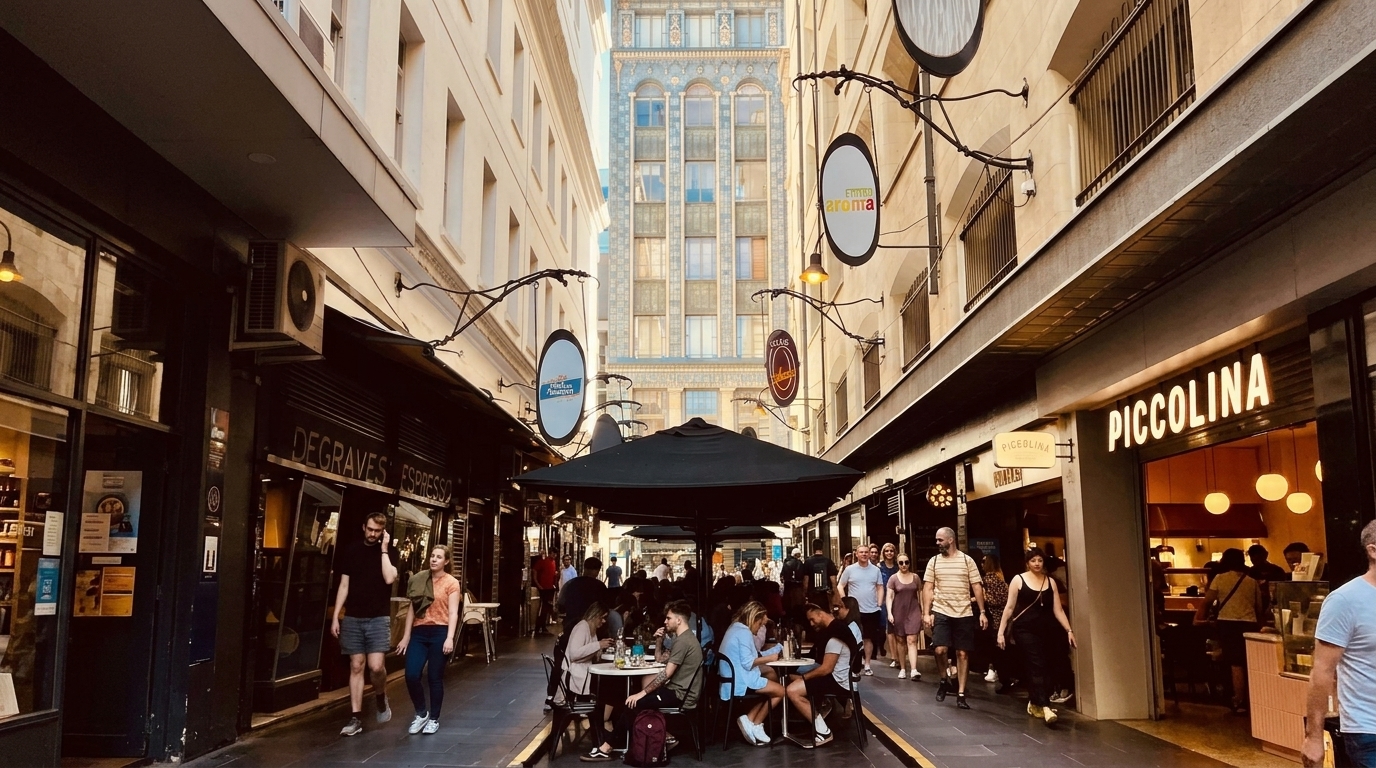
Operation Resonance has put Melbourne’s CBD hospitality scene firmly in the spotlight. Over three days in the week to 13 November 2026, officers from the Australian Taxation Office (ATO) and the Fair Work Ombudsman (FWO) made unannounced visits to more than 30 businesses. All were suspected of underpaying staff and operating outside the tax and superannuation system.
What changed under Operation Resonance
The visits didn’t come out of the blue. They were driven by community tip-offs, data matching and intelligence from earlier compliance work. The operation is part of the Shadow Economy Taskforce’s wider push to protect honest businesses from being undercut, and to make sure workers get every cent they’re entitled to.
Who is affected
The 30-plus hospitality businesses visited, and the people who work in them, are in the firing line first. But the warning reaches much further.
Fair Work Ombudsman Anna Booth said the FWO has consistently found fast-food, restaurant and café employers across Australia to be at high risk of non-compliance. She added that the sector employs large numbers of vulnerable workers, such as visa holders and young people.
She also had a direct message for visa holders, including international students. They have the same workplace rights as every other employee in Australia, and protections exist for their visa if they speak up.
What happens next with Operation Resonance
The three-day operation has finished, but the investigations have not. The information gathered will shape future compliance action, including audits, reviews and, where serious non-compliance is found, potential enforcement. Neither agency has yet said how many breaches Operation Resonance uncovered or when findings will be published.
What it means in practice
ATO Assistant Commissioner Julia Webb was keen to stress that most café, restaurant and takeaway operators work hard and play by the rules. The ATO’s target is the minority who deliberately dodge their obligations by hiding income, paying staff cash-in-hand or skipping super. In doing so, they short-change their staff and undercut honest competitors.
Her advice was straightforward. Businesses that have made genuine mistakes should come forward early. Those deliberately avoiding their obligations should know the ATO now has more data, intelligence and community information than ever before.
Booth also had a word for employers: the aim is to help them get it right first time, and inspectors spent part of the visits giving businesses guidance on meeting their obligations.
The stakes are real. In 2025–26 alone, the FWO recovered more than A$5.6 million for 3,538 workers in the fast-food, restaurant and café sector.
If you work in Melbourne’s food scene and something doesn’t feel right, you don’t have to stay quiet:
- Report to the FWO: you can report workplace issues online, anonymously and in languages other than English.
- Get advice: the Fair Work Infoline is 13 13 94.
- Use an interpreter: a free interpreting service is available on 13 14 50.
- Report tax evasion: suspected tax evasion or shadow economy behaviour can be reported to the ATO at ato.gov.au/tipoff.
also read: CBC reporting deadline pushed back almost a month, giving multinationals welcome relief
General information only, not legal advice. Check the official source before acting.
Source: Fair Work Ombudsman. Licence: CC BY 4.0.




