
Quad bike safety reforms for Australian workplaces have moved a big step closer. On 17 November 2026, a majority of work health and safety (WHS) ministers agreed to progress six changes. Their decision drew on an independent economic analysis that Safe Work Australia commissioned from EY (Ernst & Young).
The report, dated March 2026, was released alongside Safe Work Australia’s public consultation in April. Its task was easy to describe but hard to do: work out whether the benefits of the proposed changes, measured in fewer deaths and serious injuries, would justify what they cost.
What the quad bike safety reforms analysis covers
The modelling covers ten years, from 2025–26 to 2034–35. Across that period, it weighs the costs of implementing and complying with the changes against the expected gains. That gives decision-makers a clear view of what the reforms would deliver over their lifetime.
EY costed the four regulatory options. Compulsory helmets and a minimum operator age of 16 came out strongest, each returning roughly $4 in benefits for every dollar spent. Restricting passengers on operator-only bikes was also clearly worthwhile. Requiring operator protective devices (OPDs) on every workplace quad bike was the only option whose modelled costs outweighed its benefits, largely because of the expense of retrofitting older machines. EY itself described its analysis as preliminary. Even so, the overall finding was that the benefits of the package outweigh the costs of putting it in place.
Who the reforms would affect
Quad bikes are a fixture on Australian farms, but the quad bike safety reforms would apply to any workplace that uses them. The six measures ministers have agreed to progress are:
- requiring OPDs to be fitted to all quad bikes used at work
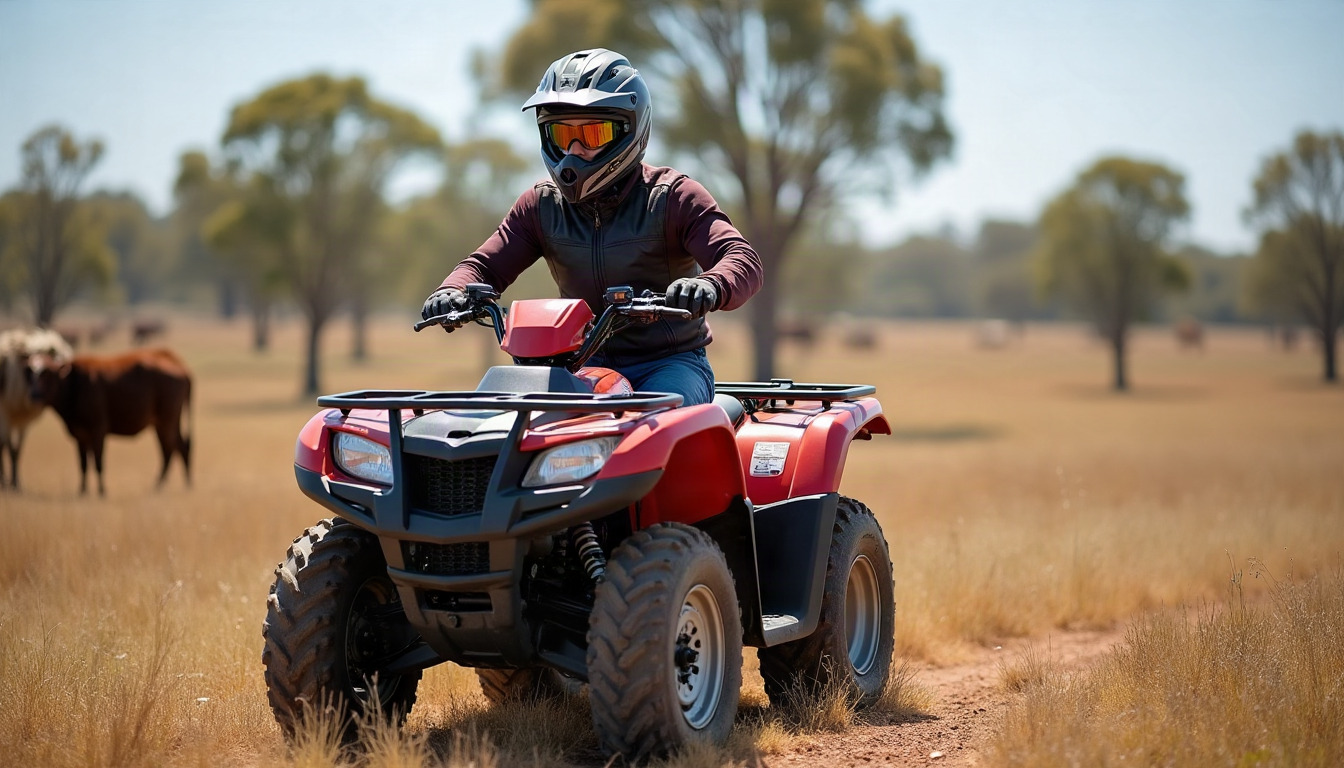
- making helmets compulsory when riding a quad bike at work
- banning passengers on type 1 (operator-only) quad bikes used at work
- limiting workplace use to people aged 16 and over
- improving how quad bike incident data is collected
- running targeted safety communication campaigns
The first four would be written into the model WHS Regulations. The last two are non-regulatory. Some of this will feel familiar in Queensland, Victoria and Tasmania, which already have their own quad-bike-specific workplace rules.
Why quad bike safety reforms matter
The human cost remains stubbornly high. Between 2021 and 2025, 73 people died in quad bike incidents, which is almost 15 a year. By 5 November 2026, 17 deaths had already been recorded this year, more than the five-year average.
What happens next
Public consultation ran from 20 April to 1 June 2026. Safe Work Australia will now draft amendments to the model WHS Regulations, which ministers must approve before they are published. A 12-month transition period is proposed from publication. No start date has been set, and each state and territory will still need to adopt the changes in its own laws.
For farmers and other businesses, that means time to plan. However, some measures, such as making sure every rider wears a helmet, cost little to adopt today.
Also read: Livestock duty resumes: owners and agents face a 21 November lodgement deadline
General information only, not legal advice. Check the official source before acting.
Source: Safe Work Australia. Licence: CC BY 4.0.




