
Key takeaways
- Two new mobile phone detection cameras are switching on: North East Road, Valley View from Friday 27 November, and Payneham Road, Felixstow from Friday 4 December.
- There is no grace period. You face a $700 bill and three demerit points from day one.
- Five camera sites are already operating across Adelaide.
- Ignore social posts about “national camera rules from 30 November“. There is no official source for them.
When South Australia switched on its first cameras in 2024, one vehicle owner received 33 warning letters during the three-month grace period, and not a single fine. Drivers on North East Road won’t get that sort of leniency this time.
The state’s next two mobile phone detection cameras go live within a week of each other. Unlike the first rollout, the penalties apply from the very first day.
Where the new mobile phone detection cameras are
The first camera starts on North East Road at Valley View this Friday, 27 November. The second follows on Payneham Road at Felixstow on Friday 4 December. These are busy roads. On average, 25,000 motorists a day travel inbound on North East Road, and 23,000 travel outbound on Payneham Road.
What getting caught will cost you
Drivers caught face a $592 expiation fee, a $108 victims of crime levy and three demerit points. That’s $700 for a glance at a text message. If you’re on your Ls or Ps, the hit can be worse. Learner and provisional licence holders have lower demerit point limits, so a single offence could push them over.
Resting your phone on your lap doesn’t get you off the hook either. South Australia amended its regulations so that “use” explicitly includes resting a phone on any part of your body, and camera images can now be used to enforce that offence.
Mobile phone detection cameras already in operation
The new sites join five that are already running:
- Southern Expressway, Darlington
- North–South Motorway, Regency Park (northbound)
- North–South Motorway, Regency Park (southbound)
- Port Road, Hindmarsh
- Port Wakefield Road, Gepps Cross
How the cameras work, and what happens to your photo
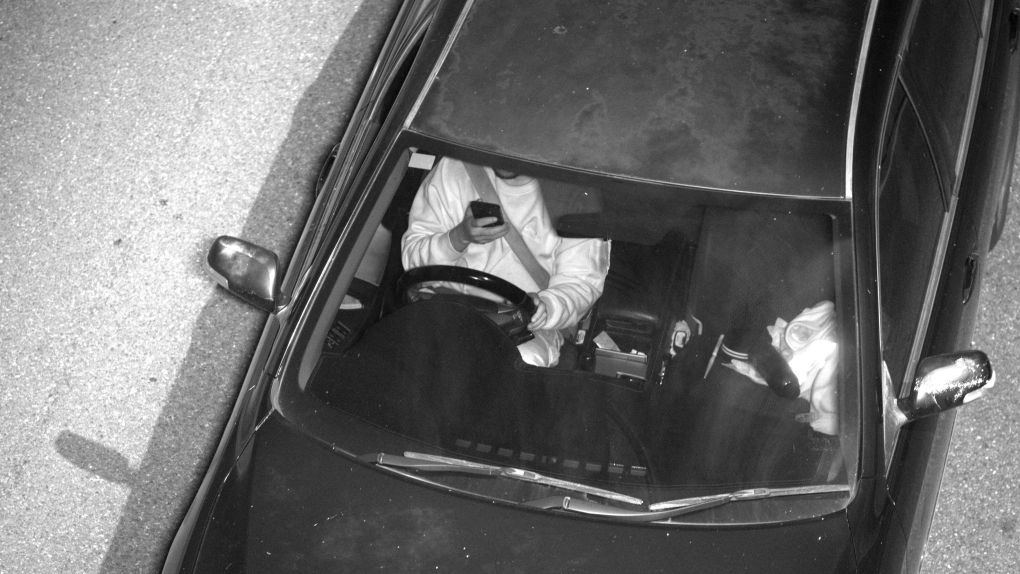
The cameras take high-resolution images through the windscreen from several angles. Software flags possible offences, and SA Police then review the images. Any images showing lawful behaviour are deleted.
Officials say the cameras are working. Since mobile phone detection cameras arrived in 2024, the number of drivers caught by them has fallen steadily. The money raised goes back into the roads. All fine revenue is returned to the Community Road Safety Fund, which pays for road improvements and safety education programmes.
The physics explain why the cameras matter. At 60 km/h, looking away from the road for just two seconds means travelling 33 metres effectively blind.
More cameras are coming. DIT and SA Police are now assessing locations for a Stage 3 rollout, which will add another six sites.
Don’t fall for the “national rules” posts
Several copycat websites claim that “national camera rules” start on 30 November. We couldn’t find any official source to support this. For accurate information on mobile phone detection cameras in South Australia, use DIT, SA Police or the Think! Road Safety website.
The bottom line
The simplest fix is also the cheapest. Before you pull out, set up your Bluetooth or navigation, then put your phone somewhere you can’t reach it. A message can wait. A $700 bill and three demerit points are much harder to undo.
Also read:Under-16 social media ban: five tech giants still under investigation nearly a year on
General information only, not legal advice. Check the official source before acting.
Source: SA Department for Infrastructure and Transport, Licence: CC BY 4.0.




