

New Zealand is weighing up a ten-fold increase in rocket launches amid plans to double the size of its aerospace industry by 2030.
Space Minister Judith Collins told the New Zealand Aerospace Summit in Christchurch this week that the government wants to ensure that future tests and launches can be carried out freely.
“Our space and advanced aviation sectors are more than just rockets, drones and satellites. They’re about advanced manufacturing, AI and autonomy, earth monitoring and next-generation mobility,” she says.
She told summit guests that a 2025 economic assessment of their space sector revealed a 53% increase in its economic value, up to NZ$2.68 (A$2.38) billion, from 2019-24 while their advanced aviation sector earned NZ$530 (A$464) million last year.
Collins says they are also on track to create a “world-leading regulatory environment” to allow tests to be carried out freely and safely which should attract overseas interest. She pointed out that in July, laws were passed to protect against foreign interference and regulate the operators of ground-based space infrastructure.
Collins says the NZ government has its eyes on a national space mission but needs to develop its space capabilities first, a process which she says is “accelerating”.
Some of the topics for discussion at the summit included the use of Antarctica to test space technology, growing NZ’s unmanned aerial capabilities, high speed flight and raising capital.
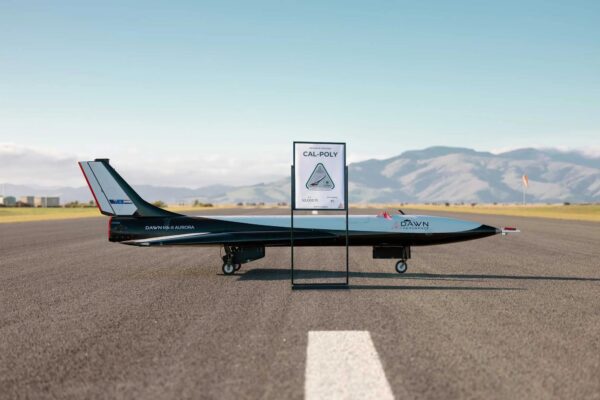
A Maori venture, the Tawhaki National Aerospace Centre near Christchurch, has been given a permanent test flight space which is being used by at least three companies including Dawn Aerospace.
Dawn Aerospace recently carried a Californian university payload onboard its Aurora II unmanned spacecraft to 37,000 feet and reaching a speed of Mach 0.79; click here for the video. (The company says the spacecraft’s maximum altitude is 100km or 328,000 feet and it can reach a top speed of Mach 3.5 or 2270 mph).
ROCKET LAUNCH DEBRIS REVIEW
The country is also reviewing its laws around space launch debris in its maritime Exclusive Economic Zone (EEZ) as launches approach a legal limit.
NZ’s Environment Ministry says the current limit of 100 launches that won’t require marine consent will be reached late next year.
It says there have been 60-plus orbital launches since 2017 with 13 in 2024 and 12 in 2025 (January to August) with debris recovered from seven of those launches.
US space company Rocket Lab alone is planning another 21 launches for a Japanese satellite company from its New Zealand site by 2030; a launch is planned for its NZ site on October 14.
The company will also launch seven satellites for Japanese start-up Institute for Q-shu Pioneers of Space (or iQPS). The company also has a launch site in the northern hemisphere (US).
The ministry says that requiring a maritime consent for launches is likely to cost up to NZ$1 (Amillion and take at least six months.
The review will focus on the effects of launch debris on the ocean and seabed, on Maori, maritime and fishing interests, international obligations, economic benefits and environmental sustainability.
It is considering three options: a 1000-launch limit for one-tonne rockets (assessed as of low environmental risk), abolish the limit or maintain the current cap.
A NZ discussion paper says its launch jettison zones are located to the south, north and east of its coastline but not to the west (Tasman Sea).