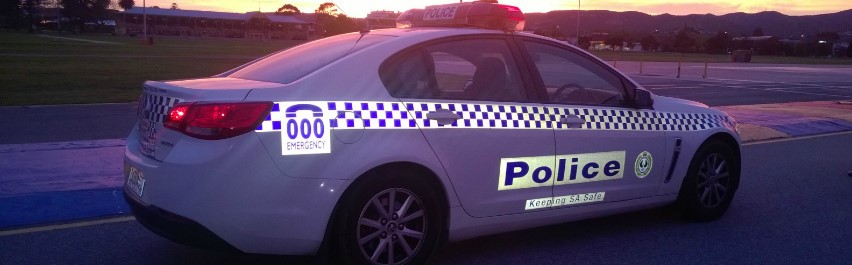
South Australian Police will now be able to carry out roadside drug tests for cocaine after a rise in crashes linked to the illegal drug.
The SA Government says its laws have been updated to include cocaine on the list of testable drugs at the request of police.
Roadside tests could previously detect for cannabis, meth and ecstasy but cocaine could only be tested from blood samples from a fatal or serious crash.
SA Police Minister Blair Boyer says government “is doing everything it can to keep our roads safe”.
“It’s not good enough that people taking illicit substances like cocaine are risking their own lives but once they get behind the wheel, they are risking the lives of others.
“It is ridiculous behaviour and there will be consequences should you choose to be an idiot on our roads,” he warns.
The change brings South Australia into line with other states, the minister says.
SA Police Commissioner Grant Stevens says taking cocaine “can lead to overconfidence and aggression, reduced inhibition, increased risk-taking, agitation and loss of concentration, delusion and affected vision — all traits you don’t want in a person driving”.
“The new drug test will reinforce our existing capabilities and become the new norm for our random drug testing campaigns, including the blitz operations conducted throughout the year,” he says.
“It is crucial that roadside drug testing includes cocaine to keep these dangerous drivers from our roads.”
POLICE DATA
According to state police, so far this year, eight drug-affected drivers died, 76 were seriously injured and more than 2600 affected drivers fined.
Last year, drugs were tied to 14 road deaths and 129 serious injuries.
From 2018-22, SA Police (SAPOL) data shows that 27,121 drivers tested positive to drug driving; of the 454 deaths during that time, 61 were linked to drug driving and 22 to driving with alcohol and drugs in their system.
Penalties include fines of $875 and a $105 contribution to a victims of crime levy for a first offence, four demerit points and a minimum three-month licence disqualification.
Those who refuse or fail to comply to a random drug test may lose their licence on the spot, earn six demerit points and at least a 12-month disqualification.
Police say that from 2022-24, the number of people who refused a drug test jumped almost 20% (from 84 to 100).
Unlike drink driving, there is no minimum amount of prescribed drug that needs to be detected in a person; a positive oral fluid test confirmed by a laboratory is enough to be charged, government says.
The expansion will bring South Australia in line with Queensland, New South Wales, Tasmania, Australian Capital Territory and Northern Territory.
The state’s random drug testing program has been in place since 2006 with up to 50,000 tests conducted each year.
EARLIER SAPOL NEWS: Recruitment reforms start to bite