
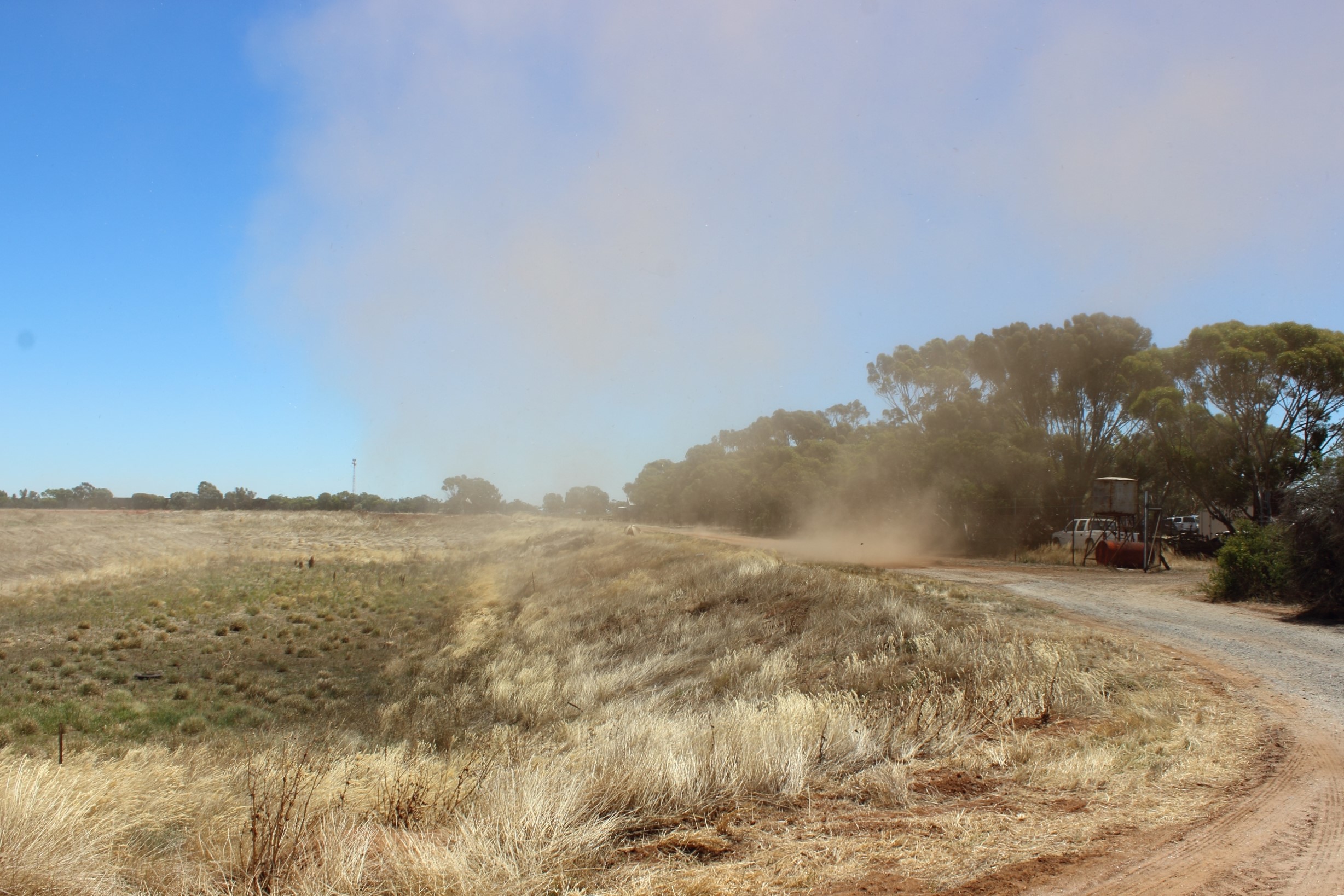
Droughts are lasting longer especially in Australia’s food-producing regions, a new UNSW study says that is using AI to unlock secrets.
The university study tracks the causes of drought and the damage it leaves behind, especially in areas with the most people and farms.
Researchers analysed drought trends across Australia from 1911 to 2020 based on rainfall shortages and falling river and dam levels.
Their analysis showed that, since 1971, drought conditions lengthened across most of Australia, especially in the southeast and southwest breadbasket areas.
The increasing dryness was especially felt during winter and spring, which are critical seasons for growing crops like wheat.
Lead author and PhD student Matt Grant says the trend is expected to continue and is especially concerning given the regions experiencing more drought are also some of the most important agriculturally.
“Across early parts of the last century, it was wetter but we can see that pattern has reversed since the 70s,” he says.
“In recent years, we’ve had this general sense that droughts are lasting longer; our work puts data behind the intuition and confirms it.”
He expects the trend to continue which will, in turn, increase water security risks for major towns and cities and put “serious pressure” on farming.
He says it’s not yet possible to say whether these conditions are caused by climate change because Australia historically had large variation in rainfall.
“It’s not to say that climate change isn’t influencing drought; it’s that the natural swings in Australia’s climate are so large that it may take longer for a clear signal to emerge from the noise.”
AI UNLOCKS SECRETS OF DROUGHTS
Researchers used AI to find the relationship between these conditions and hundreds of official drought records of crop losses and threats to water reservoirs in southeast Australia.
Co-author Dr Sanaa Hobeichi says the approach is answering old questions in drought science.
“It wasn’t really understood how closely weather was reflected in actual drought impacts but we could show they clearly mirror one another,” she says.
“The model links all steps of a drought from a lack of rain to documented consequences.”
“Rainfall patterns, soil moisture and ocean drivers will all shift under climate
change, altering the ‘recipe’ for drought.” Study co-author Dr Sanaa Hobeichi
OTHER FACTORS DRIVING DROUGHTS
She says the research also sheds new light on less visible drivers of drought.
It shows that soil and atmospheric conditions are usually a better indicator of drought risk than monthly rainfall.
Evaporation on hot, dry days is the strongest predictor of crop failure, especially in the driest regions like the Rangelands (which covers more than 80% of Australia’s landmass).
Whether or not water levels would run low often hinges on soil moisture because very dry soil soaked up rain before runoff could reach rivers and dams.
Dr Hobeichi says the results build on a growing body of research that shows that drought risk is incredibly complex and can’t always be predicted by major weather systems like El Nino.
“Different droughts have different profiles. AI lets us understand the complex dynamics of each one,” she says.
Dr Hobeichi says there is growing interest in developing impact-based approaches to better manage future climate risks.
“People want metrics that reflect conditions on the ground because a lot of the risks we’re facing are cascading and compounding.”
However, she says AI would need further research and testing to adapt it to assess drought risk in a hotter future.
“Rainfall patterns, soil moisture and ocean drivers will all shift under climate change, altering the ‘recipe’ for drought,” she explains.
Even so, she says, the model has real potential for climate resilience planning.
“The AI could one day tell us not only when conditions are dry but when it’s going to start affecting people’s lives, letting us make better decisions about where we need to allocate resources to adaptation.”
Dr Hobeichi is part of a research team working on a national drought-impact database covering all of Australia’s major cropping regions.
EARLIER CLIMATE NEWS: Australia getting hotter, says CSIRO report




