
Shark tagging, listening stations and more drone patrols: that will be the result of an extra $4.2 million the NSW Government is spending on swimmers safety.
The news follows four recent shark attacks (one fatal) within three days across Sydney, Manly, Northern Beaches and NSW Mid North Coast: a12-year-old boy died from injuries after he was bitten in Sydney Harbour.
Agriculture Minister Tara Moriarty says “recent shark incidents following storms and heavy rainfall highlighted the importance of clear, practical information” for those in the ocean and rivers.
“There’s no single solution. No government can ever promise to make the water completely safe, which is why we’re using a range of tools to keep people informed and as safe as possible,” she says.
Surf Life Saving NSW CEO Steve Pearce says the new funding deal is a 90% increase on their current shark surveillance drone program.
“(This is) a significant enhancement that will see more drones flying at popular beaches along our coast, representing an extra 35,000 flying hours from January 24 to April 26,” he says.
Drone coverage is expanding: an extra 30 beaches were added to patrols from January 24 (19 in Sydney and 11 regional) while drone patrols will operate seven days a week to the end of the April school holidays.
“We know our SLS drones are an effective eye in the sky when it comes to early shark detection and warning beach users,” Pearce says.
He says that so far in the 2025-26 season, 50 of their drones from Tweed to Bega completed 29,431 flights over 8044 flying hours with 461 sharks sighted.
“Our lifeguards and lifesavers enacted 170 countermeasures including beach evacuations, beach siren, drone siren, and rescue vessels,” he explains.
OTHER SHARK SAFETY MEASURES
The government says it is funding harbour monitoring to better identify where bull sharks locations, how they move and when the risks are higher, particularly after storms and heavy rain, and will directly inform future plans for 2026-27 and beyond.
New shark listening stations will be installed in Sydney Harbour with a greater community awareness campaign involving a van, new signs and more social media alerts.
Other measures already operating include 305 drumlines in 19 council areas, nets at 51 beaches between Newcastle and Wollongong (deployed September 1 to March 31), and tracking tagged sharks via 37 listening stations.
In December, the government spent an extra $2.5 million on its 2025-26 shark safety program so that drone flights can start a week earlier with weekend flights from February to April, hastening the roll-out of more drones, training for Surfing NSW and tripling funding for an extra 150 shark bite kits in regional coastal areas.
DRONE MAKER’S SAY
Australian manufacturer Sphere is pushing the NSW Government to accelerate the use of drones.
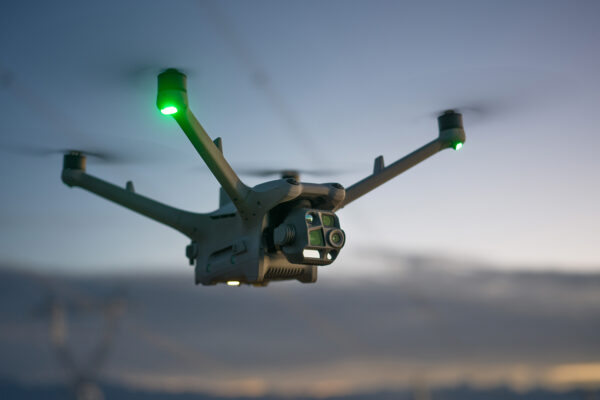
The company says that last October, it offered its autonomous drone-in-a-box systems, HubX and HubT, to government which would provide consistent daylight surveillance without burdening volunteer lifesavers.
Paris Cockinos, the CEO of Sphere, says the next step in shark safety is not about new tools but an evolution in the use of existing technology.
He points to their permanently installed units that can launch drones autonomously, fly programmed patrol routes and livestream back to a central remote operations centre.
These units could be installed along the NSW coastline to provide overlapping day coverage with priority coverage of high-use and higher-risk beaches; live video feeds would be monitored from the company’s Sydney-based remote operations centre.
“We’re not talking about trials or concepts,” Cockinos says.
“These systems are operational today. They’re already trusted in complex environments where safety and reliability matter.
“Beaches should be no different,” he says.
MORE SHARK NEWS: Qld’s monitoring efforts taking off