Australian marine scientists are tracking vessels in and out of the water to predict the spread of an invasive seaweed in New Zealand waters.
And the results may have implications for Australia’s marine biosecurity.
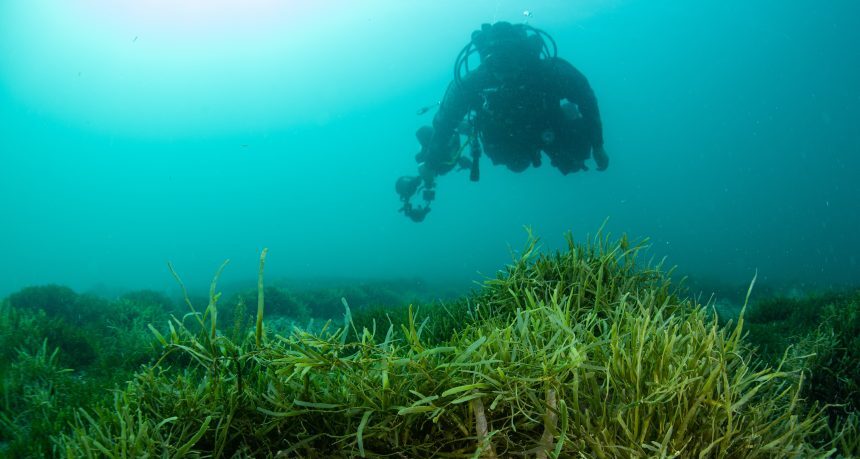
The Australian Institute of Marine Science (AIMS) says the invasive Caulerpa seaweed is a major problem in New Zealand’s coastal areas; it spreads rapidly via boat gear or anchor entanglement and causes long-term ecological damage.
But in two research papers, scientists explained how they tracked multiple vessels (ships and boats) around the country before an outbreak in Northland gave them the chance to test if they could predict its future spread.
AIMS says their analysis revealed high-risk sites in urgent need of surveillance for early detection, the most likely routes for Caulerpa to spread and how widely it could spread across New Zealand in a doomsday scenario.
Lead author and Perth-based AIMS experimental scientist Cal Faubel says the forecasting system had proved valuable at a critical time.
MARINE OUTBREAK PROVES TIMELY
“During the course of this research, Caulerpa was detected in Northland, giving us the opportunity to test and apply the vessel network approach in a real-world setting,” he says.
“The findings helped inform where surveillance efforts would be most effective and helped validate the approach as a practical tool for supporting biosecurity response and decision making.”
The Caulerpa species targeted by them shares the growth and life characteristics of other invasive species (like Caulerpa taxifolia) which have degraded coastal ecosystems in Australia and the Mediterranean, the institute explains.
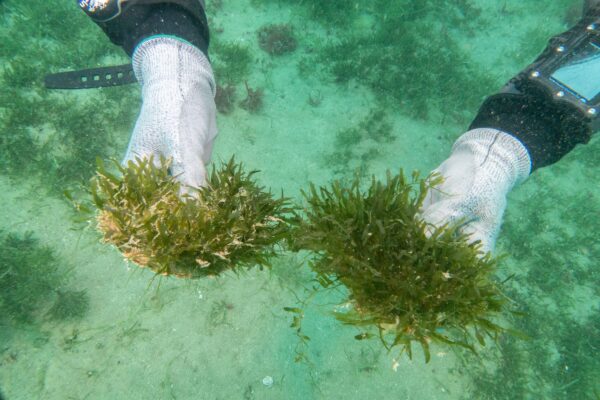
They form large ‘mats’ that outcompete native seaweeds and seagrasses, reduce the diversity of fauna, smother shellfish beds and can grow from tiny fragments.
With the seaweed able to survive up to 10 days out of water entangled on boat gear, the research found that it can be transported across country in a living state.
Using automated identification systems fitted to boats and recreational boater surveys, the scientists identified 4000 anchorage ‘events’ in the Northland region that came from infested areas and 13 high risk sites, within Northland and Bay of Islands as well.
Kaeden Leonard is Marine Biosecurity Manager at Northland Regional Council and a contributing author on the study.
He says the research reinforces confidence in current surveillance efforts.
“The analysis validated our highest‑risk areas, where fortunately no new Caulerpa infestations were detected,” he says.
“These sites are popular with boaties which highlights the ongoing need for continual surveillance and public awareness.”
Senior AIMS scientist Dr Eric Treml says a key challenge for marine biosecurity management, particularly for Australia, is prioritising marine pest surveillance with limited resources.
“Network approaches may be particularly suitable for prioritising cost-effective surveillance and enabling early detection because it can help to identify hubs of connectivity thereby improving the incursion response following the initial detection of high-risk marine invasive species,” he says.
To read the research, click here to visit the ScienceDirect.com article or here at the British Ecological Society’s Journal of Applied Ecology.
AIMS is a tropical marine research agency that has existed for 50 years. For more on them, click here https://www.aims.gov.au/
MORE MARINE NEWS: Underwater reforesting plans for Coogee