
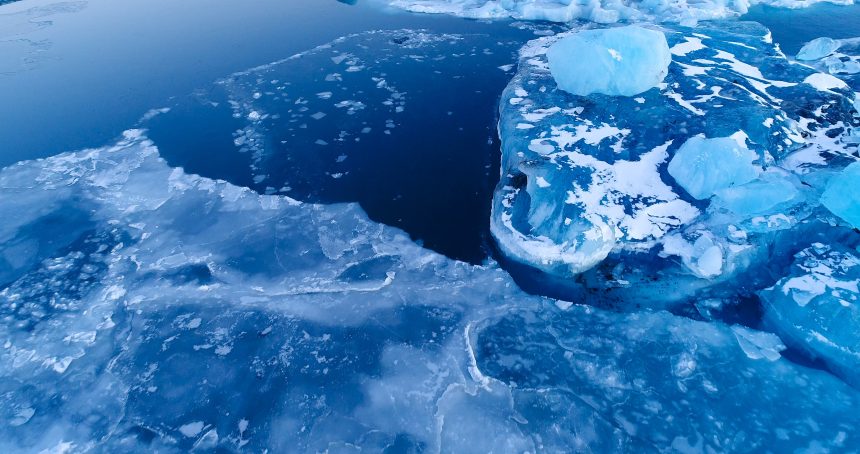
LIFE DOWN SOUTH DEPENDENT ON SEA ICE
Sea ice supports one of the planet’s most productive ecosystems ranging from microscopic algae to krill, whales and penguins.
Emperor penguins are entirely dependent on stable sea ice for breeding, moulting and resting from April to December.
The researchers says rapid declines in sea ice, particularly during 2022–24, caused catastrophic breeding failures as many chicks drowned or froze before they could develop waterproof feathers.
“The system flipped,” Dr Narayanan says.
“What started as a slow build-up of deep-sea heat under the Antarctic sea ice was followed by a strong mixing of water, ending in a vicious feedback cycle where it’s too warm to let ice recover.”
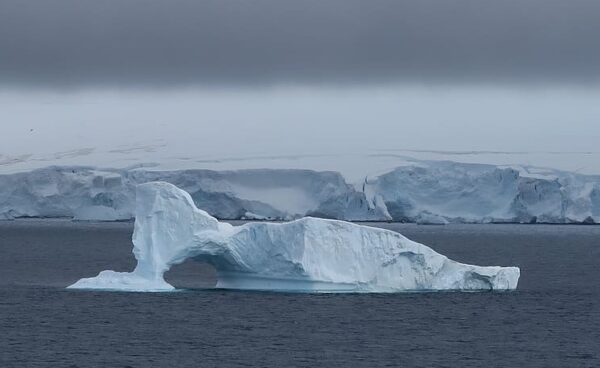
HEAT IS RISING
The Southern Ocean’s layers (cold, fresher water sitting on top of warmer, saltier water) acts as a lid, trapping heat at depth.
But their new research shows the layers have weakened; as the feedback loop locked in the change, the ocean’s surface became saltier and less layered.
By analysing ocean data and using a high-resolution model, the research team found that warm ‘Circumpolar Deep Water’ has risen closer to the surface where it can directly melt sea ice.
They say the loss of sea ice will destabilise the world’s ocean currents and warming the planet far quicker than expected.
“This is not just about warmer air temperatures,” says Professor Matthew England, an oceanographer at UNSW and co-author of the study.
“We’re seeing heat that has been stored in the ocean for decades now breaking through to the surface,” he says.
“Once that happens, it becomes very difficult for the system to return to its previous state.”
While the surface warming can fluctuate from year to year, the heat stored in the ocean represents a deeper, longer-term shift in the climate system.
A TALE OF TWO ANTARCTICAS
The research also reveals a split across Antarctica.
With sea ice loss driven mostly by an upward surge of deep ocean heat in East Antarctica, in West Antarctica it was different.
Greater cloud cover linked to warm air moving down from the subtropics trapped heat in the ocean and melting ice from above, especially during summer in 2016 and 2019.
“This is a coupled atmosphere-ocean-ice event,” Prof. England says.
“You’ve got changes in winds, clouds, sea-ice and ocean circulation all reinforcing each other. That’s why the response has been so abrupt.”
NOT CONFINED TO SOUTH
The team explains that sea ice plays a central role in regulating Earth’s climate; it’s bright surface reflects sunlight back into space so the ocean absorbs less solar energy.
While driving the global ocean circulation, it keeps heat but carbon locked deep below the surface.
“Antarctica historically helped slow the pace of climate change,” Dr Narayanan says. “If that starts to reverse, it has global consequences.”
Co-author Dr Alessandro Silvano, from the University of Southampton, says there are further local effects with global impact.
“It could also destabilise ice shelves that prevent glaciers from sliding into the sea, raising global sea levels.”
EARLIER RELATED STORIES
Shrinking sea ice alarms scientists
Emperor penguins marching into extinction




