
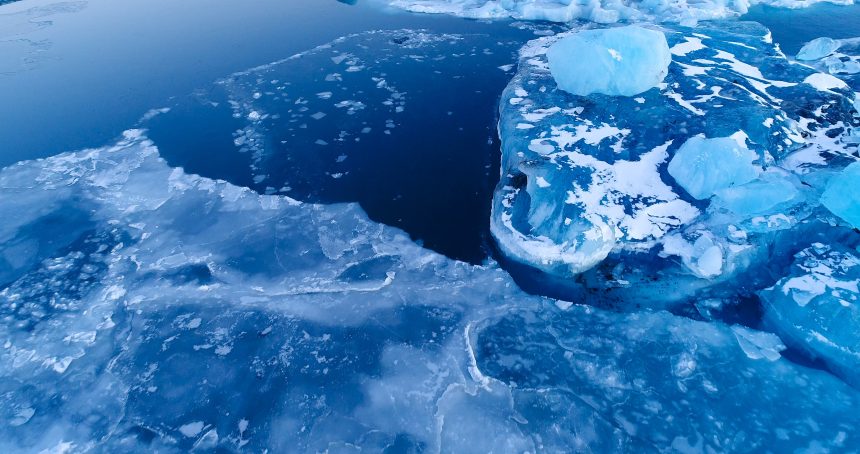
Antarctica may be flipping from its role as a global climate buffer to that of an amplifier, new research says.
An international study published in the Science Advances journal warns that the South Pole is flipping under a cascade of climatic changes in the sea ice.
Lead author Dr Aditya Narayanan is from the University of Southampton in the UK and a visiting Research Fellow with UNSW in Sydney.
He says a ‘triple whammy’ of intersecting climate processes tipped the Southern Ocean into a new state which triggered a sudden decline in sea ice after 2015.
Researchers cannot tell if this shift is temporary or the start of a new ‘normal’ but they say climate models that long predicted Antarctic sea ice would decline under global warming failed to capture the timing, speed and regional complexity of what has happened.
Dr Narayanan says if the processes continue, this “would fundamentally change how the climate system behaves”.
Future changes will depend on the balance between warming, winds and freshwater input from melting ice.
“What happens at the bottom of the world shapes what happens everywhere else,” he says.
TRIPLE WHAMMY FOR ANTARCTICA
The first climatic ‘whammy’ has come from greenhouse gas emissions and ozone hole strengthening the winds surrounding Antarctica, Dr Narayanan says.
The second whammy came from warm, salty water hauled up to the surface which mixed with cooler water to unleash its heat.
The final whammy comes from a feedback loop that has kept sea ice in a prolonged low state.
When Antarctic sea ice levels fell to record lows in 2023, it was one of the least understood and extreme climatic events, the UNSW says.
Dr Narayanan says Antarctica may now be shifting from acting as a buffer against global warming to amplifying it.
“Antarctic sea ice in the Southern Ocean helps drive the planet’s ocean overturning circulation,” he explains.
A global system of surface and deep-water currents regulates the planetary climate; bringing warm surface water to the poles and sinking cold, dense water to the ocean floor.
The impact of this is felt locally and globally, the UNSW explains.
NEXT PAGE: FRAGILITY OF LIFE




