
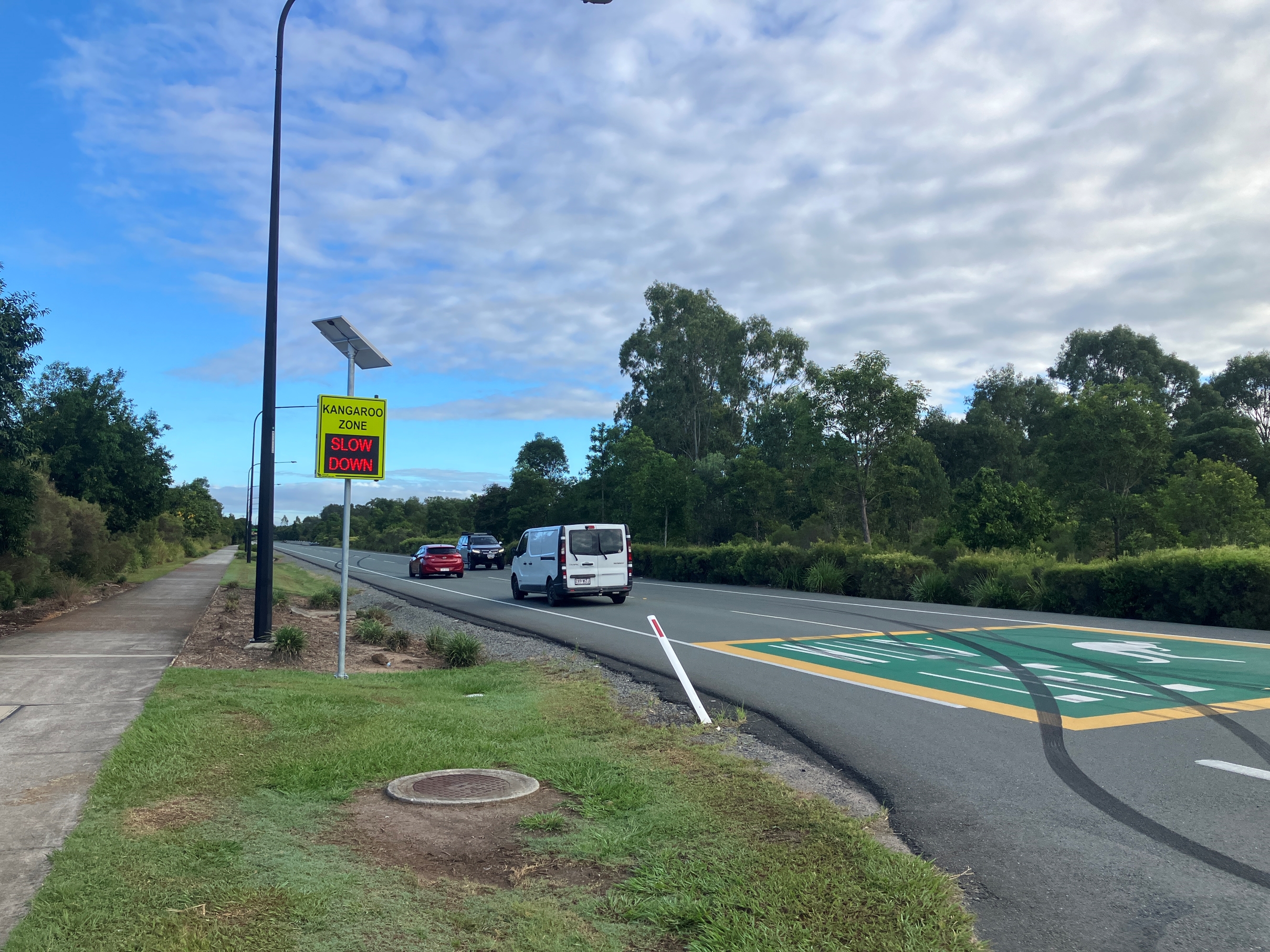
Drivers across Moreton Bay need to slow down this winter to protect wildlife that are already in greater danger from drivers, says local council.
Moreton Bay City Council says that every week, there are 8.8 million vehicle movements in their wildlife zones; the figure came from a new analysis of LED signs installed to improve wildlife safety.
Mayor Peter Flannery says the reality is that drivers are still speeding despite the signs alerting them to the risk of meeting animals.
“Every kilometre above the speed limit endangers wildlife, especially during winter when shorter daylight hours mean more driving at dawn and dusk that are peak feeding times for koalas, kangaroos and other animals,” he says.
“Each year, we receive around 110 speed limit review requests for council roads; concerningly, around 10-15% of those involve concerns about wildlife safety.
Council wants drivers to stick to designated speed limits and stay alert for animals in our wildlife zones.”
MORE DRIVERS HEEDING MESSAGE
Moreton Bay Council manages a 3806km road network; many of them are within ecological corridors with confirmed wildlife activity.
Since 2020, more than 150 radar-based LED signs were installed that can detect an oncoming vehicle’s speed. When it detects a vehicle, it alerts the driver to wildlife crossings and will advise them to slow down.
A recent analysis of these show they are working, council says: 86% of drivers detected travelled at or below the speed limit; this compared to a 2024 survey which found 74.1% of respondents were compliant.
RELATED STORY: Wildlife collisions a major issue, says AAMI
SPECIFIC ROADS: Drivers need to remain especially vigilant for wildlife on the following roads, says council: Winn Rd, Cashmere; Torrens Rd, Petrie; Nathan Rd, Kippa-Ring; Lilley Rd Warner; Boundary Rd, North Lakes; Gibbons Rd, Samford Valley; Sheaves Rd, Kallangur; Beeville Rd, Petrie; Plucks Rd, Ferny Hills; Marsden Rd, Kallangur; and Central Springs Parade / Smiths Rd, Caboolture.
“Council is doing its bit to protect our wildlife – we’re expanding our network of LED signage in our wildlife zones, installing fauna hatches so koalas and kangaroos can quickly escape road corridors, and erecting fauna fencing,” Flannery says.
“We’ve also granted an initial 10-year community lease for the Moreton Bay Wildlife Hospital Foundation, that will operate the city’s first dedicated wildlife hospital on land allocated by council at Dakabin.
“However, we need motorists to do their bit by adhering to speed limits to reduce the risk of them hitting our koalas, kangaroos, and other native wildlife that call Moreton Bay home.”
OTHER COUNCIL NEWS: Push for more roads funding to fuel new housing




