
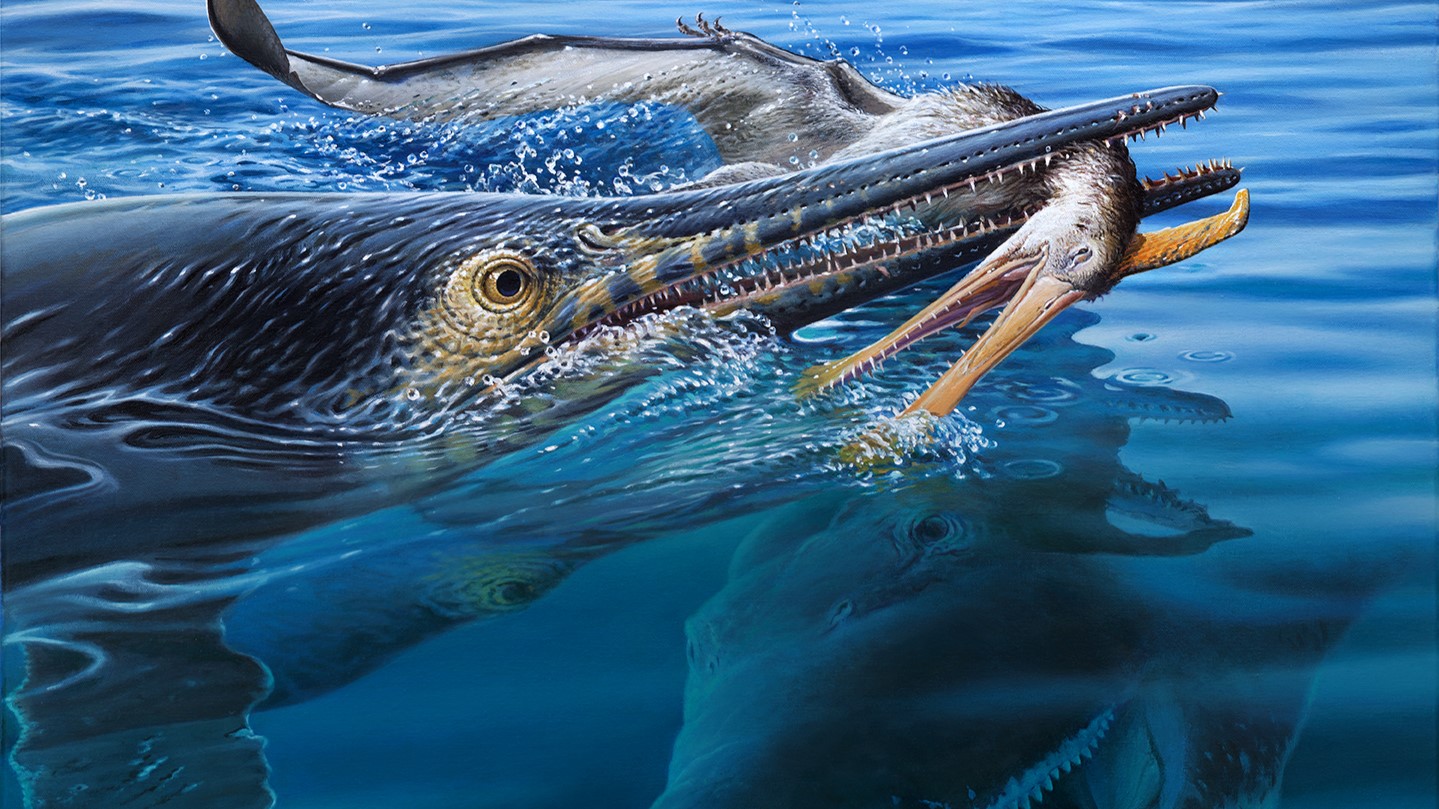
Frozen in rock has been a scene that could have been rejected by Jurassic Park script writers as ‘too much’.
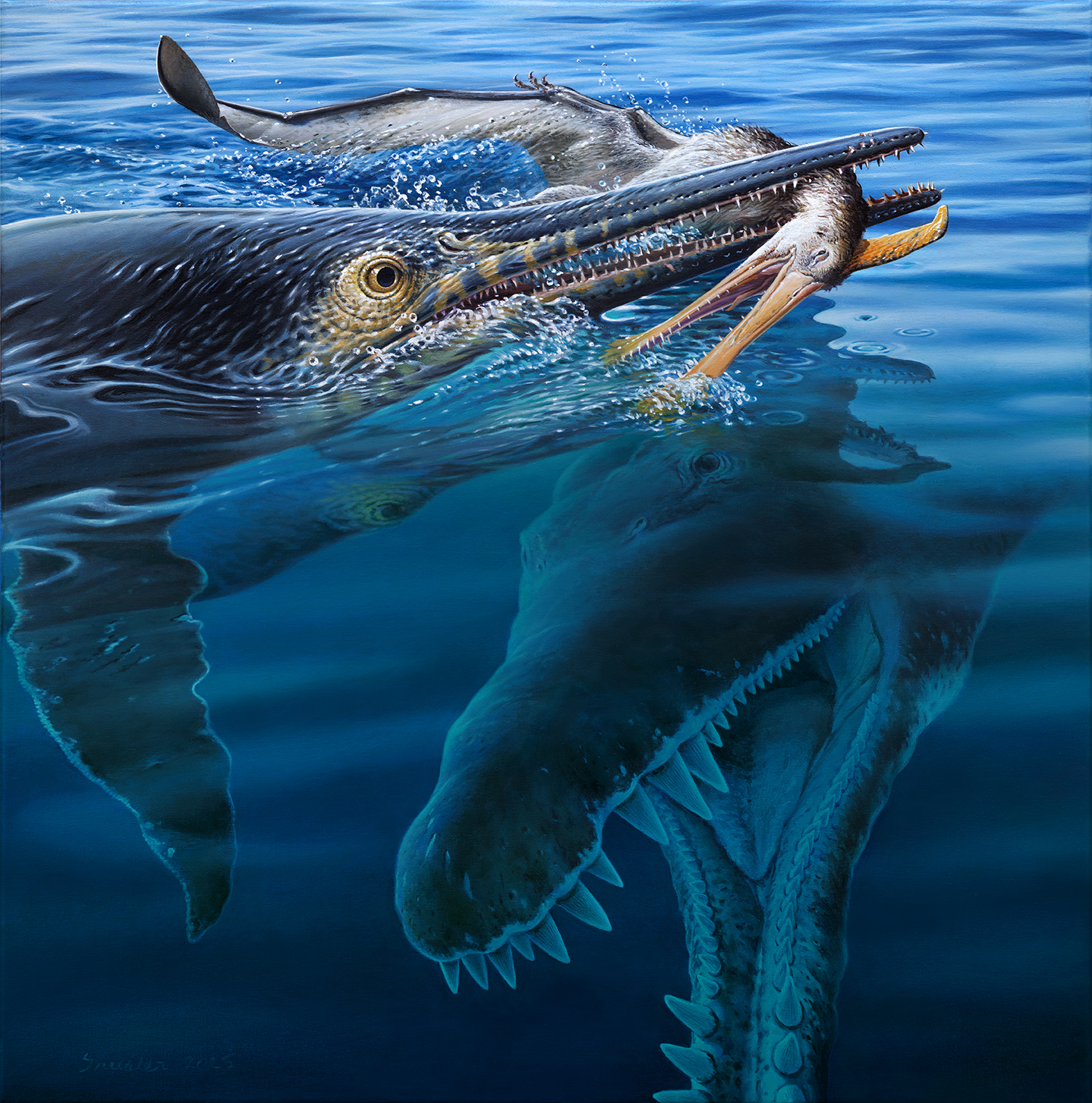
The fossils of a prehistoric sea reptile eating a flying dinosaur that was itself eaten by a giant predator were found near Richmond in central Queensland.
The deaths occurred about 100 million years ago when central Queensland was part of the Eromanga Sea.
At the centre of the discovery is a 6-to-7 metre-long ichthyosaur (a dolphin-shaped marine reptile) ‘frozen’ in rock.
Scientists using 3D imaging technology discovered fragments of a pterosaur (a flying reptile) preserved inside the ichthyosaur’s fossilised stomach.
But the ichthyosaur’s skeleton bears huge crushing bite marks, shattered bones and missing sections consistent with an attack by Kronosaurus queenslandicus, a giant pliosaur (apex predator) that had ruled the inland Queensland sea.
(The findings from the discovery have been published online in the international scientific journal Gondwana Research).
FROZEN, HISTORIC MOMENT IN TIME
Internationally renowned palaeontologist Dr Dean Lomax was a recent visitor to Australia for the first time who vied the find.
“It’s one of the clearest examples ever discovered of a three-tier predator interaction and offers an unprecedented snapshot of behaviour in Australia’s Cretaceous seas,” he says.
“This extraordinary fossil records a trophic interaction between a pterosaur eaten by an ichthyosaur that was then partly consumed by a giant pliosaur. It gives us direct evidence of behaviour in the Eromanga Sea.”
Dr Matt White is a research associate at the University of New England and lead author of the study; he says the fossil was unlike anything the team has seen before.
“I was amazed by the size of the ichthyosaur, and shocked to see it littered with bite marks and partially exposed pterosaur remains behind the skull,” he says.
“This discovery enriches our understanding of these ancient marine reptiles and illustrates the complex interactions that shaped their prehistoric aquatic environment.”
FROM BOB TO DISCOVERY
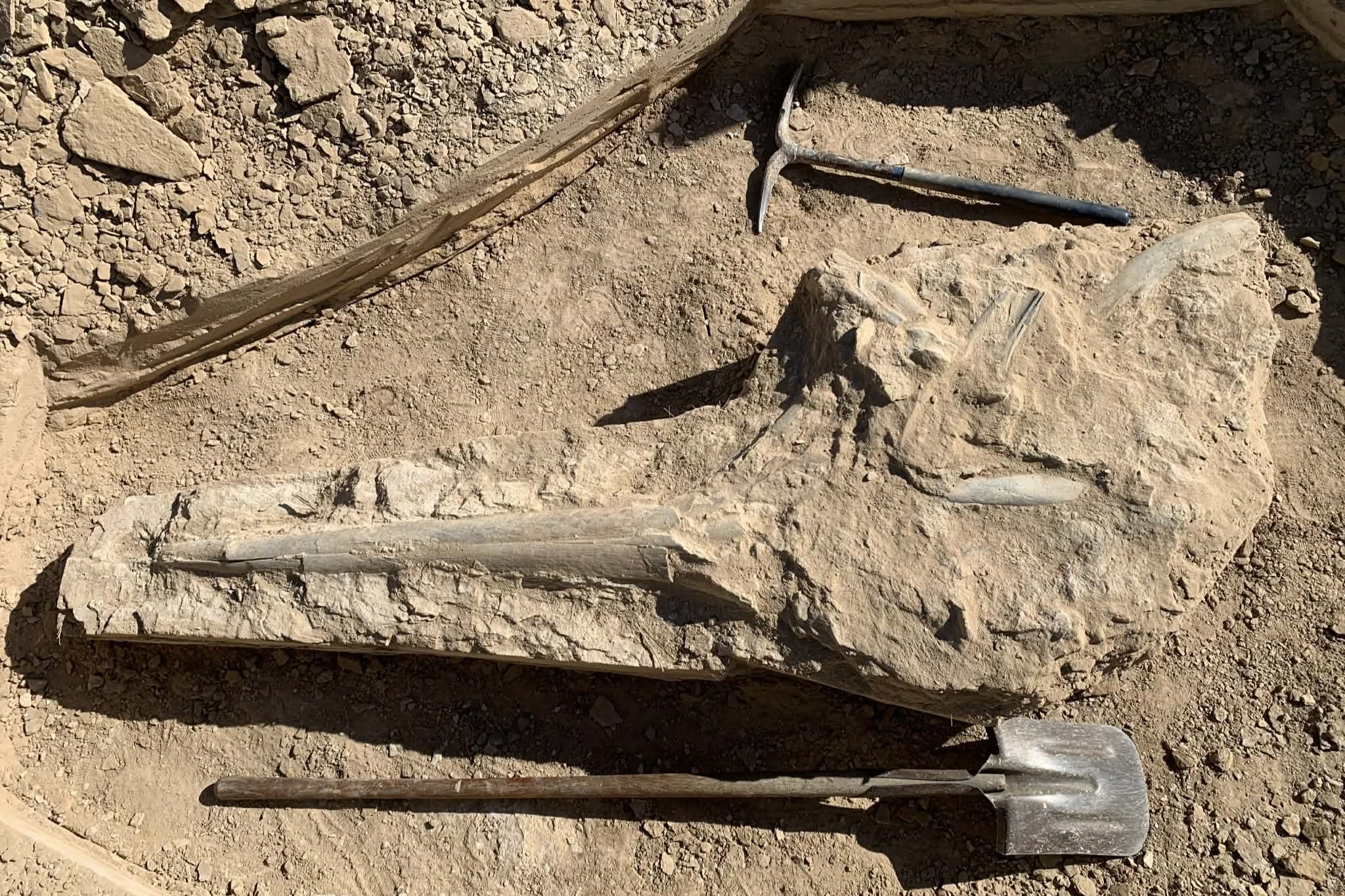
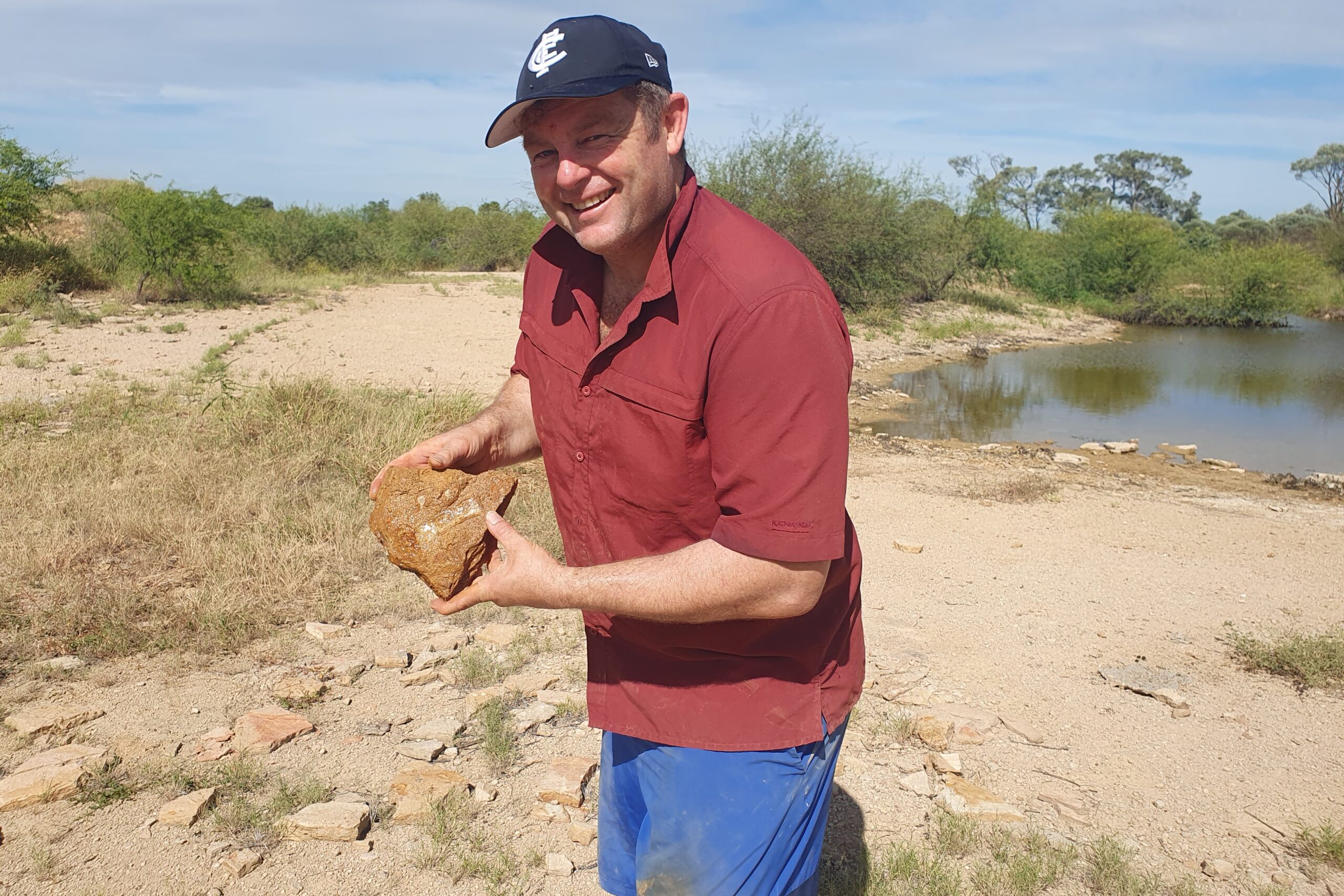
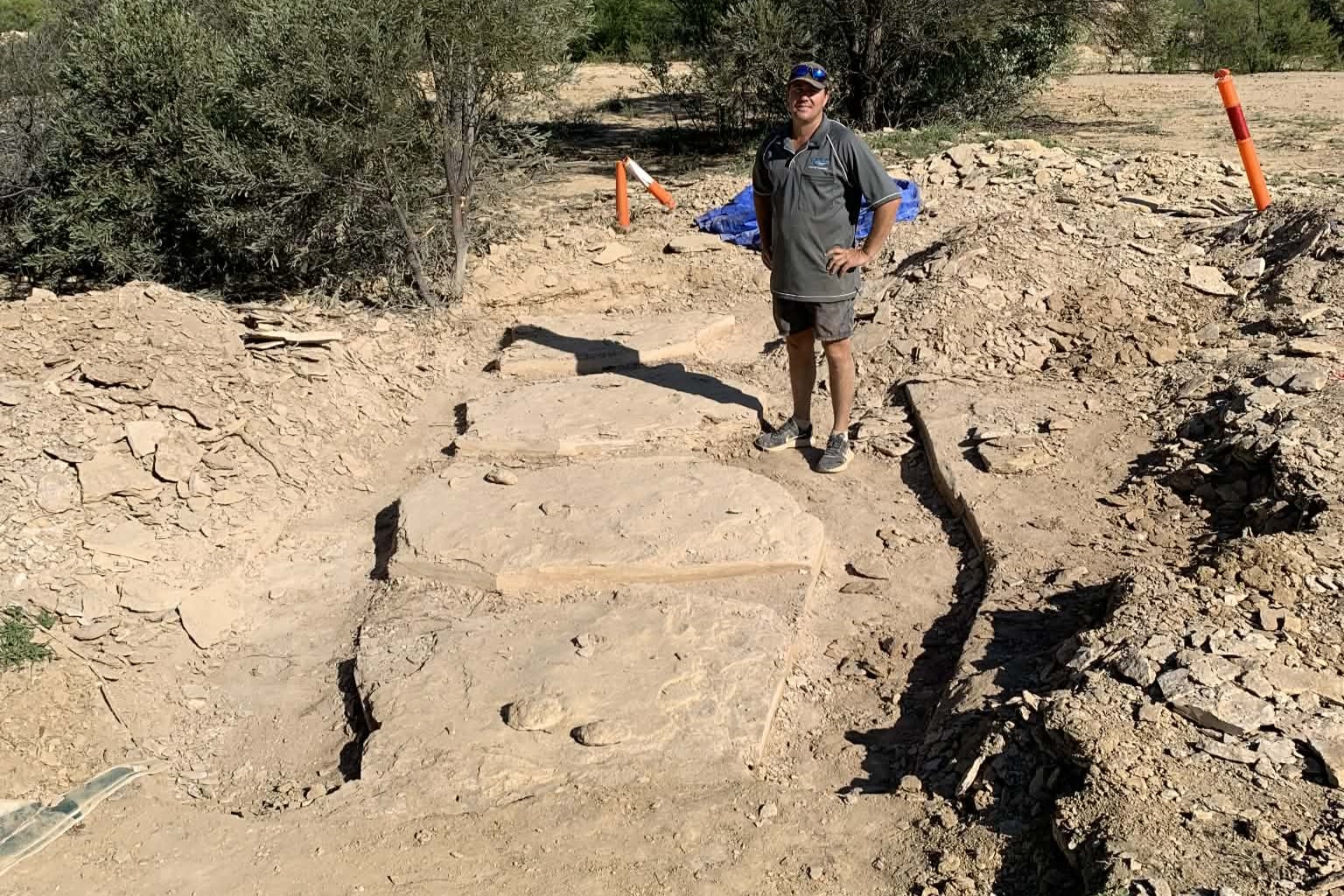
According to Dinosaur Experiences Australia, the find resulted from a fossicking trip to Richmond in August 2019 by visitors Mike and Cathy Freeman, with Gary and Barb Flewelling, who uncovered large fossils.
The mysterious bones were collected, bagged and nicknamed BOB (for Bag Of Bones).
In 2022, curator Kevin Petersen returned to the site and uncovered the rest of a partially articulated ichthyosaur almost 8 metres long.
More than 600 volunteer and staff hours were spent on preparing the fossil before unusual rock nodules found behind the skull prompted further investigation.
The rocks were not broken apart but sent to the Australian Nuclear Science and Technology Organisation (ANSTO) where advanced neutron tomography allowed scientists to look inside without destroying the fossil.
Hidden in the rock were fish, squid-like cephalopods … and fragments of a flying reptile’s jaw.
POWER OF SCIENCE TOURISM
Karen Hanna Miller, the Executive Officer of Dinosaur Experiences Australia, says there is a powerful connection between science and tourism.
“Queensland is home to discoveries that are changing our understanding of prehistoric life; those discoveries deserve to be shared beyond the scientific community,” she says.
“Scientific discovery provides the stories that inspire travel while tourism helps those stories reach the world.
“Together they create greater awareness, stronger regional economies, increased support for museums and researchers, and inspire the next generation of scientists,” she says.
“Science drives tourism and tourism helps sustain science.”
RELATED STORIES




