
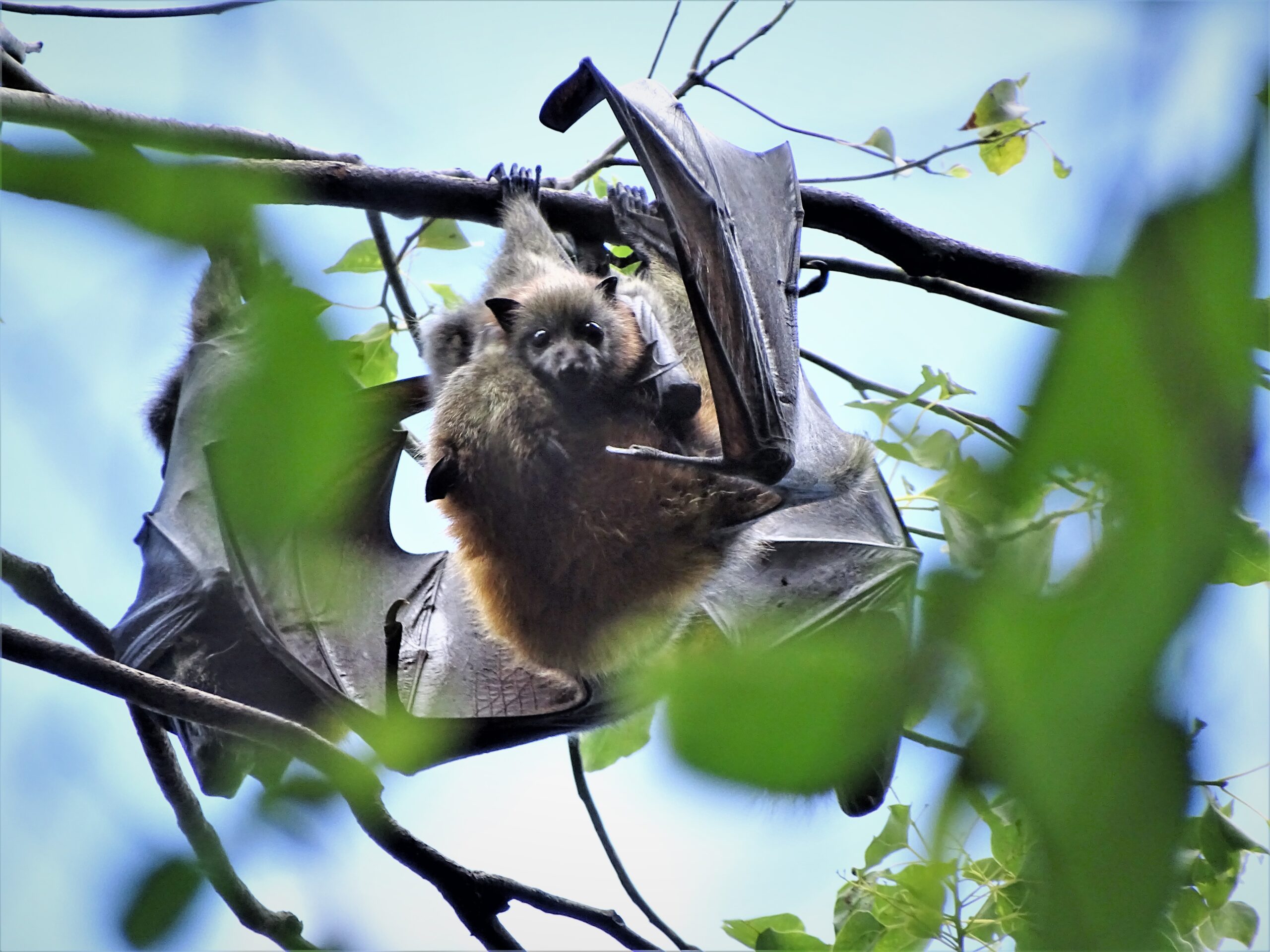
New sensors to monitor heat stress at flying fox roosts are being rolled out across Moreton Bay in Brisbane.
The sensors can monitor temperature and humidity and should help council and wildlife carers manage flying fox roosts ahead of summer.
Moreton Bay City Council is partnering with Queensland tech company Kallipr to roll out 16 sensors across eight roosts.
The devices will sound the alarm when roosts get too hot, allowing council officers and carers to act.
“With South-East Queensland experiencing a spring heatwave and summer just around the corner, it’s important we keep tabs on how our native animals are faring,” mayor Peter Flannery says.
MANY USES FOR SENSORS
“Using these sensors, council can not only monitor flying fox roosts for heat stress but pass on this data to researchers to help develop an understanding of heat stress events and what potential mitigation measures can be taken for future events.”
Designed for harsh environments, the sensors means council staff no longer need to physically travel to sites to check on roosts and take temperature measurements.
Council says Moreton Bay is home to three known species of flying foxes: Black and grey-headed flying foxes are present year-round while little red flying foxes visit during summer.
Flannery says it is important residents did not try to handle an injured flying fox but contact a local wildlife carer.
“An injured animal is more likely to defend itself if stressed or provoked, so be sure to give them a wide berth and contact a wildlife carer as soon as possible,” he says.
“While less than 1% of fruit bats (flying foxes) carry the Australian bat lyssavirus, a bat bite, scratch or exposure to bat saliva through your eyes, nose or mouth can transmit the virus.
“Always remember – no touch, no risk.”
Dead animals found on council roads, parks, and footpaths can be reported for removal by calling 3205 0555 or 1300 477 161.
Click here for more information about flying foxes.
MORE WILDLIFE NEWS: New $15m wildlife hospital to be built