
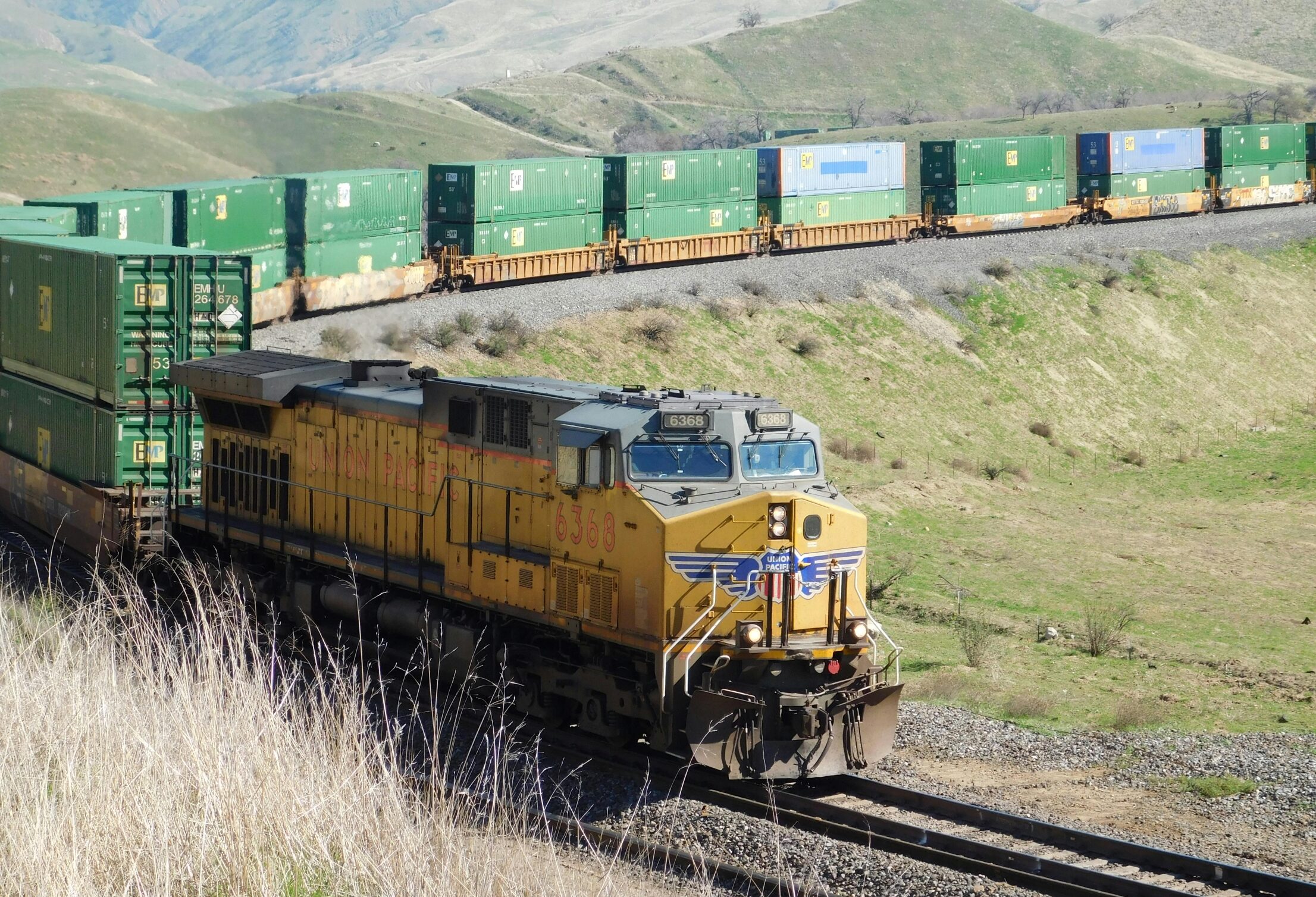
An inland freight rail line 1700km-long from Melbourne to Brisbane has been shelved as Canberra pivots to a ‘Plan B’ for the project.
The Labor Federal Government says the price tag for the inland project has ballooned, from the Coalition Government’s original $9.3 billion figure in 2017 to more than $45bn today.
The new plan will see the inland line run from Beveridge, Victoria, to Parkes, NSW by the end of 2027 and allow double-stacked freight trains to travel between Melbourne and Perth via the NSW town.
Federal Infrastructure and Transport Minister Catherine King today said that a 2023 independent review “found major deficiencies” in the inland rail project they inherited from the Coalition government with “sensible decisions” now being taken.
The review found that estimated costs of the project had risen from $16.4bn in 2020 to $31.4bn in 2022 with very little certainty about the final figure due to delays and ‘immature’ preliminary designs and a completion date of 2036 at the earliest.
The Commonwealth says future Inland Rail work north of Parkes will be about preserving the rail corridor and protecting sites for future intermodal terminals in Queensland.
OTHER INLAND RAIL PROJECTS
Meanwhile, Canberra is diverting $1.75 billion to upgrade the freight rail network and spending $55m to get more freight moving by rail and sea.
This funding is extra to $1.04bn earmarked for the Australian Rail Track Corporation’s (ARTC) network and takes the total spend to nearly $2.8bn.
“The Albanese Government’s $1.75 billion investment in the ARTC network will shift more freight onto rail and protect this network for decades to come,” King says.
Works will involve upgrading east coast lines such as track renewals, passing loop extensions, upgrading signalling to handle faster trains, improve transit times, support larger trains and upgrading the network’s flood safety.
The $55m incentive scheme for greater freight movement by rail and ships follows a November 2025 deal between federal, state and territory infrastructure and transport ministers to identify ways of increasing freight rail traffic.
The ARTC has just completed a 96-hour shutdown of sections of the Sydney-Melbourne corridor on the weekend for maintenance work including signal and rail bridge upgrades.
Clinton Crump, the Group Executive Operations for the ARTC, says: “This significant shutdown allowed us to complete critical maintenance and upgrades to … the Sydney-Melbourne and Cootamundra-Parkes corridors.
“Major infrastructure works will improve reliability, support faster and more efficient services, and strengthen the resilience of the network for the future.”
Click here for more about the ARTC.
FUNDING NEWS WELCOMED
The Australasian Railway Association (ARA) has welcomed news of the $1.75bn funding for other inland projects.
ARA Chief Executive Officer Caroline Wilkie says the decision is “welcome recognition” of the critical role of rail freight in the national economy.
“… we must invest in the future of freight and promote greater use of rail to increase productivity and resilience across the national network,” she says.
The ARA is calling for more ARTC funding in its pre-budget submission.
“Today’s commitment will support a more productive freight system, delivering reduced service disruptions, improved climate resilience, lower operating costs and faster, more frequent services.”
On the $55m incentive scheme, Wilkie says that rail freight is “central” to managing fuel challenges.
“Moving more freight on rail reduces national diesel consumption at scale, easing pressure on the supply and lowering costs across the economy,” she says.
The news follows an ARA-convened workshop with industry and government last month which called for such a scheme.
“Australia can save 200,000 litres of diesel for every rail journey on the east-west route that replaces moving the equivalent freight on road,” Wilkie says.
“This represents a huge saving at a time where every litre counts; the ARA is pleased to see incentives confirmed for the rail industry just as they have been for the trucking sector.”
OTHER RAIL NEWS: Records WA harvests prompt upgrades




