
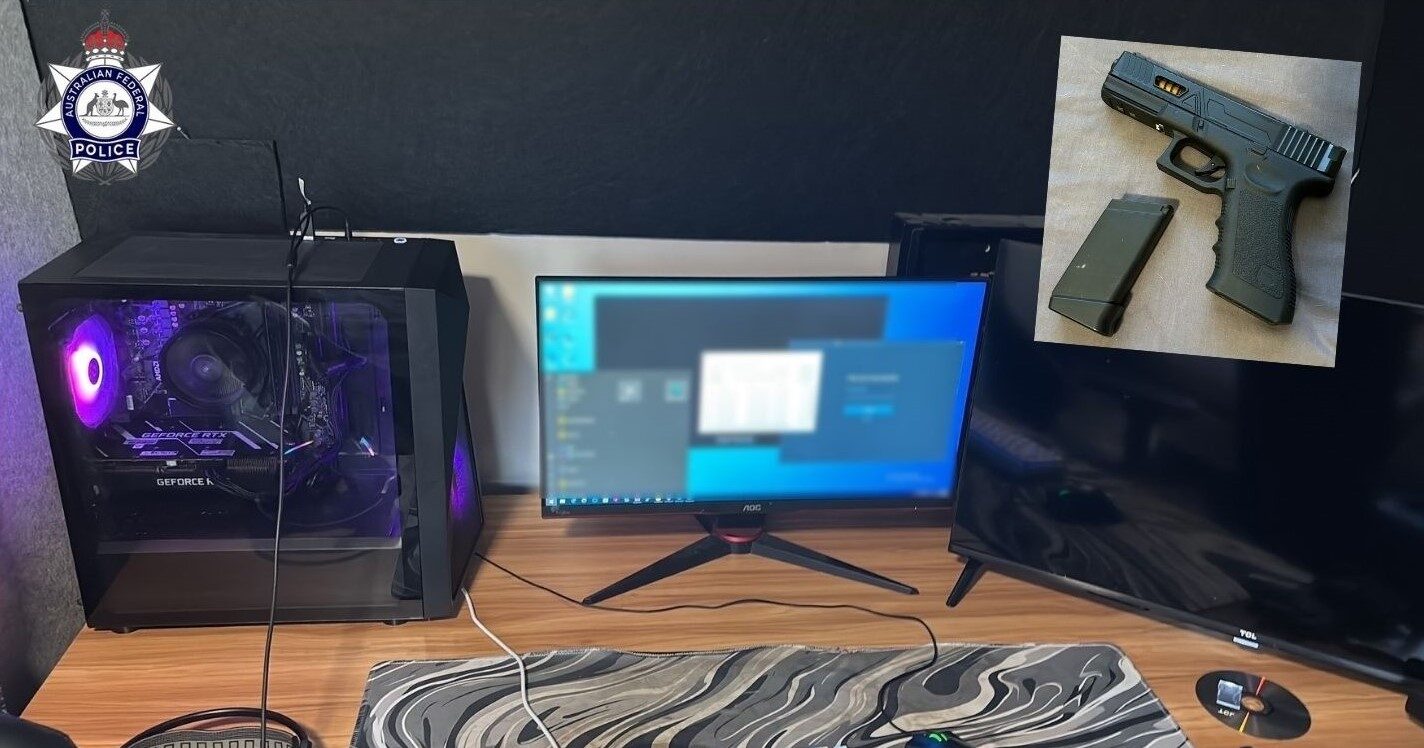
A NSW teenager who made ‘swatting’ calls to the US is facing children’s court today (January 13) after an overseas tip-off.
‘Swatting’ involves making fake calls to emergency services that trigger a large-scale, and armed, response.
The Australian Federal Police allege that the boy made multiple fake calls claiming that mass shootings were happening at major shopping centres and schools in the US.
A NSW house was searched by police on December 18, 2025, with electronic devices and a gun seized.
He was arrested by AFP Taskforce Pompilid that was launched last October to target decentralised online criminal networks.
The AFP say they were alerted by the US Federal Bureau of Investigation (FBI) to an Australian member of one such network linked to ‘swatting’ calls in that country.
The AFP says the boy is facing 12 counts of using a telecommunications network to commit a serious crime (with a maximum penalty of five years jail) and one count of unauthorised possession of a prohibited gun (maximum penalty is 14 years jail).
SWATTING THE SWATTERS
AFP Acting Assistant Commissioner Graeme Marshall says the AFP is working closely and continually with its overseas partner agencies.
“These (online criminal) perpetrators, often young males aged from 11-25, are engaging in crimes such as swatting, doxxing and hacking to achieve status, notoriety and recognition in their online groups.
“In this investigation, a young boy from regional NSW allegedly caused widespread alarm and turmoil to thousands of people, businesses and services in the US, resulting in significant financial implications,” acting-assistant commissioner Marshall says.
“These types of investigations are complex; the AFP will work with private and public sector partners to educate families and schools about the threat of these online decentralised crime networks.”
FBI International Operations Division Assistant Director Jason A. Kaplan says swatting is a “dangerous and disruptive” crime that endangers lives and drains critical resources.
“This case demonstrates that anonymity online is an illusion; we are committed to working with the AFP, our international partners, and private sector partners to identify and hold accountable those who exploit technology to cause harm to communities.”
US Embassy Canberra Charge d’Affaires Erika Olson says they are “grateful” for the FBI-AFP partnership.
“… we appreciate our continued co-operation,” they say.
ESAFETY TIPS
The AFP says parents and carers can help manage children’s online activity by:
Being curious and maintain open conversations with children about their online activity.
Actively supervising online activity where appropriate.
Seeking professional or community support if concerns arise.
For further advice and resources to help parents and caregivers, visit the eSafety website.
OTHER AFP NEWS: Call to beware of Binance crypto scam texts