
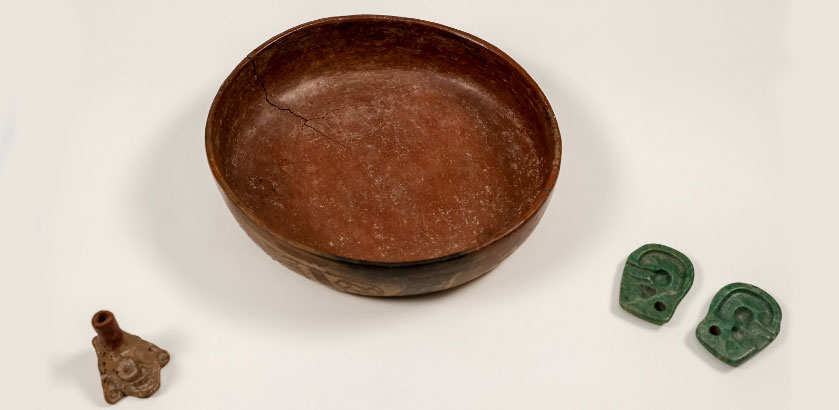
Ancient artifacts that were illegally exported to Australia from the US are now back home in Mexico.
The three historical objects were seized by Australian Border Force (ABF) officials in 2023 and were found to have been illegally exported from Mexico whose law classifies them as archaeological monuments.
Federal Arts Minister Tony Burke says their return, which took place during a ceremony at the Mexican Embassy in Canberra recently, shows the government is determined to protect global cultural heritage.
“These priceless objects tell the story of people’s ancestors from hundreds, and thousands, of years ago and returning them to the Mexican Government honours that history,” he says.
“We’re serious about protecting cultural heritage and returning objects to their rightful home.”
ARTIFACTS WELCOMED BACK
Mexican Ambassador Ernesto Cespedes Oropeza welcomed their return at the ceremony.
“We are grateful to the Australian authorities for their collaboration and commitment in ensuring that these objects return to Mexico,” he says.
“These objects are more than archaeological pieces. They represent the history, creativity and identity of civilisations that flourished in Mexico long before our time.”
Cespedes also noted that international co-operation is “essential” to crack down on the illegal trafficking of artifacts.
Special Envoy for the Arts, Susan Templeman says “it’s a very special moment to witness these … objects, taken from their homeland illegally, returned to their country”.
Last year, 17 ancient Egyptian artifacts ordered online from the US were seized by ABF officials and subsequently returned to Egypt.
ANCIENT ORIGINS
The artifacts may date as far back as 1500 BC, according to the Federal Arts Department. The artifacts are:
- A pair of ear-shaped plaques: crafted from jadeite or serpentinite rock, they were likely part of a facial mask. They were made by the Olmecs, who lived on the coastline of Gulf of Mexico around 1500-400BC. Who are the Olmecs?
- Zacatecas bowl: A painted ceramic bowl made between 100-500AD and used in a Zacatecas funerary tradition called ‘tumbas de tiro’ (‘shaft tombs’) in which a shaft up to 16 metres deep led to underground chambers full of burials and ceramic offerings. The tradition developed in western Mexican states from 100–500 CE and the bowl is from the Zacatecas region in north-central Mexico.
- Aztec whistle: The ceramic whistle represents a skull and likely used in ceremonies. It has two holes: one on the top, and a smaller one at the back. It was crafted on the Central Mexican Plateau around 1200–1521AD during the Aztec Empire. (Click here to learn more about the Aztecs.) Source: Department of Arts
OTHER ARTIFACT NEWS: Viking hoard heading for Sydney




