
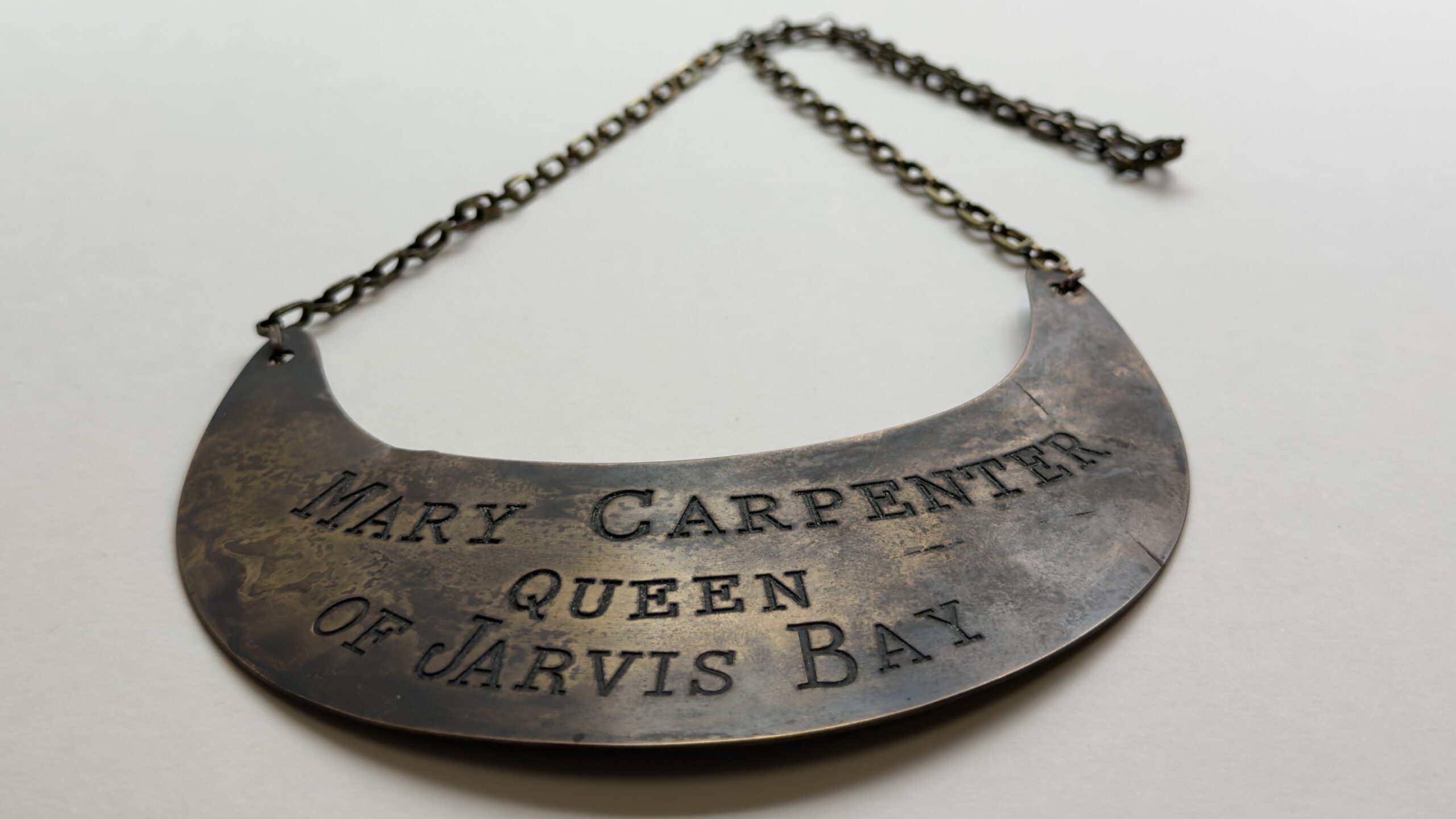
A Victorian breastplate made for ‘Queen’ Mary Carpenter’s almost 100 years after she was buried is back home in Country on the NSW South Coast.
The brass breastplate was made between 1880 and 1910 and belonged to Queen Mary, a highly regarded and influential member of the Jerrinja Aboriginal Community.
Federal Arts Minister Tony Burke says the breastplate was returned with help from the National Cultural Heritage Account which helps ensure “important pieces of cultural heritage are protected”.
The location of breastplate was unknown after her death until it was recently listed at auction in Melbourne. It was bought by the Jervis Bay museum with federal help.
“We know how important it is to keep these objects on Country close to their communities,” Burke says.
BREASTPLATE’S WORTH
Indigenous Australians Minister Malarndirri McCarthy says: “Almost a century after the passing of its owner, this breastplate is returning to Saltwater Country on the NSW South Coast.
“Breastplates like these can evoke mixed feelings but every repatriation of a cultural and heritage item is an important return to Country and communities.”
The Jerrinja Aboriginal community entrusted the Jervis Bay Maritime Museum with its safekeeping, Burke’s office says.
The museum also holds a replica that belonged to her husband, King Budd Billy II; the original is held in the National Museum of Australia in Canberra.
Diana Lorentz is director of the Jervis Bay Museum and says: “The rediscovery of the breastplate, and its return to the communities in Huskisson, is an important act of cultural reconnection.
“We are thrilled that it is coming back to Country.”
QUEEN MARY AND HER KING
Queen Mary and husband James Golding (also known as ‘Budd Billy II, King of Jarvis Bay’) were prominent members of the Aboriginal community in Huskisson.
Golding died in 1905 while Queen Mary died in February 1928, aged 106 years, in a ceremony that was covered by newspapers of the time. The two of them had been given royal rank by government proclamation, reports from the day say.
Often made from brass, copper or bronze, these crescent-shaped plaques were worn around the neck and typically given to prominent Indigenous Australians by colonial authorities who were identified as worthy of their respect.
A ceremony was held on June 12 at the Jervis Bay museum to ‘welcome’ it home; it will go on display at the museum from June 23.
MORE ARTIFACTS STORIES: ancient pieces returned to Mexico




