
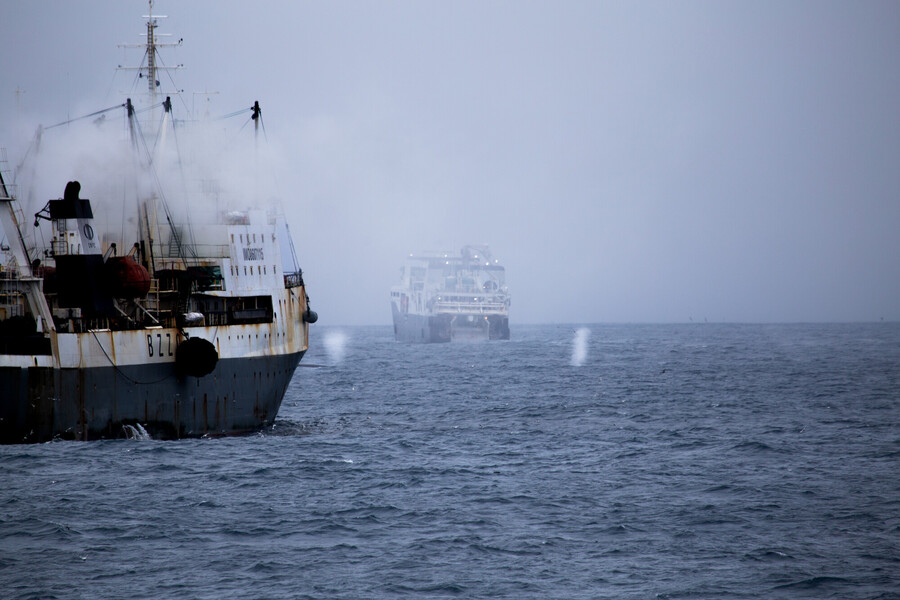
Krill fishing around the Antarctic must be suspended until new safeguards are in place, WWF Australia says.
The Commission for the Conservation of Antarctic Marine Living Resources (CCAMLR) wrapped up its annual meeting in Hobart last week but failed to agree on long-term measures, including a new marine protected area around the Antarctic Peninsula.
(The commission’s next annual meeting is next October.)
The WWF says that the first time, the krill fishery was forced to close early in 2025 after its entire 620,000-tonne annual quota was quickly reached.
It says the early closure was the result of an end to protective measures in 2024.
It says CCAMLR’s failure means the fishery quota will be filled without any oversight from around the Antarctic Peninsula.
The peninsula is a hotspot for Antarctic wildlife, especially whales and penguins.
KRILL FISHING INCREASING
As the industrial krill fishery expands, more reports are coming in seabird, seal and whale bycatches, indicating the fishery is concentrating in key foraging grounds for these krill predators.
WWF is calling for a moratorium until a new, highly precautionary and ecosystem-based management framework is agreed.
Emily Grilly is Ocean Conservation Manager at WWF-Australia. She says that “Antarctica is … already under immense pressure from climate change”.
“Without safeguards in place, krill fishing cannot continue at current levels let alone be increased, as some are proposing.”
Grilly says Australia has historically shown “great leadership” in Antarctic conservation as one of the original signatories of the Antarctic Treaty while former prime minister Bob Hawke played a pivotal role in preventing mining there.
“Now, we are witnessing the slow erosion of Antarctic protection by a small number of countries. It’s time for ocean leading countries like Australia to support a moratorium until adequate fishing safeguards and marine protection measures are put in place,” she says.
Rhona Kent is Polar Oceans Program Manager at WWF UK. She says: “Antarctic krill are the superheroes of the Southern Ocean, sustaining incredible marine life, but climate change and unsustainable fishing are putting them at risk.
“With sea ice declining and industrial fishing growing, we urgently need CCAMLR to better manage the fishery, and protect it and predator habitats within a network of marine protected areas.”
The Antarctic Peninsula is one of the most rapidly warming regions on the planet, and the location of a large-scale industrial krill fishery.
OTHER KRILL NEWS: New Hobart aquarium to carry pioneer’s name




