
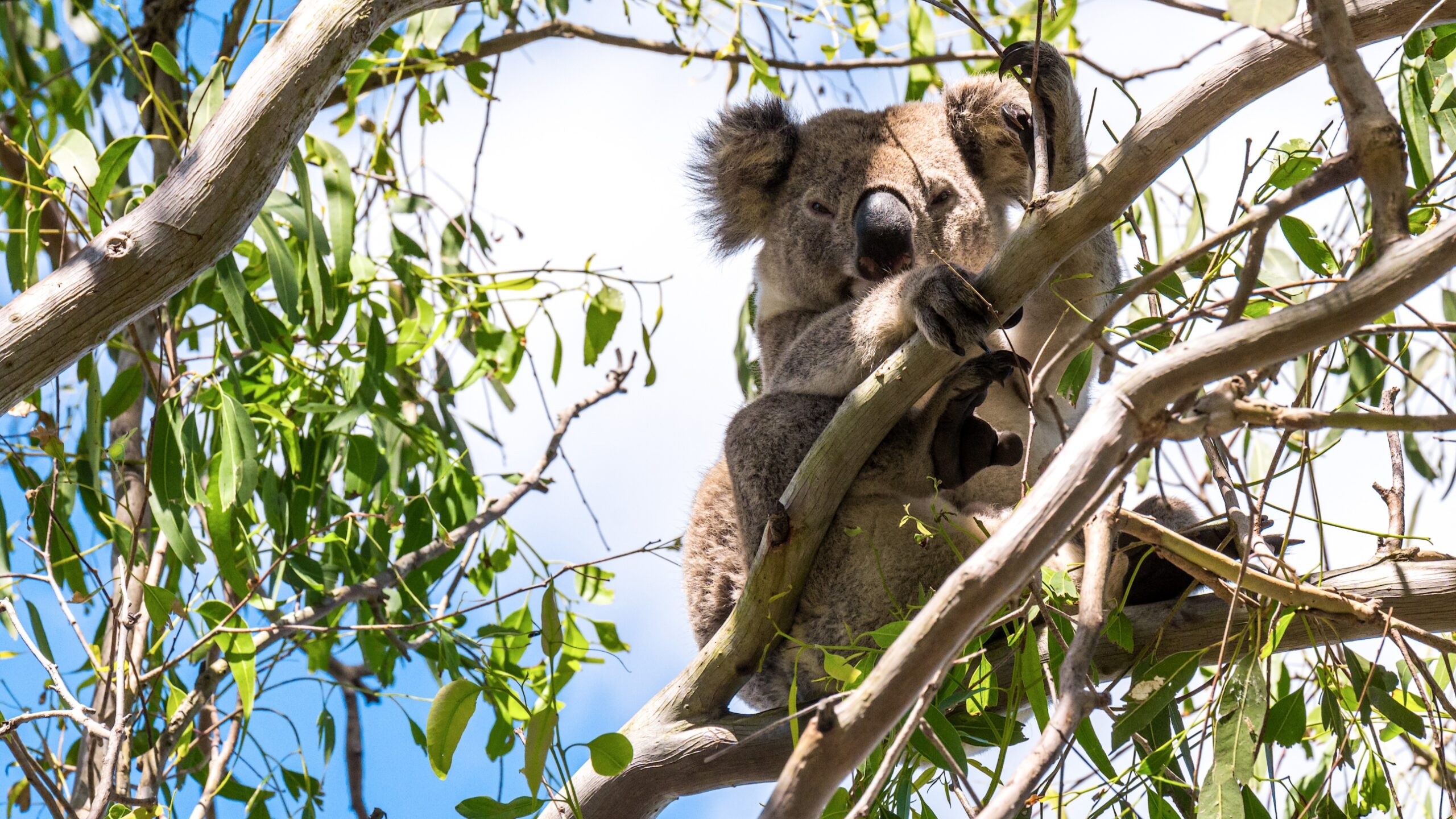
Koalas in NSW are still fighting for existence despite a new survey revealing 274,000 animals living in more than 1000 sites across parks, forests and private land.
Animal welfare groups sounded a caution after the baseline survey’s results was announced by the NSW Government.
The survey was conducted with new technology such as heat-detecting drones and acoustic recorders, a decision welcomed by the groups.
(More traditional survey methods involved visual sightings and scat analysis.)
The government says this high-tech approach will allow scientists to more accurately detect more koalas faster.
NSW Environment Minister Penny Sharpe says the survey improves their understanding of where the animals are living in the state.
“It is an important tool to guide conservation decisions,” she says.
“This survey shows we have been making the right decisions to ensure their survival.” The results will also feed into a national koala monitoring program.
“Koalas are still endangered and the threats they face are real,” Sharpe says.
“This work helps ensure we are targeting the right areas so that future generations can continue to see koalas in the wild.”
Koalas in NSW remain endangered as they face growing threats from habitat loss and fragmentation, climate impact, disease and vehicle strikes.
The government claims its new Great Koala National Park will protect the habitat of more than 12,000 koalas, greater gliders and other threatened species and points to other measures such as the new Warranmadhaa National Park along the Georges River in south-west Sydney and a new $8.5 million koala care centre in the Macarthur region.
KOALAS ‘STILL UNDER THREAT’
The World Wide Fund for Nature-Australia welcomed the survey results but added a cautionary note.
“We welcome the government’s considerable investment to count koala populations; this is important information to have,” says Tanya Pritchard, WWF’s Senior Manager of Koala Recovery.
“However, it does not mean koala populations are increasing. New approaches like scanning with thermal drones, and an increased search effort means we’re getting better at finding existing koalas.”
She highlighted the 19th and early 20th century trade in koala fur which decimated their population as well as habitat destruction.
“A study last year found 29 million hectares (54%) of forests and woodlands that once existed in NSW have been destroyed since European colonisation,” Pritchard says.
“There simply isn’t enough habitat so koalas end up on fences, up power poles, or even climb onto vehicles. Others are killed crossing roads or are attacked by dogs.”
She also says disease is another threat to them.
“Chlamydia is rife among populations – a disease that can cause infertility, blindness and death,” she explains.
With so many people working to boost koala numbers, she says the announcement of the Great Koala National Park was “a game changer”.
“This will be a crucial safe haven where koalas are protected in perpetuity. As the climate warms, and some areas become too hot, koalas can shelter in the tall eucalypt forests of the Great Koala National Park.”
Pritchard says the WWF has been helping Bangalow Koalas plant 500,000 habitat trees in northern NSW by funding about half those trees with help from furniture brand Koala.
“WWF is also working on an initiative to provide financial incentives for landowners who plant trees in koala areas,” she says.
“Efforts to restore koala habitat on a large scale will be crucial to WWF’s aim of doubling koala numbers by 2050.”
“A study last year found 29 million hectares (54%) of forests and woodlands that
once existed in NSW have been destroyed since European colonisation.”
TANYA PRITCHARD, WWF-AUSTRALIA
HUMANE WORLD
Humane World for Animals Australia’s wildlife program manager, Dr Renae Charalambous, says the science involved in the new survey is a second chance to get koala conservation right.
“While this new data is encouraging, we still need strong action to secure and restore connected habitat across the koala’s range,” she says.
“The Great Koala National Park is central to this effort. Protecting and connecting high-value habitat will give koalas the space and resilience they need to survive long-term.”
Koalas were listed as endangered on Australia’s east coast in 2022 after a joint nomination by Humane World for Animals Australia, International Fund for Animal Welfare and WWF-Australia on the back of revelations in 2021 that koala populations in Queensland, ACT and NSW had declined by 57% over 20 years previously.
MORE KOALA NEWS: Dining out on Lismore tree nursery