
Farmers are ending the year expecting a mostly stable year ahead and a desire to spend more on their businesses.
This was the main finding of the fourth quarterly Rabobank Rural Confidence Survey that was just released (December 17).
Despite ongoing concerns about rising costs and unpredictable weather, three in four farmers expect operating conditions to improve or stabilise over the next year, it says.
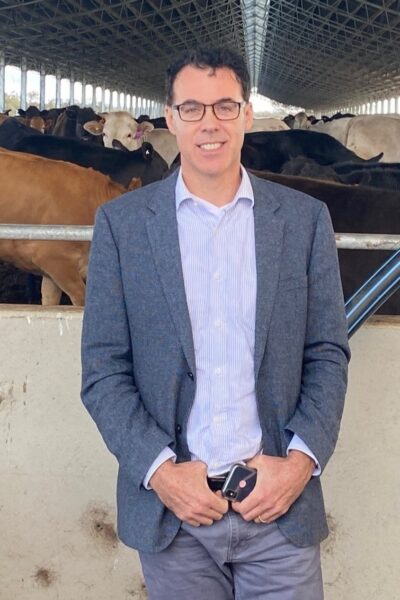
Rabobank group executive for Country Banking Australia, Marcel van Doremaele says farmers are ending the year on a steady footing.
“After a period of volatility – especially from a seasonal perspective – farmers are shifting their expectations towards greater stability in 2026, with nearly half anticipating it will be ‘business as usual’ in the year ahead,” he says.
“Input costs, drought concerns and softer commodity prices continue to weigh on outlook, but these challenges haven’t shaken farmers’ broader confidence.”
Positive signs in key commodity markets are fuelling this confidence, aided by better seasonal conditions and what may be another bumper harvest, he adds.
FARMERS ON SPENDING
The survey found 33% of respondents intend to spend more on their farms, while 55% plan to spend the same.
Van Doremaele says that while rising costs of everything from fuel to fertiliser to labour and insurance means farmers remain cautious as the year ends, their desire to invest on their farms is the highest since June 2022.
“Farmers across the country are concerned about the impact that high input costs are having on their farming business, with this topping the list of concerns in all states this survey,” he says.
“Farmers are facing sustained inflation across almost every major input cost… it’s no longer just fuel and fertiliser; everything from machinery repairs to labour and insurance is tightening margins, and when markets soften, such as wheat and cotton, those rising costs become even harder to absorb.”
The survey completed last month shows that national rural confidence sitting at 6%, declining from 14 per cent in the previous quarter.
Nearly half of the farmers surveyed (48%) expect conditions in the agricultural economy to remain stable in the year ahead, increasing from 41% in quarter three.
A further 27% are anticipating an improved outlook for agriculture in 2026 (albeit down from 35% with that view in the previous survey).
The proportion expecting conditions to deteriorate is stable at 22%.
Nationally, grain growers were the only commodity group where sentiment ticked up this quarter, although red meat producers were the most bullish in their outlook.
High costa remains the top concern for farmers in the survey (for 37% of respondents) while drought remains a worry for 33%.
About 24% of respondents were worried about the impact of falling commodity prices on their businesses, particularly grain, cotton and sugar cane growers while 31% cited worries about government policy, down from last quarter’s 39%.
Concern about the implications of overseas economic conditions also fell to 19% from 24% previously.
On the other side of the ledger, farmers overall were still feeling positive about commodity prices, which remained the leading source of optimism, with 50% tipping they will drive positive conditions.
Seasonal conditions were considered a positive factor for 46% of farmers, down from 49% last quarter.
STATE OF PLAY
Victoria again registered a 3% rise in farm confidence to 24% (the highest since 2021) fuelled by expectations of a strong season and stable commodity prices.
Tasmanian farmers remain the most confident farmers in the country despite a dip of 3% to 31%; only 5% of farmers expect conditions to worsen in 2026.
New South Wales farming confidence fell the most, from 15% to -3%; producers in the state’s north fared better seasonally compared to the southern regions, who had a tougher season.
In Queensland, rural confidence fell from 10% to -1% due to dry seasonal conditions heading into summer while some commodities like sugar are facing pricing headwinds.
South Australian farmers’ spirits were less optimistic as well, from 8% to 6%, weighed down by rising costs but may be boosted by late spring rainfall; this year’s winter crop is forecast to be 67% higher than last year’s drought-impacted harvest.
In Western Australia, rural confidence fell slightly (from 0% to -7%), although the state is in the midst of a very strong harvest.
“Farmers across the country are concerned about the impact that high input costs are having on their farming business, with this topping the list of concerns in all states this survey.” Marcel van Doremaele
SPENDING PLANS
Australian farmers overall reported an increased appetite for investment this quarter, indicating their long-term confidence in the performance of the sector, says van Doremaele.
The survey found a third of Australian farmers plan to increase investment in their farm businesses in the coming year (33%, up from 29%), while only 10% expect to reduce investment levels (previously 9%).
Just over half (55%) plan to maintain spending at current levels.
A total of 63% of respondents intend to invest in on-farm infrastructure, including fences, yards and silos, while more than a third of Australian farmers will spend on new technologies (39%) and new plant and machinery (35%).
Plans to increase livestock numbers remain firm for 29% of farmers, and investment in irrigation or water infrastructure held steady, planned by 23%.
Appetite for purchasing farmland remained stable, with 16% of farmers across the nation looking to expand their holdings.
This was led by South Australia, where there was a significant increase in expansionary plans this quarter on the back of improved seasonal conditions from 12% to 23%.
This increase was despite some reservations about interest rates, with a small but growing number of SA farmers citing rates as a cause for concern.
“While earlier expectations pointed toward interest rate cuts, the latest indicators suggest a more cautious approach from the RBA to combat inflation, as we’ve recently seen with the December announcement to hold the OCR [official cash rate] steady,” says van Doremaele.
Income expectations for the coming year remain largely positive, with 41% of Australian farmers expecting their gross farm incomes to rise over the next 12 months (unchanged from last quarter) and 38% expecting them to remain steady.
However, the number expecting incomes to decline went up to 20% (previously 16%).
A comprehensive monitor of outlook and sentiment in Australian rural industries, the Rabobank Rural Confidence Survey questions an average of 700 primary producers across a wide range of commodities and geographical areas throughout Australia on a quarterly basis.
The Rabobank survey has been conducted since 2000 by an independent research organisation. The next results are due in March 2026.




