
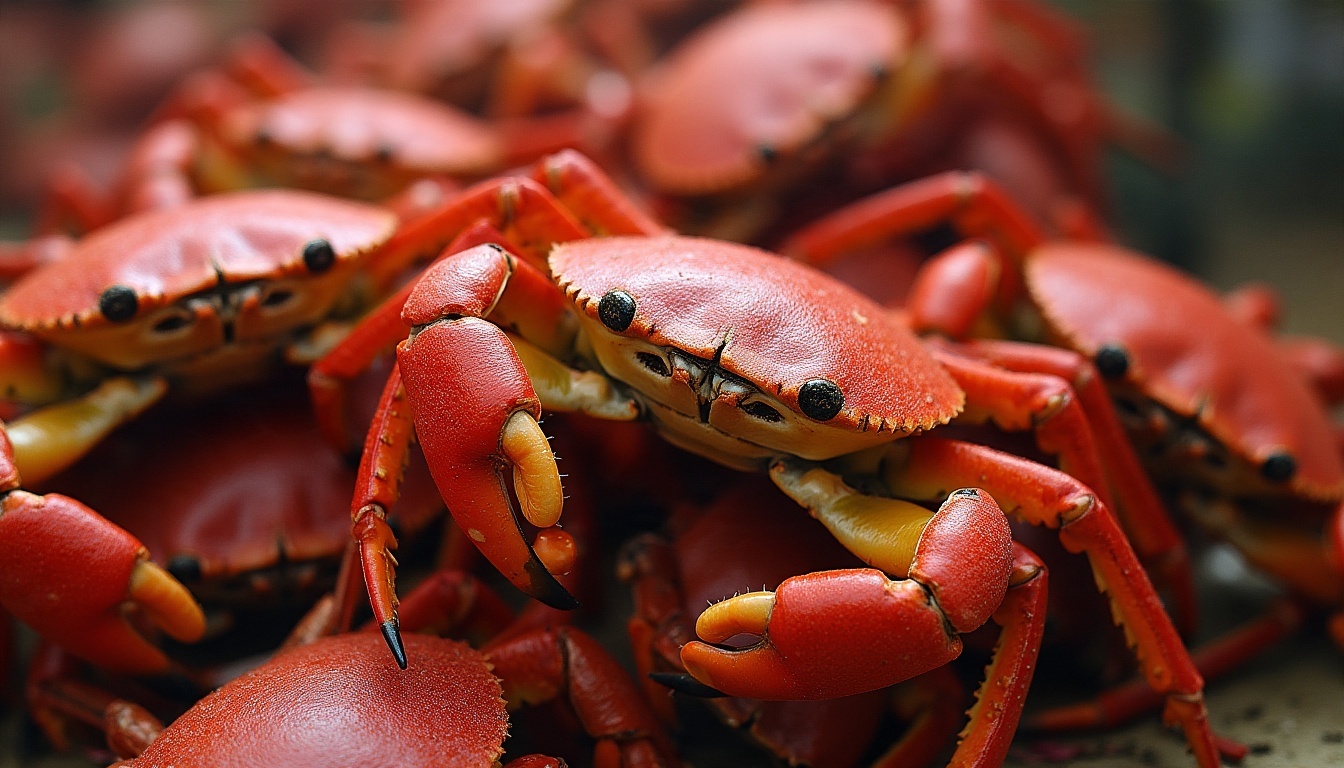
The Christmas Island red crab migration is officially underway, and for a few weeks this tiny Australian territory belongs to the crabs. More than 100 million red crabs on Australia’s Christmas Island have begun their annual migration from the forest to the sea, conservationists said this week. Roads and specially built crossings turned into streams of red on 14 and 15 November.
The Christmas Island red crab migration is a spectacle that is world-famous and deeply local at the same time. The island sits 2,600 kilometres north-west of Perth, 350 kilometres south of Indonesia, and covers just 135 square kilometres.
Why the Christmas Island red crab migration happens
The journey begins with the first rains of the wet season, usually around October or November, when the crabs leave the forest to mate and spawn on the coast. Males lead the first wave and are joined by females along the way.
The timing is set by the moon. According to Parks Australia, the crabs aim to spawn before dawn on a receding high tide during the moon’s last quarter. Park staff say the crabs effectively work backwards from that spawning date to plan their trip. Each female can carry up to 100,000 eggs in a brood pouch.
The island’s tourism body lists 5–6 December 2026 and 2–3 January 2027 as possible spawning dates, so the main event is likely still a couple of weeks away.
Watching the Christmas Island red crab migration live
For anyone who cannot make the long trip, the Christmas Island red crab migration can now be watched from home.. Christmas Island National Park has launched daily live streaming from the Red Crab Bridge, a roughly 16-foot (about five-metre) structure built to help the crabs cross a busy road.
Rangers are honest that the crabs set the schedule. They plan to stream in the mornings, but say the crabs will decide when and for how many days they cross the bridge, which usually lasts three to four days.
Life on an island run by crabs
For the roughly 1,700 people who call the island home, the Christmas Island red crab migration means a few weeks of slow driving and careful footsteps. Local pharmacist Grace Orr-Young told the ABC that residents learn to crawl along and steer around the crabs, and she often keeps to the township during the season. When she does venture out, a friend walks ahead of the car with a rake to clear the way.
Months beforehand, Parks Australia clears underpasses, builds crab bridges and installs kilometres of roadside barriers and warning signs. Some roads are closed outright, making parts of the island difficult to reach.
A conservation success story
The crabs’ recovery is the real good news. Work to control invasive yellow crazy ants, one of the biggest threats to the species, has helped the population rebound from around 50 million to today’s levels. National Park Manager Chris Chartres put it simply:
“Red crabs are the island’s keystone species.”
Scientists are still puzzling over how the crabs find their way. Researchers from Lund University in Sweden visited this year to study the journey, and suspect the crabs may navigate using the sun, the Earth’s magnetic field or polarised light. One of them, Professor Marie Dacke, described the scene as
“like a red river flowing through the forest.”
Whether you watch it from a beach at Flying Fish Cove or a laptop on the other side of the world, the Christmas Island red crab migration remains one of nature’s most remarkable shows.
Also read: Second and third Working Holiday visas are moving to an invitation system: here’s what changes
General information only. Dates may change; check official sources before planning a trip.
Source: ABC News, RNZ, AFP via France 24, Christmas Island Tourism Association




