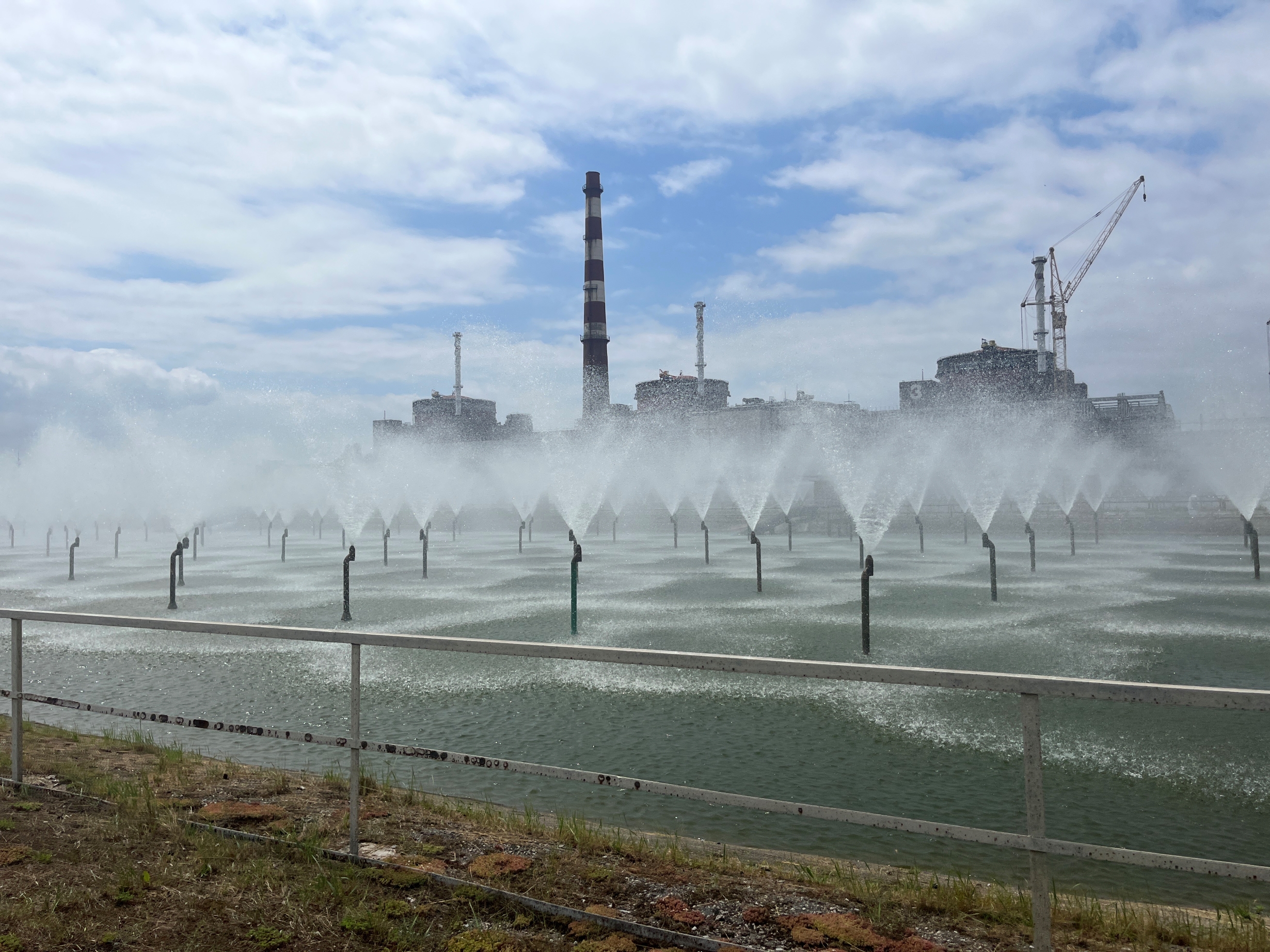
Diesel generators have had to power Europe’s largest nuclear power plant, located in the Ukraine, three times in a week even as fuel supplies dwindle, the United Nations says.
The Zaporizhzhya Nuclear Power Plant (ZNPP) briefly had to rely on emergency generators on August 8 for the third time in seven days amid continual fighting, the International Atomic Energy Agency (IAEA) says.
The report came in its latest update on the safety of Ukraine’s nuclear sites amid continual fighting.
The plant’s only remaining off-site power line, the single 330 kilovolt (kV) Ferosplavna-1 line, was knocked out, prompting the plant’s diesel generators to automatically kick in and power the safety systems.
(Before the war, the plant could rely on 10 off-site power lines, the agency says.)
It was the 25th complete Loss Of Off-site Power (LOOP) at the 5700 megaWatt ZNPP since the war started in 2022 and the 13th since April, according to the IAEA.
“The increasing frequency of power losses at the plant is deeply concerning,” agency director general Rafael Mariano Grossi says.
“A reliable connection to the electricity grid remains essential for nuclear safety and security.”
The plant’s main 750kV Dniprovska power line remains knocked out since March, when it was damaged.
Although repaired during a sixth ceasefire in June, the line could not be re-energised due to extensive damage to an electrical substation more than 100 kilometres north-west of the plant and the ZNPP has had to rely on the single Ferosplavna-1 off-site line since.
WORKING AROUND DIESEL SUPPLY INTERRUPTION
With fighting blocking resupplies of diesel for the generator, the IAEA says, the plant staff decided to increase water levels in the spent fuel pools of all six reactor units.
The IAEA explains that raising the water levels in the spent fuel pools will increase the time available before water starts to boil in the case of an extended LOOP event with the generators out of fuel and cooling not possible.
“This is a prudent step to strengthen safety margins and prepare for unlikely but potentially critical scenarios,” Grossi says.
“At the same time, it does not reduce the urgent need for reliable off-site power and full respect … for protecting the plant.”
Agency staff at the ZNPP continue to hear fighting, including explosions, several times a day and seemingly often close to the site.
The plant also continued to report fighting in the nearby city of Enerhodar, where many plant staff live, and drones flying in and near the site.
UPDATES ON OTHER NUCLEAR STATIONS
Other nuclear plants also reported air raid alarms and drones.
The South Ukraine Nuclear Power Plant (SUNPP) reported air raid alarms on a near daily basis and detected two drones nearby.
The Chornobyl nuclear plant also reported near daily alarms and two drones detected.
Meanwhile, the IAEA says it is continuing to deliver nuclear safety gear and security equipment to plants and other sites across the country.