
Canada is embarking on a C$500 billion (A$517bn) pivot away from the US as it seeks to boost its domestic defence industry.
Last week, Canadian PM Brian Carney announced his country’s first defence industry strategy that will guide a big boost on domestic production and create 12,500 jobs in the process.
The plan is expected to allow Canada to raise its defence spending to 5% of GDP by 2032 in line with NATO expectations; the country already expects to hit a 2% target of $63 bn (A$65bn) this financial year.
(The government also says applications to join the Canadian Armed Forces or CAF are up 13% as well.)
Ottawa wants to use the new strategy to boost Canadian exports by 50%, raise contracts awarded to Canadian firms to 70% and grow revenue by 240%.
Within 10 years, they say their naval fleet should be 75% larger, army fleet up 80% and aerospace fleets up 85%.
“Our new defence industrial strategy ensures Canada remains a sovereign nation, in charge of its own destiny,” Carney told journalists in Montreal, Quebec, as he announced the strategy.
CANADA “MUST BE AMBITIOUS”
Defence Minister David McGuinty says now “is the time to be ambitious” in building military capability.
“We are strengthening the CAF’s ability to defend, deter, and defeat threats,” he said.
“At a time of growing global uncertainty, Canada must strengthen its economic security and protect its sovereignty by investing at home,” Industry Minister Melanie Joly said.
“(The) new strategy will grow our domestic industrial base, create high-quality jobs in every region of the country, and position Canadian companies to compete and win globally,” she said.
Canada’s Secretary of State for Defence Procurement Stephen Fuhr said: “By investing in our defence industrial base, we can build stronger supply chains, drive innovation and create up to 125,000 good-paying jobs for Canadians.”
The new strategy will feature five pillars: defence production, bureaucratic streamlining, help local companies scale up for domestic and export production, protect Canadian companies and jobs, and lead a national effort to protect the country including in the Arctic.
Canada is recently announced it is reconsidering plans to buy more F-35 joint strike fighters from the US after it starts taking delivery of the first of 16 by the end of the year.
It is due to take delivery of another 72 of the aircraft but the final order has not been signed off as tensions between Ottawa and Washington rise.
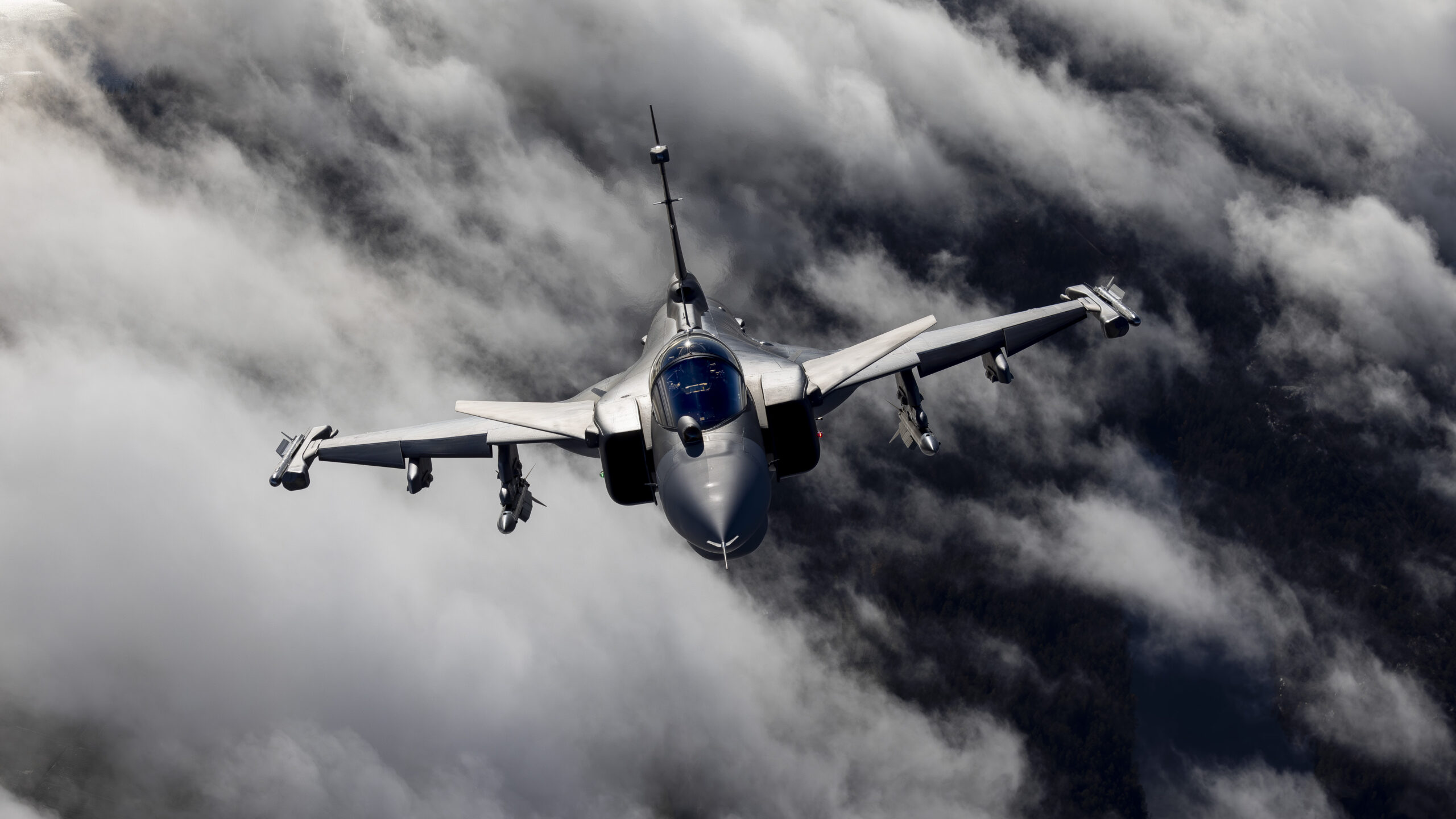
Swedish aircraft maker Saab is offering its Gripen fighter jet, airborne warning aircraft and a technology transfer deal to allow Canada to make the Grippen on Canadian soil.
ABOUT THE DEFENCE SECTOR
The defence industry contributes nearly C$10bn (A$10.34bn) to the GDP and supports over 81,000 jobs.
In 2022, the sector spent C$440m (A$455bn) on research and development.
The sector is more than three times as intensive as Canadian manufacturing with 2.5 times the number of workers employed in high-end science, technology, engineering, and mathematics. Source: www.canada.ca
MORE AUST NEWS: Defence sites to go to open market




